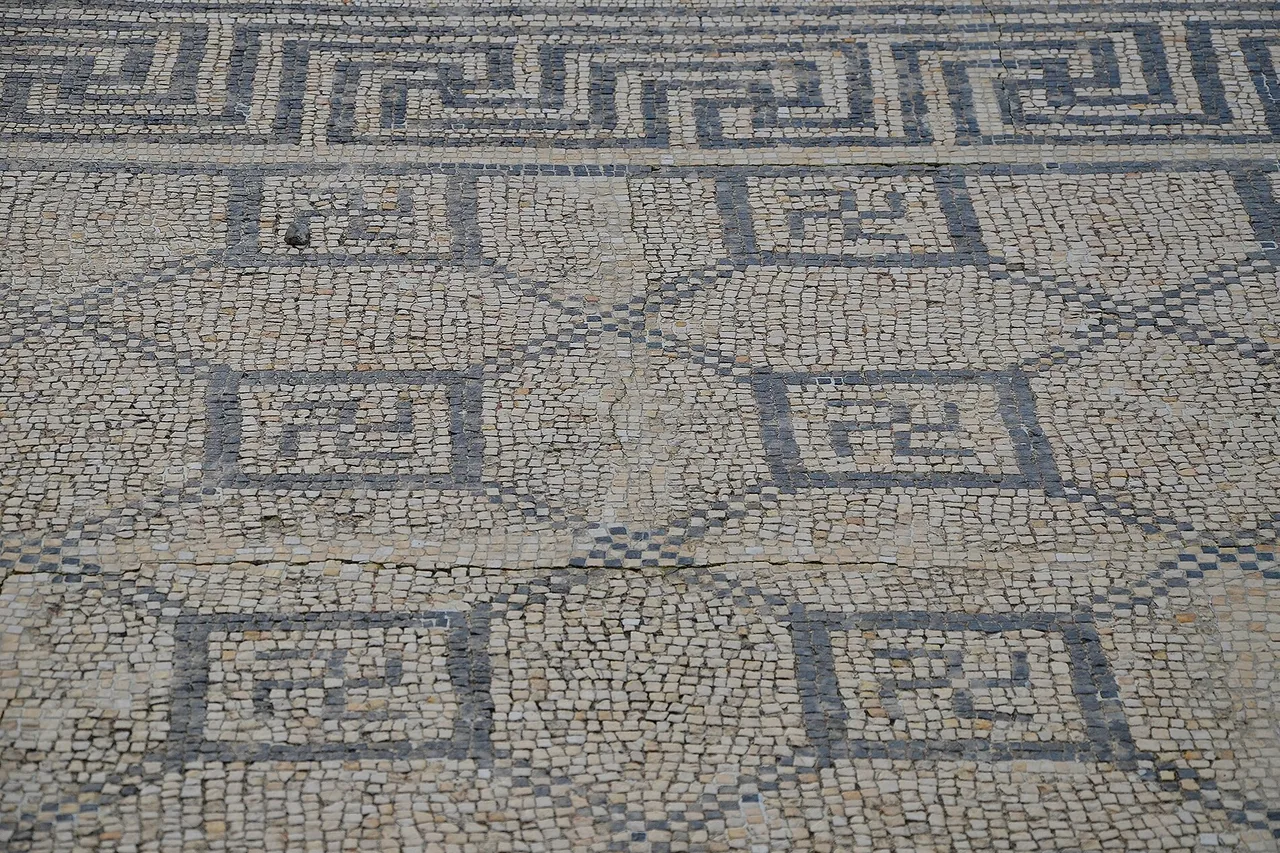
Carole Raddato from FRANKFURT, Germany · Wikimedia Commons · CC BY-SA 2.0
solar-astro
The Swastika
A 15,000-year solar wheel of good fortune, older than every flag.
AttributedDocumented origin
The oldest known swastika is carved on a mammoth-ivory bird figurine unearthed at Mezine, Ukraine, radiocarbon-dated to approximately 12,000–15,000 years ago, now held in the National Museum of the History of Ukraine. The Sanskrit scholar Monier Monier-Williams documented that most scholars consider the form originally a solar symbol; the Sanskrit svastika means simply “well-being.” Across Eurasia — Hindu, Buddhist, and Jain temples, Greek pottery, Roman mosaics, Norse runestones — the hooked cross recurs as a sign of good fortune and cosmic motion.
The reading
In the astrotheology tradition, Jordan Maxwell and Manly P. Hall read the swastika as a depiction of the sun in rotation — the cosmos turning on its own axis, generating life. Robert Sepehr emphasizes its pan-Eurasian distribution as evidence of a shared primordial solar grammar: the four bent arms are the sun’s rays caught mid-sweep, the universe spinning outward from a still center. In this reading it is a “good fortune” glyph before it is anything else.
Where it hides today
Hindu, Buddhist, and Jain temples, homes, and festival decorations across Asia display it continuously, as they have for millennia. Ancient pottery and Roman mosaic floors carry it across Europe’s museum collections. The glyph predates every nation that has ever tried to own it.
Decoded by
- Jordan Maxwell
- Manly P Hall
- Robert Sepehr
Where next
-

solar-astro
Sol Invictus / The Halo-Nimbus
The halo behind every saint is a disk of the sun.
Also solar-astro
Attributed Astro-Theology -
solar-astro
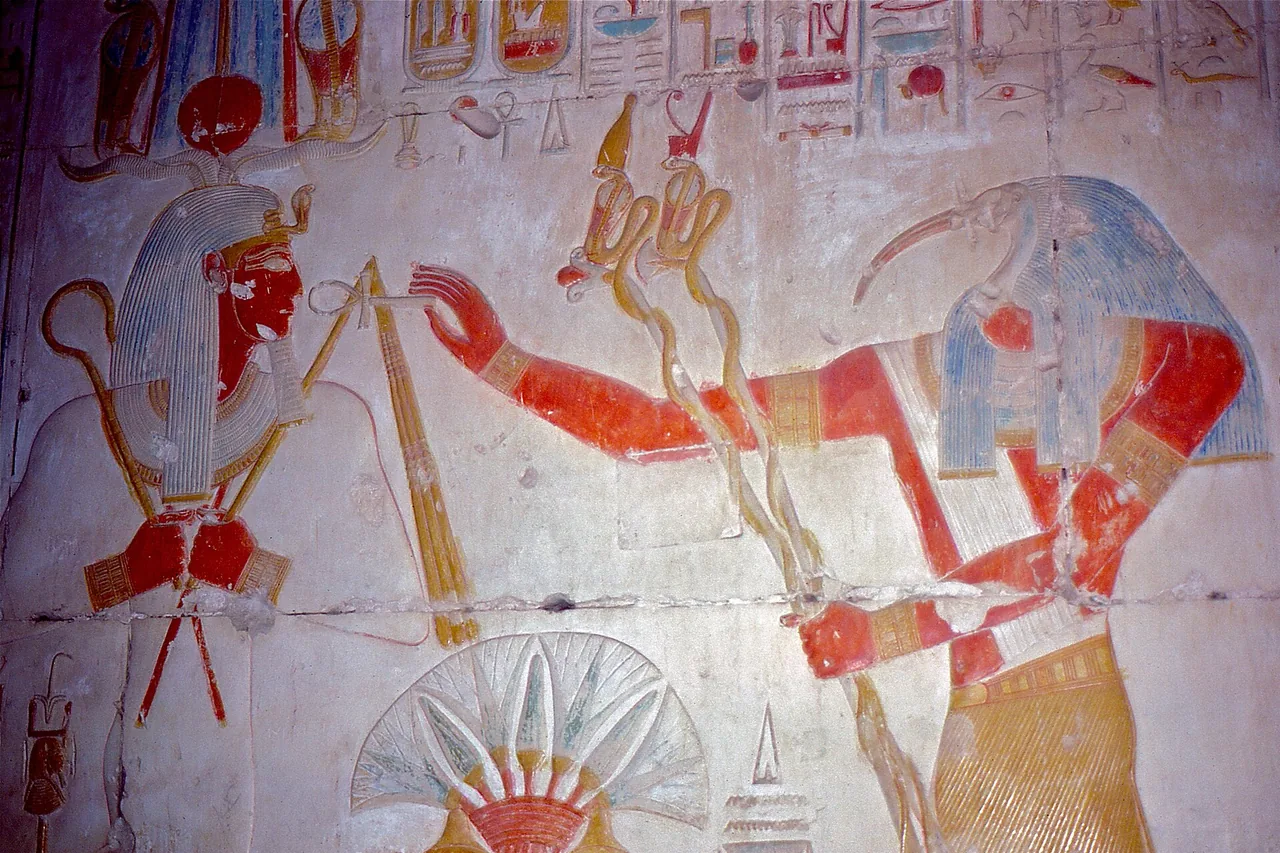
The Ankh
Egypt's word for life: a loop of sun rising over a cross.
Also solar-astro
Attributed Astro-Theology -

solar-astro
The Obelisk
A stone ray of sunlight, planted at the center of empire.
Also solar-astro
Attributed Astro-Theology -

solar-astro
The Solar Cross
The first cross was the sun's path through the year.
Also solar-astro
Attributed Astro-Theology
Share this specimen
ANAMNESIS
Before any flag claimed it, this glyph meant well-being.
The Swastika