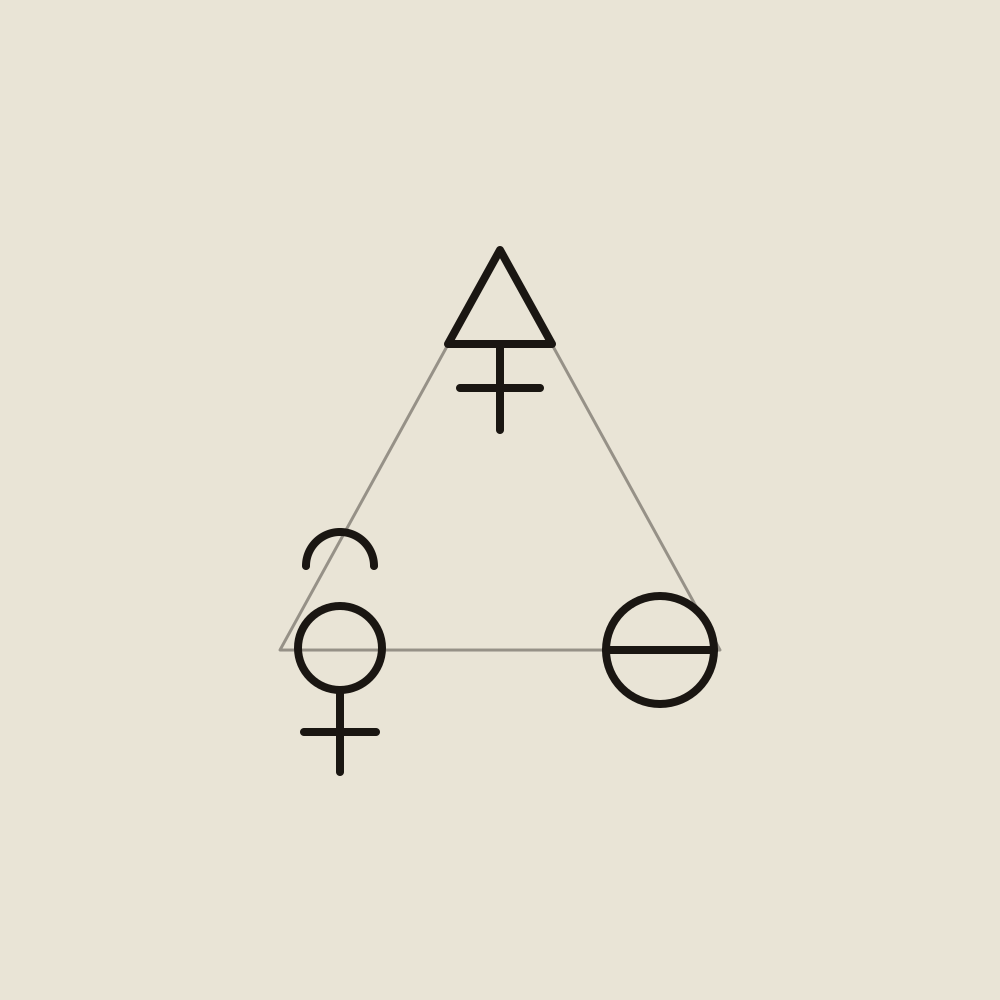
Original diagram — ANAMNESIS · CC0
alchemical
The Tria Prima
Three glyphs that map the soul, the spirit, and the body of all things.
AttributedDocumented origin
The “three primes” were formulated by the Swiss physician-alchemist Paracelsus in the sixteenth century as a replacement for the classical four elements. Sulfur — rendered as a triangle set above a cross — represents the soul and the principle of combustibility. Mercury, denoted by its own compound glyph, carries spirit and volatility. Salt, the fixed and enduring residue, stands for body and solidity. Each substance received its own alchemical glyph, and the triad became the organizational framework of Paracelsian medicine and natural philosophy across Europe.
The reading
In the alchemical tradition, Manly P. Hall reads the Tria Prima not as chemistry but as cosmology: sulfur, mercury, and salt are the three philosophical principles composing every substance in the universe, and the threefold nature of the human being — spirit, soul, and body — mirrors the same division. Mark Passio teaches the three primes as a map of consciousness itself: the fiery will, the fluid mind, and the fixed physical vehicle through which both act. To know the Tria Prima, in this tradition, is to know what you are made of.
Where it hides today
The triangular sulfur glyph, the winged mercury sign, and the divided-circle of salt appear in alchemical manuscript illustrations from the sixteenth through eighteenth centuries and endure in occult literature, tattoos, and emblem design. The underlying threefold pattern — mind, body, spirit — has become so embedded in wellness culture that its alchemical origin has been nearly forgotten.
Decoded by
- Manly P Hall
- Mark Passio
Where next
-
alchemical
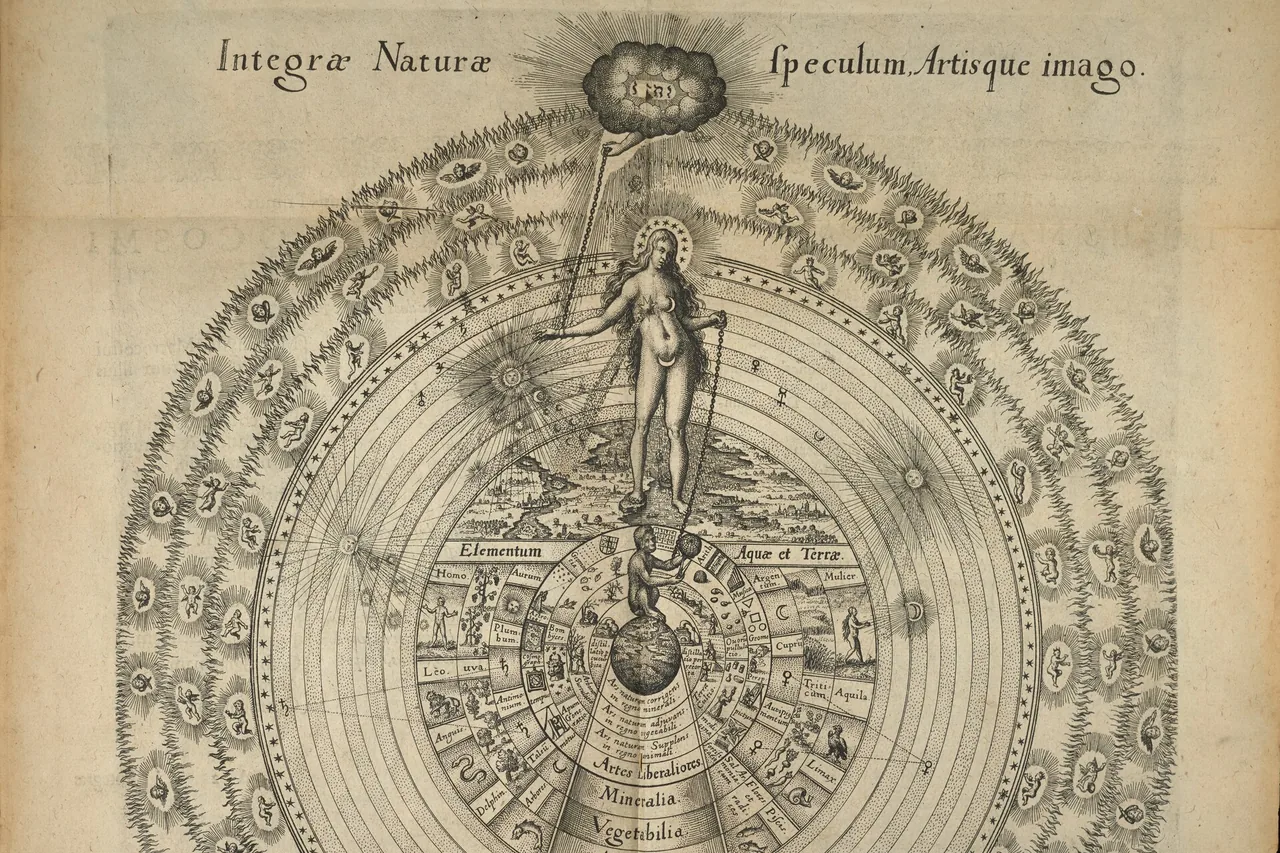
As Above, So Below
The chain of being from God to ape, drawn whole.
Also alchemical
Attributed Hermetic -
alchemical
The Caduceus
Hermes' twin-serpent wand, read as energy rising up the spine.
Also alchemical
Attributed Hermetic -
alchemical
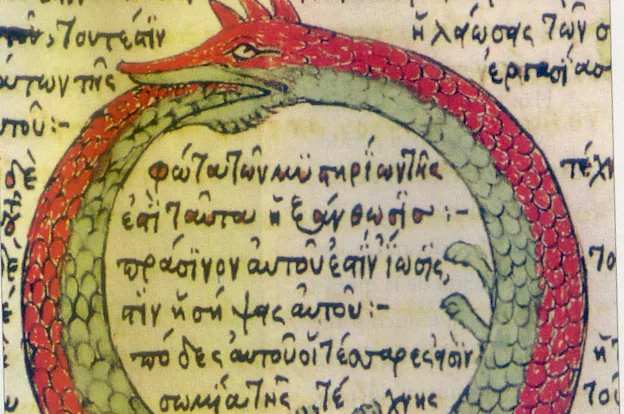
The Ouroboros
The serpent that eats its own tail — the cosmos remaking itself.
Also alchemical
Attributed Hermetic -
alchemical
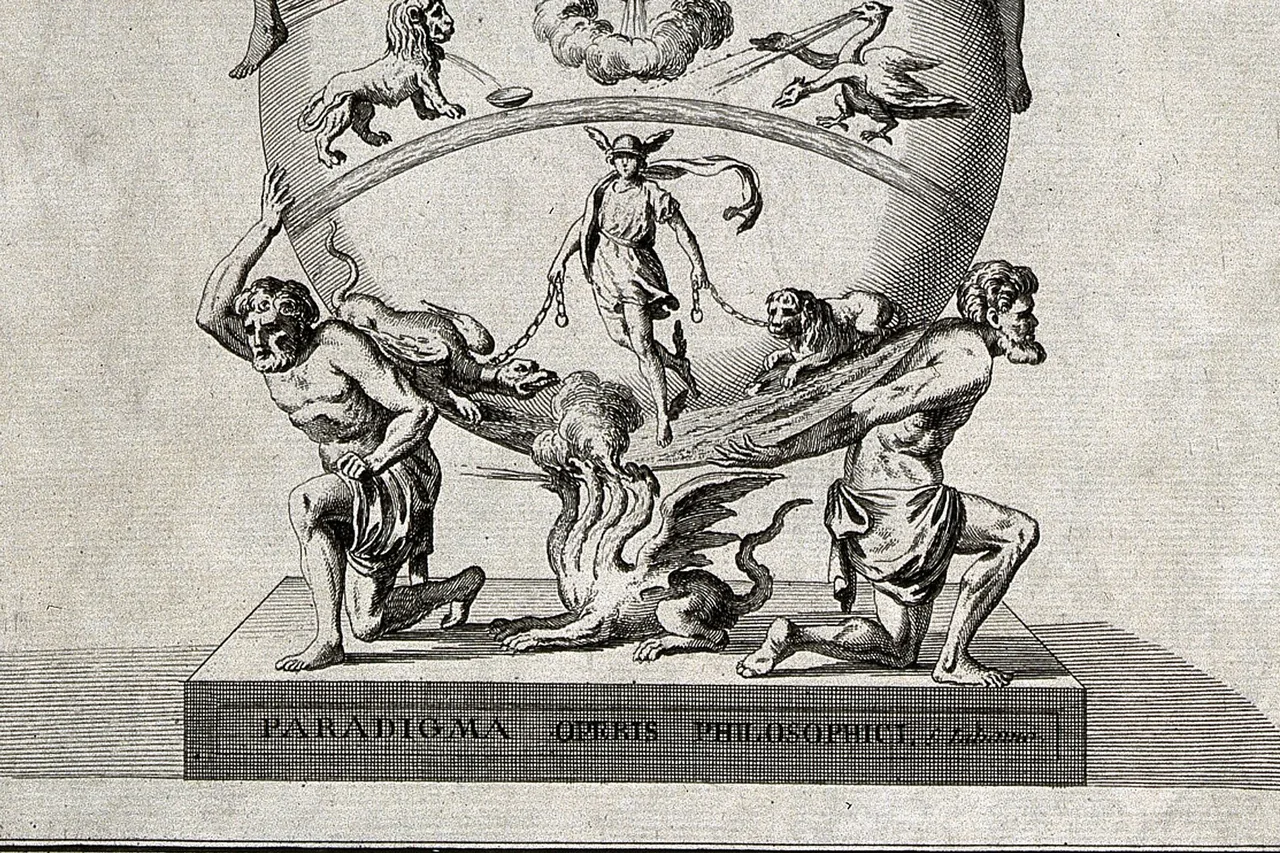
The Philosopher's Stone Glyph
The goal of every alchemist — perfection drawn as a single device.
Also alchemical
Attributed Alchemical
Share this specimen
ANAMNESIS
Sulfur burns. Mercury flows. Salt endures. You are all three.
The Tria Prima