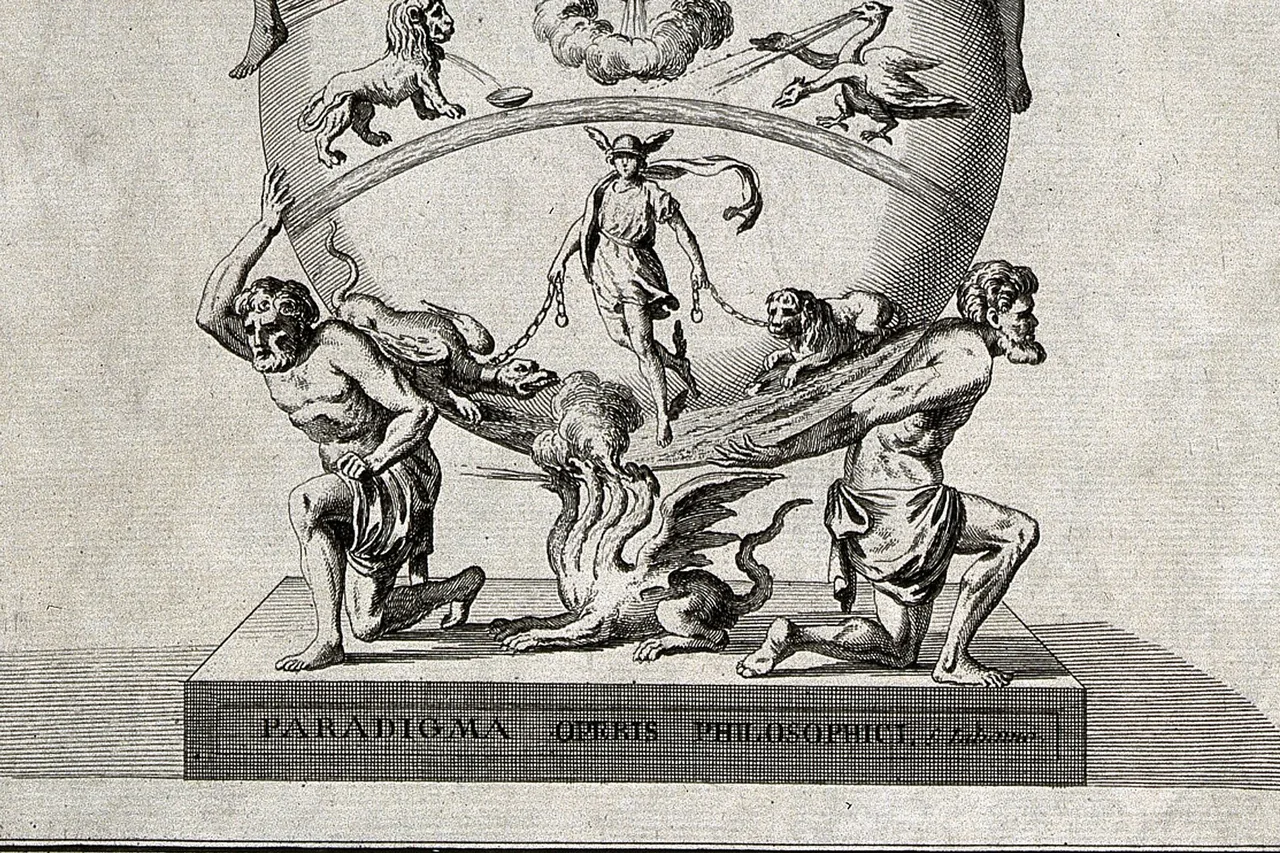
Emblem of the path to the philosopher's stone · Wellcome Collection (via Wikimedia Commons) · CC BY 4.0
alchemical
The Philosopher's Stone Glyph
The goal of every alchemist — perfection drawn as a single device.
AttributedDocumented origin
The lapis philosophorum — the Philosopher’s Stone — is the supreme object and the supreme agent of alchemical work: the substance held to transmute base metals into gold and to confer immortality. Its device, the “squared circle of the philosophers,” appears across European alchemical manuscripts from the medieval period onward, combining circle, square, triangle, and dot into a compact emblem of the Stone’s fourfold-yet-unified nature. The glyph is not the name of a single formula but a pictographic summary of the entire alchemical program — the end-state of the Great Work rendered as geometry.
The reading
In the alchemical tradition, Manly P. Hall reads the Philosopher’s Stone not as a physical mineral but as an allegorical teaching: the Stone is the perfected human being. The transmutation of lead into gold is, in Hall’s reading, the transmutation of the base, unregenerate self into its divine counterpart. The squared-circle glyph encodes the stages of this process — the four elements reconciled, the opposites united, the volatile fixed — and the central point marks the achieved, luminous self at the completion of the Work.
Where it hides today
The Stone’s glyph endures in alchemy-themed fiction and film, most recognizably as the central emblem of the Harry Potter franchise’s first installment. Esoteric jewelry and contemporary occult art reproduce it as a shorthand for the entire transformative project that Western alchemy encoded. The Stone itself — the idea of a substance that makes everything it touches more fully what it ought to be — has never stopped circulating.
Decoded by
- Manly P Hall
Where next
-
alchemical
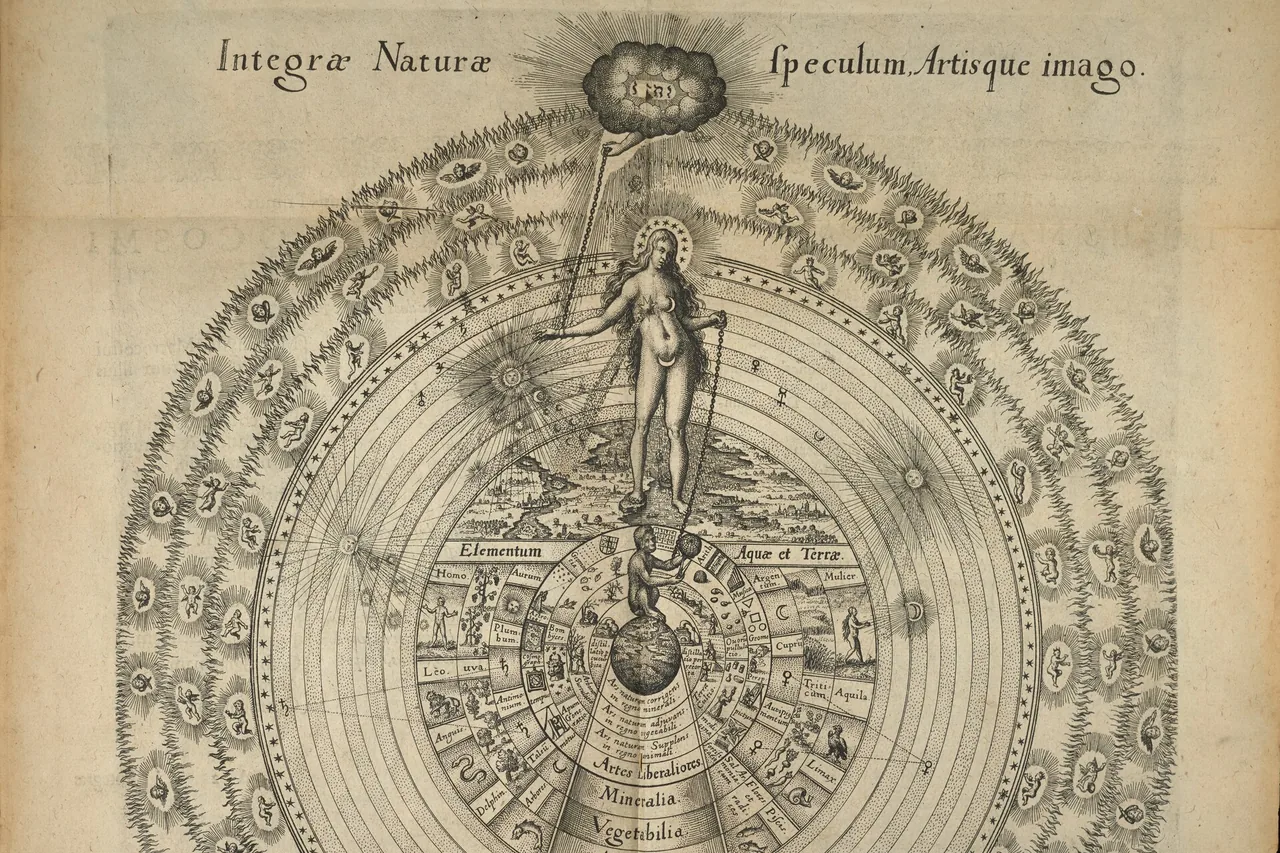
As Above, So Below
The chain of being from God to ape, drawn whole.
Also alchemical
Attributed Hermetic -
alchemical
The Caduceus
Hermes' twin-serpent wand, read as energy rising up the spine.
Also alchemical
Attributed Hermetic -
alchemical
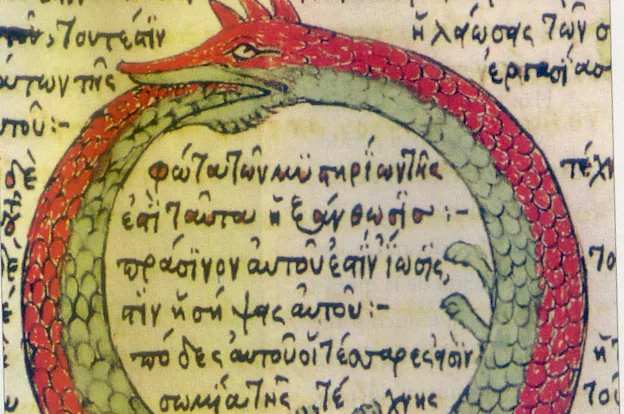
The Ouroboros
The serpent that eats its own tail — the cosmos remaking itself.
Also alchemical
Attributed Hermetic -
alchemical
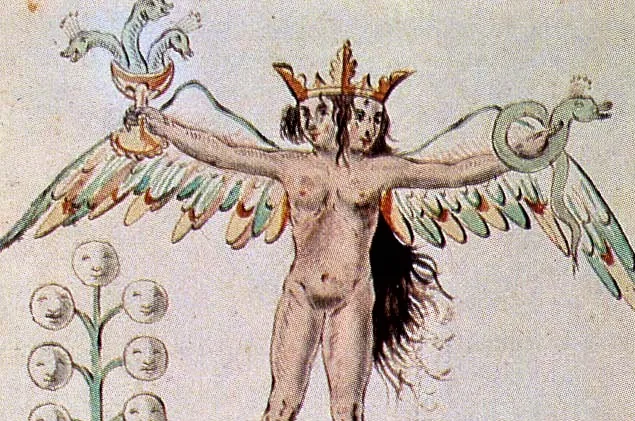
The Rebis
Two natures, one body — wholeness as the goal of the Work.
Also alchemical
Attributed Alchemical
Share this specimen
ANAMNESIS
Not a stone. A process. The perfecting of everything base.
The Philosopher's Stone Glyph