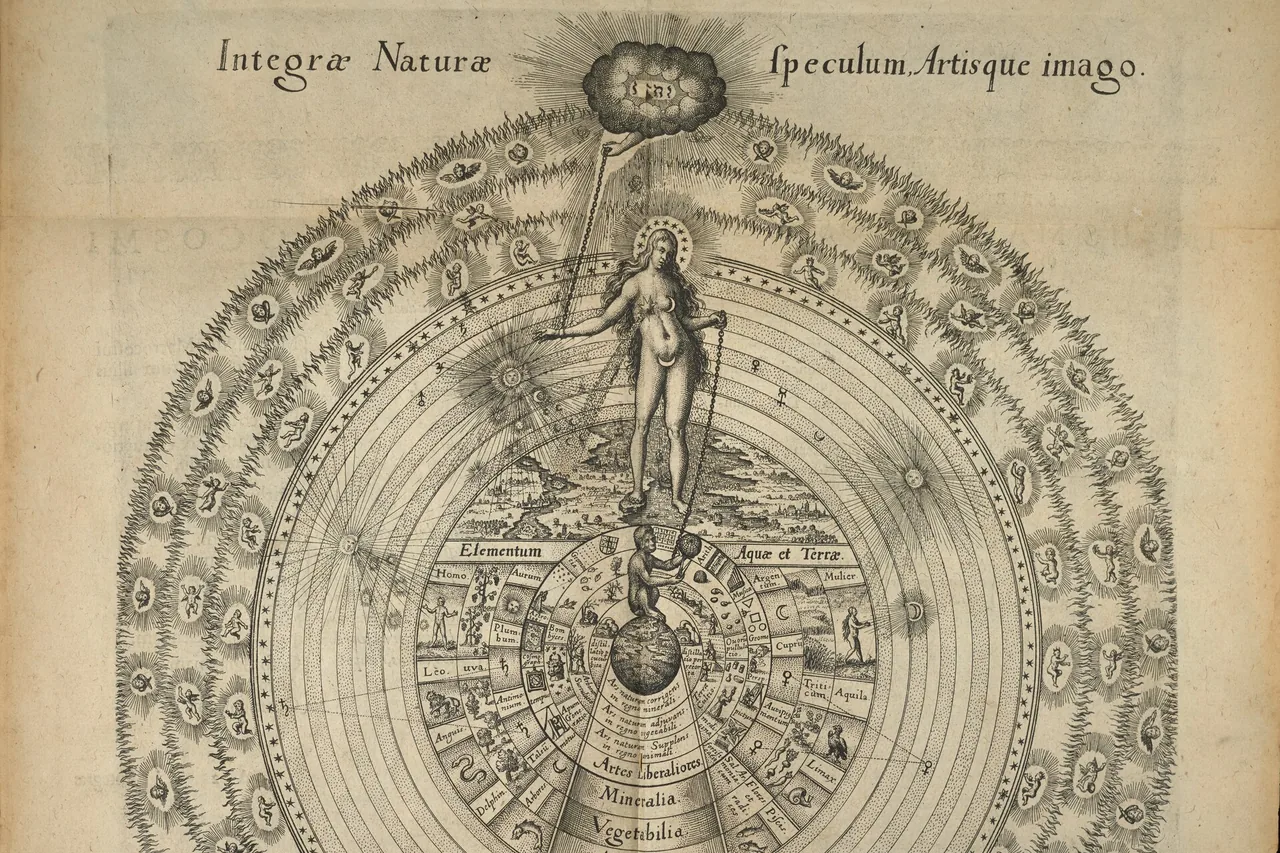
Robert Fludd, Utriusque Cosmi Historia (1617) · Wikimedia Commons · CC0
alchemical
As Above, So Below
The chain of being from God to ape, drawn whole.
AttributedDocumented origin
Robert Fludd’s 1617 engraving Integrae Naturae Speculum — “the mirror of all Nature” — figures the universe as a single graded chain. A divine hand reaches from the clouds; a woman, Nature, is chained to it and to the world below; the order descends through the heavens, the elements, and at last the ape of art, imitating what it cannot make. It remains one of the most complete pictures of the hermetic cosmos ever printed.
The reading
The tradition reads the plate as the first principle of the Emerald Tablet made visible: that which is below corresponds to that which is above. Manly P. Hall and Santos Bonacci treat the diagram as a literal map — the human microcosm and the cosmic macrocosm built on one pattern, and the work of the initiate being to find the channel that runs between them.
Where it hides today
The axiom survives as a gesture: the mirrored “as above, so below” composition in advertising and album art, the radiant-figure motif in wellness branding, and the quiet pyramid-of-correspondences logic that still structures how brands rank themselves from the divine name down to the product.
Decoded by
- Manly P Hall
- Santos Bonacci
Where next
-
alchemical
The Caduceus
Hermes' twin-serpent wand, read as energy rising up the spine.
Also alchemical
Attributed Hermetic -
alchemical
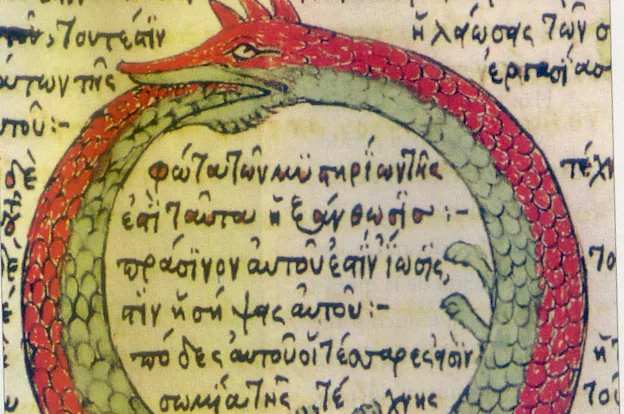
The Ouroboros
The serpent that eats its own tail — the cosmos remaking itself.
Also alchemical
Attributed Hermetic -
alchemical
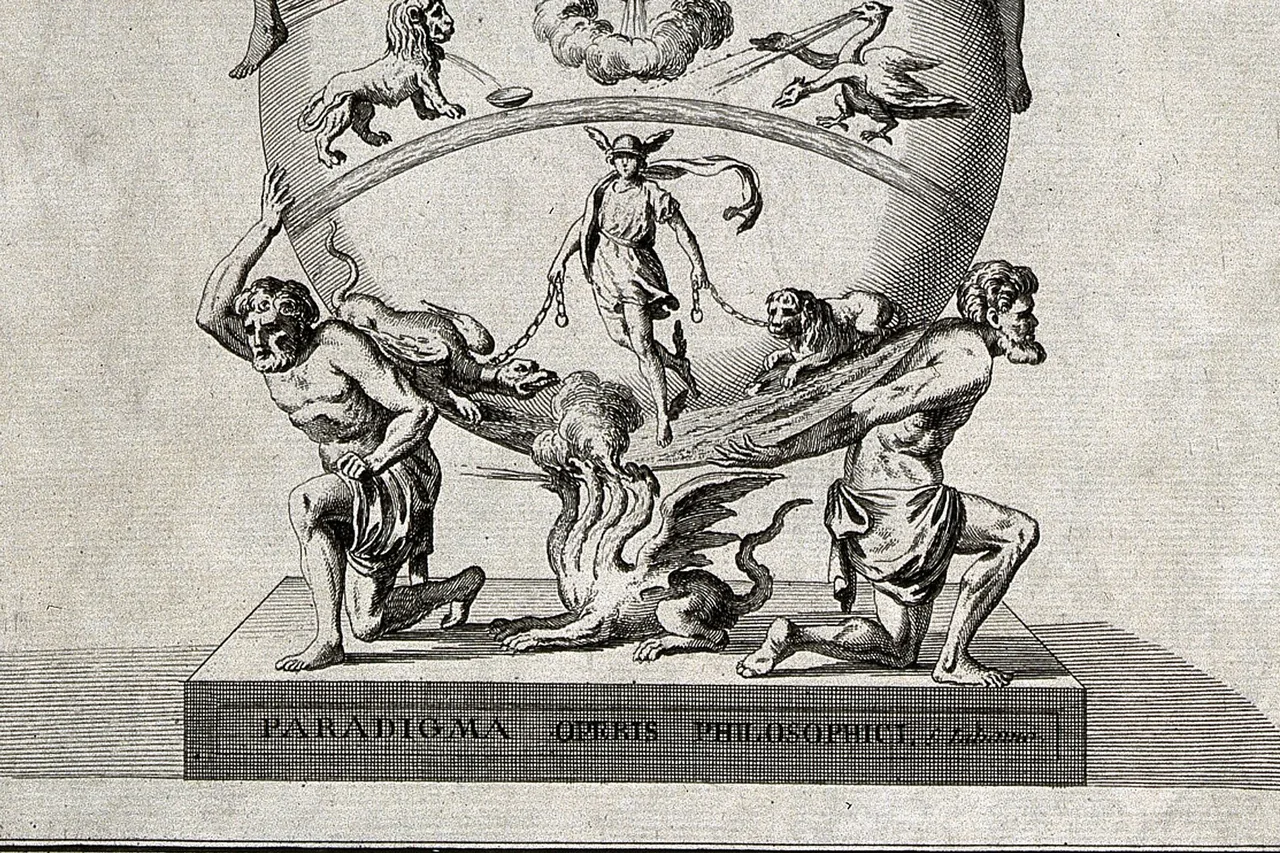
The Philosopher's Stone Glyph
The goal of every alchemist — perfection drawn as a single device.
Also alchemical
Attributed Alchemical -
alchemical
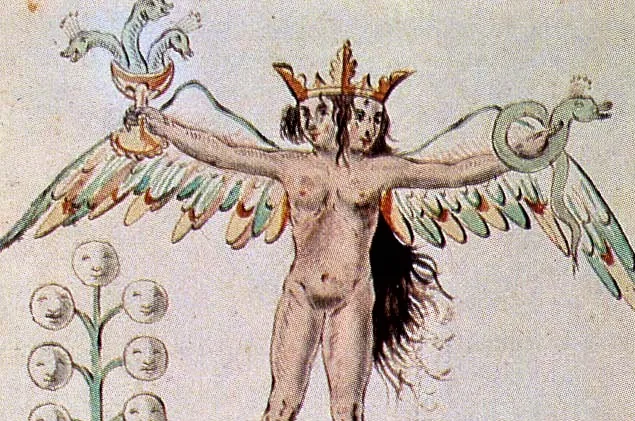
The Rebis
Two natures, one body — wholeness as the goal of the Work.
Also alchemical
Attributed Alchemical
Share this specimen
ANAMNESIS
One pattern runs the cosmos and the body. That's the whole claim.
As Above, So Below