Eliphas Levi · Wikimedia Commons · Public Domain
occult
Baphomet
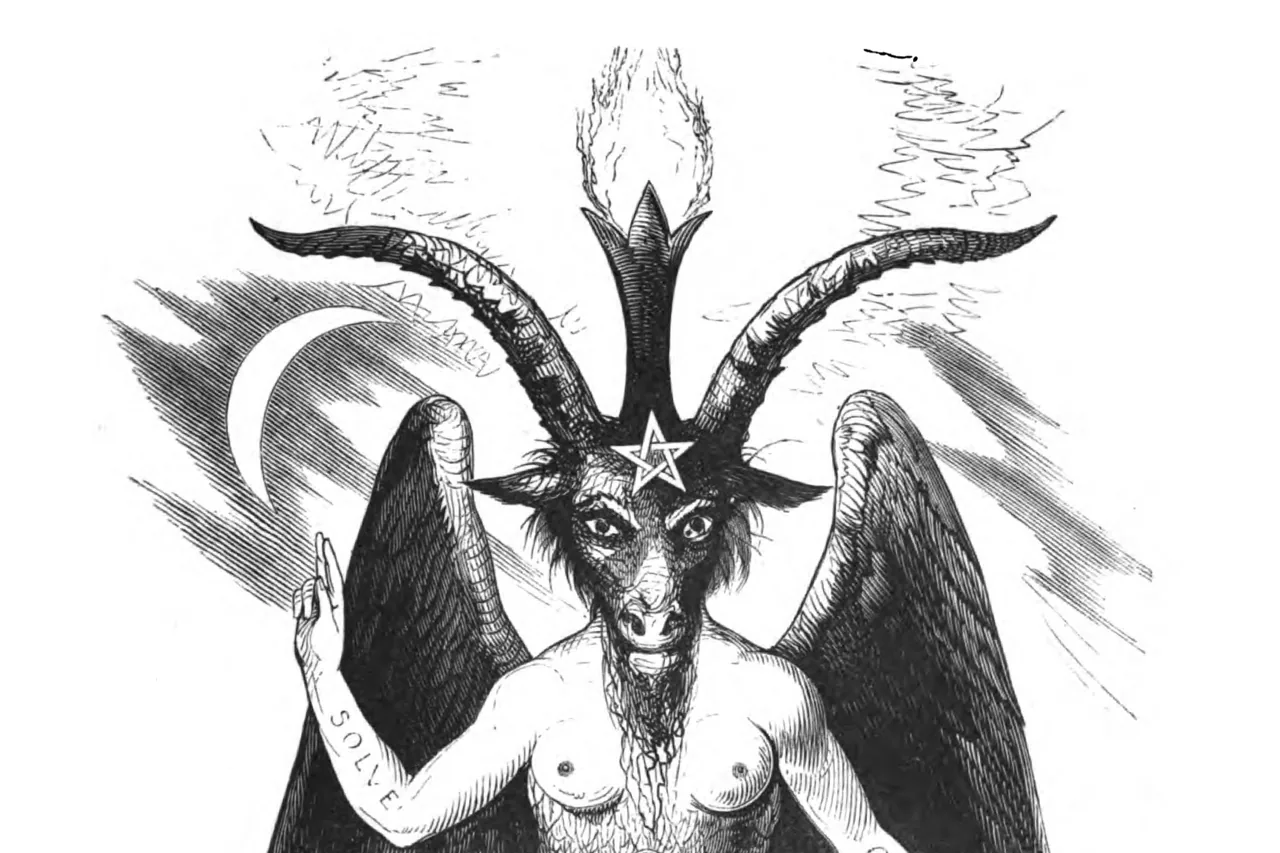
Lévi's drawing of opposites in balance — not a devil, a diagram.
AttributedDocumented origin
The winged, androgynous, goat-headed figure was drawn by Éliphas Lévi in 1856 as “the Sabbatic Goat,” a deliberate synthesis of opposites — male and female, human and animal, light and dark, the arms inscribed solve and coagula. The name “Baphomet” is older than the picture: it appears in a 1098 letter from the First Crusade and again in the 14th-century trials of the Knights Templar, long before Lévi gave it this now-famous form.
The reading
Mark Passio reads Baphomet not as a devil but as a teaching diagram — the union of opposites and the balance of natural law, every paired element answering its opposite. Lévi himself intended the figure as “the equilibrium of opposites,” solve et coagula, the Hermetic axiom as above, so below rendered as a single body. Manly P. Hall places it in the same lineage of the reconciled pair, wholeness assembled from contraries.
Where it hides today
It recurs in occult art, in the Tarot’s Devil card, and in the imagery of modern Satanic organizations — a 19th-century drawing of balance now read, by turns, as a warning and as a creed.
Decoded by
- Mark Passio
- Manly P Hall
- Eliphas Levi
Where next
-
occult
666 / The Number of the Beast
The Bible's most feared number, still totaled on the Sun's magic square.
Also occult
Attributed Saturnian -
occult
Saturn & the Black Cube
The geometry of time, lead, and limitation.
Also occult
Attributed Saturnian -
occult
The Black Sun
An inner, invisible sun — and a symbol whose history cannot be separated from its origin.
Also occult
Attributed Hermetic -
occult
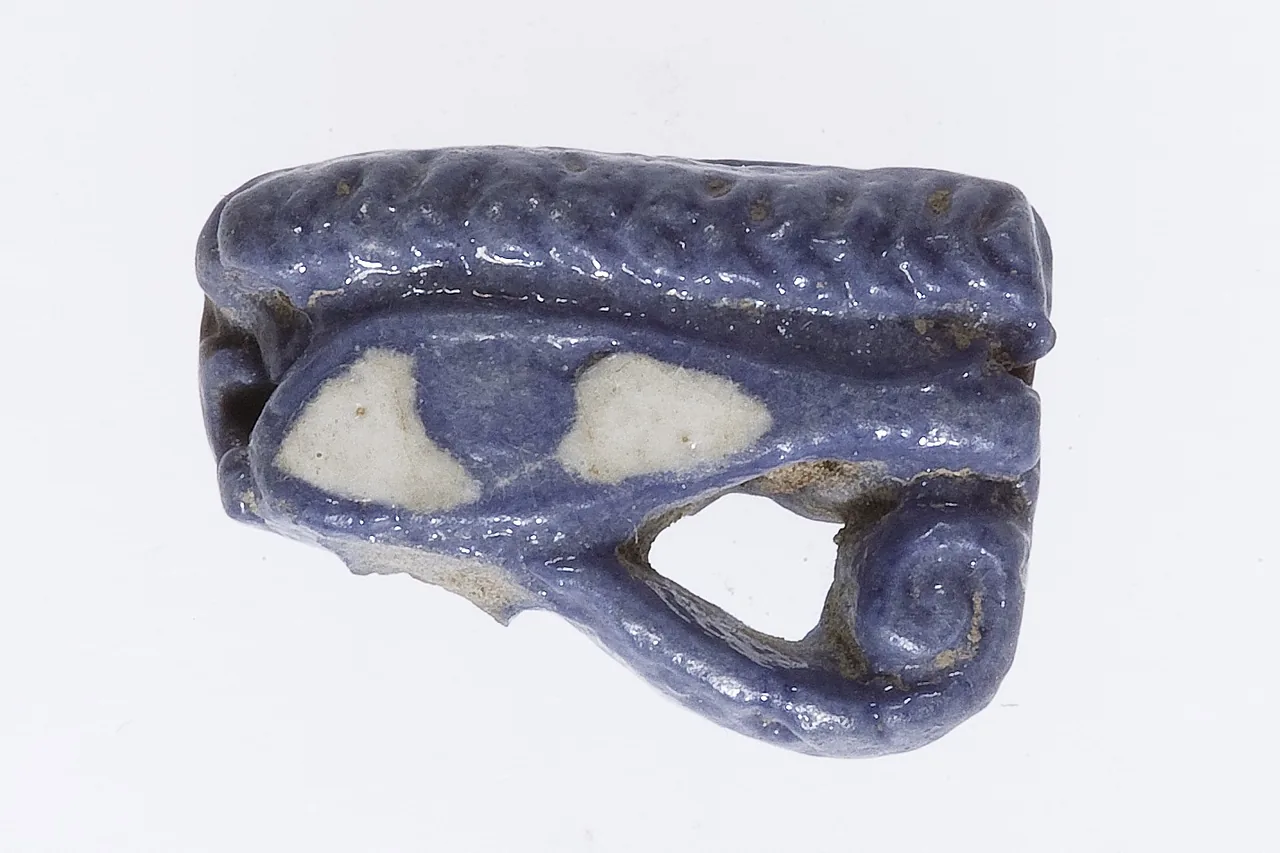
The Eye of Horus
Egypt's watching eye, ancestor of every eye in a triangle.
Also occult
Attributed Astro-Theology
Share this specimen
ANAMNESIS
Read in the tradition not as a devil, but as balance drawn whole.
Baphomet