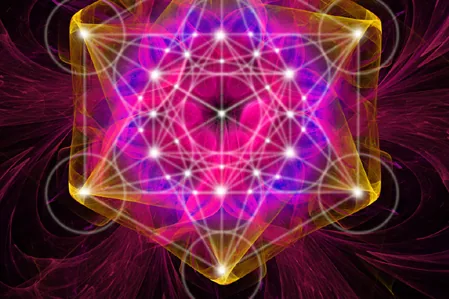
Alexa Szlavics · Wikimedia Commons · CC BY-SA 4.0
sacred-geometry
Metatron's Cube
Every shape matter can take, drawn from thirteen circles.
AttributedDocumented origin
Metatron’s Cube is constructed by connecting the centers of the thirteen circles that form the “Fruit of Life” — a pattern extracted from the Flower of Life grid. The name belongs to Metatron, the angel of the divine presence in Kabbalistic angelology, described in texts such as the Third Book of Enoch as the celestial scribe standing closest to the throne. The geometric form, uniting those thirteen centers with straight lines, was named and popularized in modern sacred-geometry literature, where it gained wide currency as a teaching diagram of cosmic structure.
The reading
In the sacred-geometry tradition, Manly P. Hall reads Metatron’s Cube as a container of the five Platonic solids — the tetrahedron, cube, octahedron, dodecahedron, and icosahedron — held to be the fundamental building blocks of the physical universe. Santos Bonacci teaches that these solids nest within the figure as a complete index of the forms matter can take. In this reading the diagram is not decorative: it is the instruction set from which a cosmos is assembled.
Where it hides today
Metatron’s Cube migrated from Renaissance Kabbalistic manuscripts into New Age art and then into the visual language of wellness, spirituality, and design culture. It surfaces on meditation tools, tattoos, and jewelry; increasingly it appears in corporate identity work drawn to its layered geometric authority — a pattern that signals hidden order.
Decoded by
- Manly P Hall
- Santos Bonacci
Where next
-
sacred-geometry
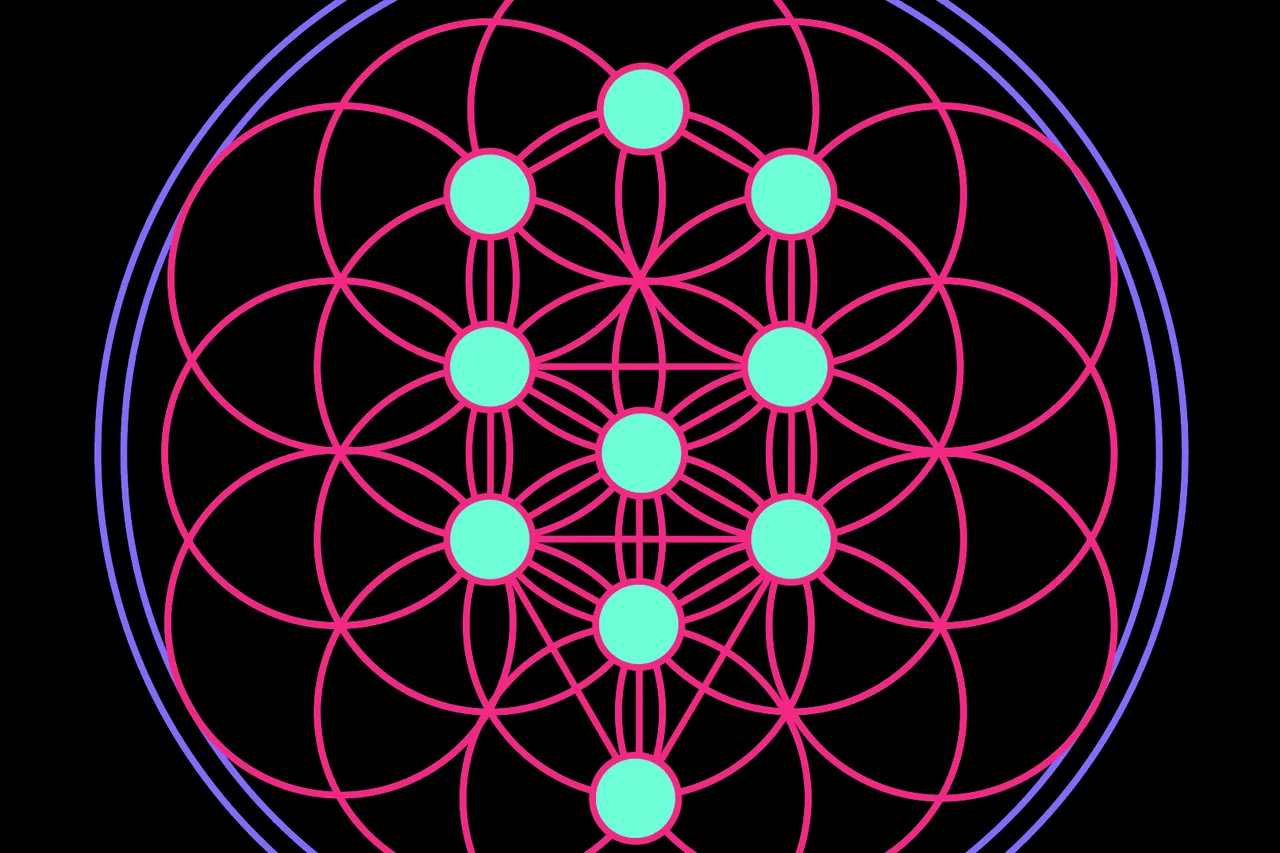
The Flower of Life
Nineteen circles encoding the blueprint of all created form.
Also sacred-geometry
Attributed Sacred Geometry -
sacred-geometry
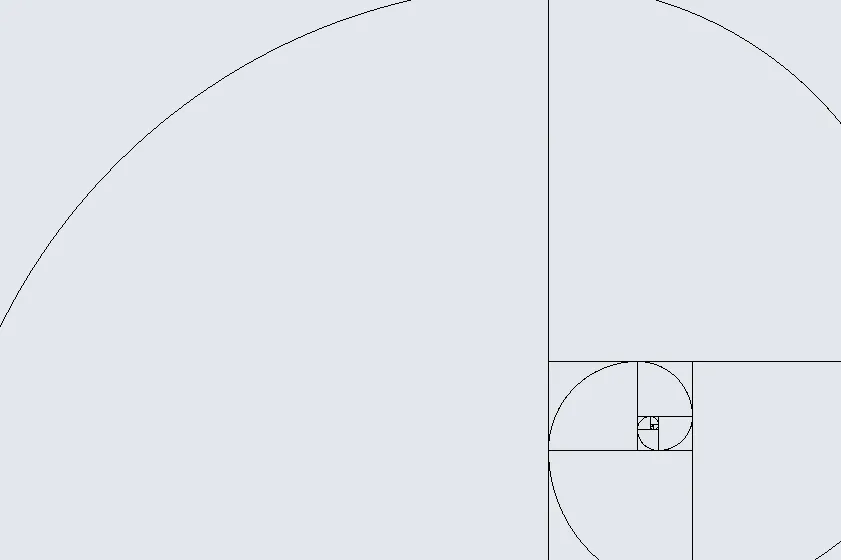
The Golden Ratio / Fibonacci Spiral
The ratio nature uses to build everything — including you.
Also sacred-geometry
Attributed Sacred Geometry -
sacred-geometry
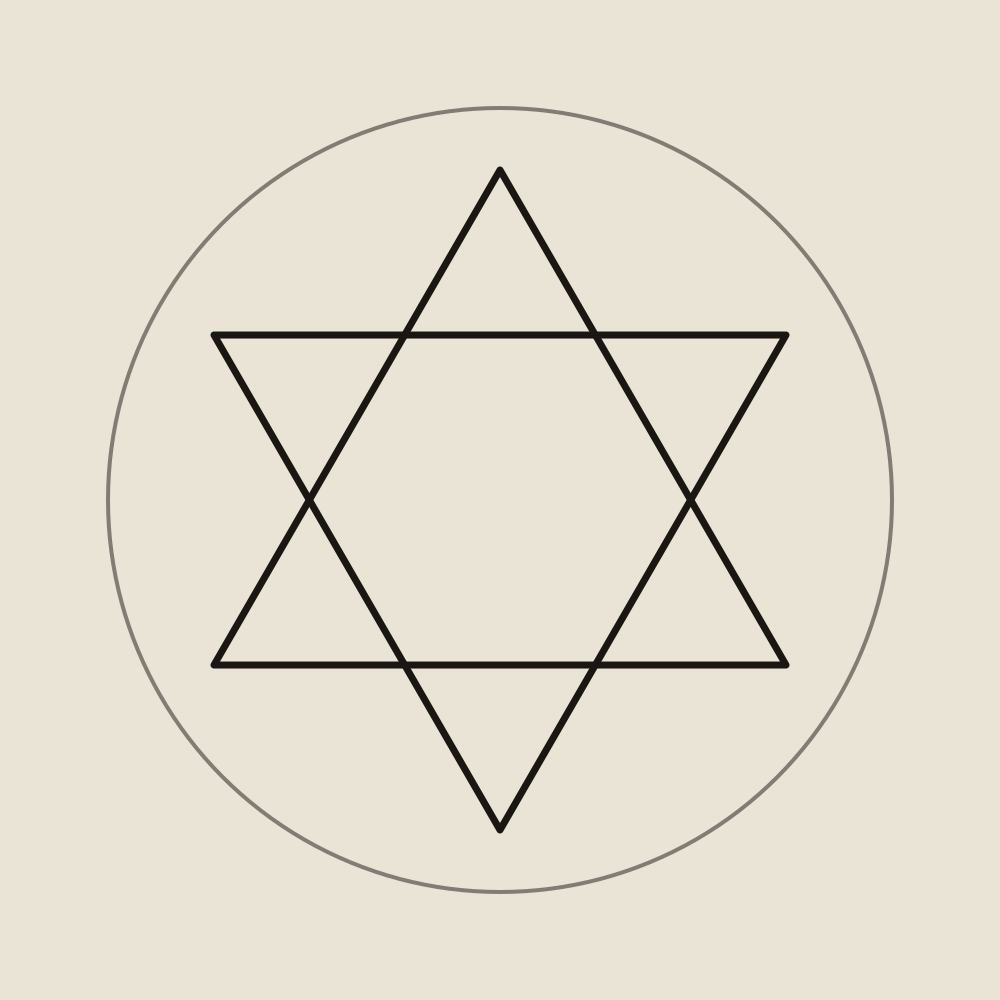
The Hexagram
Two triangles, joined — read by the tradition as Saturn's seal.
Also sacred-geometry
Attributed Saturnian -
sacred-geometry
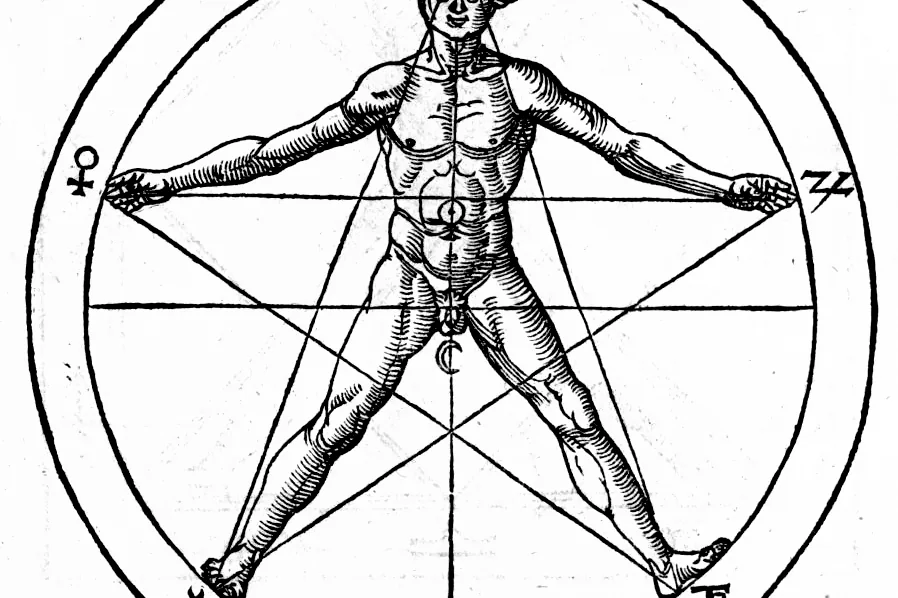
The Pentagram
The star of the body, the cosmos, and the awakened mind.
Also sacred-geometry
Attributed Hermetic
Share this specimen
ANAMNESIS
Thirteen circles, every solid in nature — one figure.
Metatron's Cube