Macaddct1984 · Wikimedia Commons · Public Domain
sacred-geometry
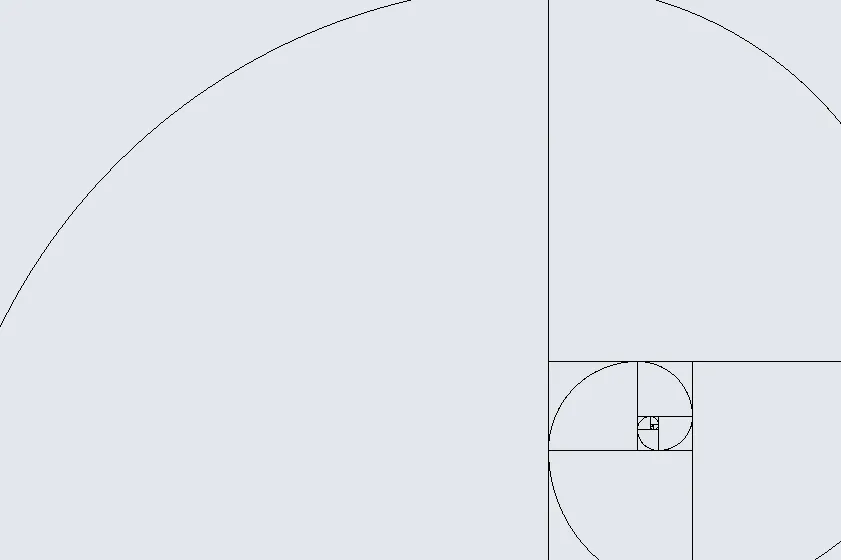
The Golden Ratio / Fibonacci Spiral
The ratio nature uses to build everything — including you.
AttributedDocumented origin
The ratio now written as φ (phi, approximately 1.618) was studied by Euclid in the Elements as the “extreme and mean ratio” — a line divided so that the smaller part relates to the larger as the larger relates to the whole. The related Fibonacci sequence — each number the sum of the two before it — was introduced to Europe by Leonardo of Pisa in Liber Abaci (1202). The logarithmic spiral these numbers approximate surfaces in nautilus shells, sunflower seed-heads, pinecones, and the branching of plants.
The reading
In the sacred-geometry tradition, Manly P. Hall reads phi as the “divine proportion” — the ratio through which the creative intelligence of the cosmos writes itself into living form. Santos Bonacci teaches it as the most direct proof of “as above, so below”: the same measure that orders the galaxy’s spiral governs the curl of a fern and the bones of the human hand. The ratio does not merely describe nature; in this reading, it is nature’s primary instruction.
Where it hides today
Architecture, graphic design, and brand identity invoke the golden ratio constantly — sometimes precisely, sometimes aspirationally. The Parthenon, Le Corbusier’s Modulor, and the layouts of countless logos all claim phi as their root proportion. Once the spiral is in your eye, you see it in every snail, every rose, every face.
Decoded by
- Manly P Hall
- Santos Bonacci
Where next
-
sacred-geometry
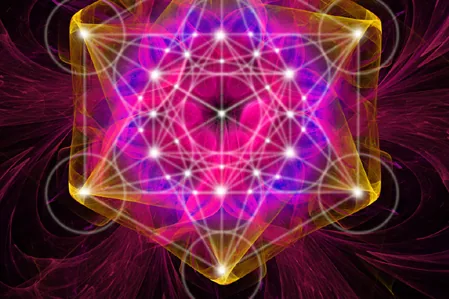
Metatron's Cube
Every shape matter can take, drawn from thirteen circles.
Also sacred-geometry
Attributed Kabbalistic -
sacred-geometry
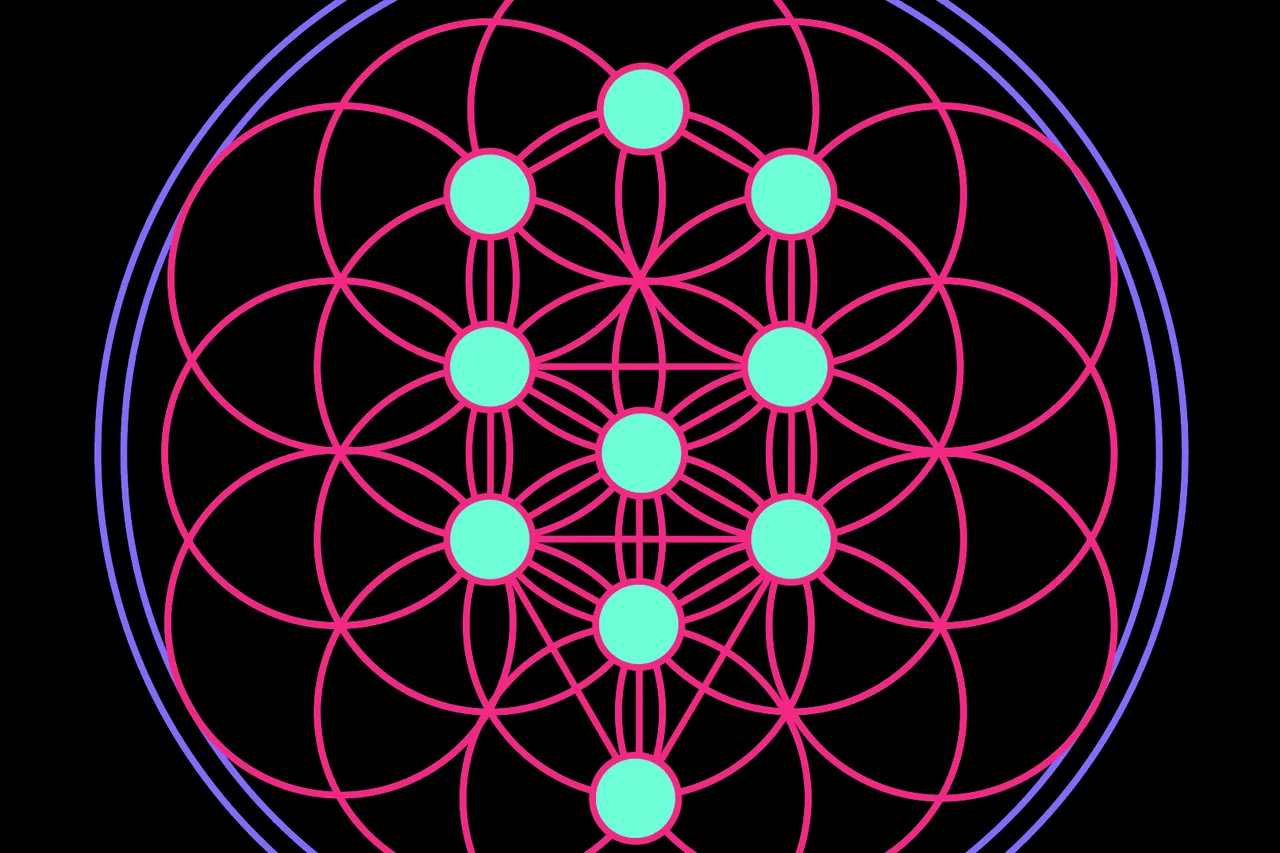
The Flower of Life
Nineteen circles encoding the blueprint of all created form.
Also sacred-geometry
Attributed Sacred Geometry -
sacred-geometry
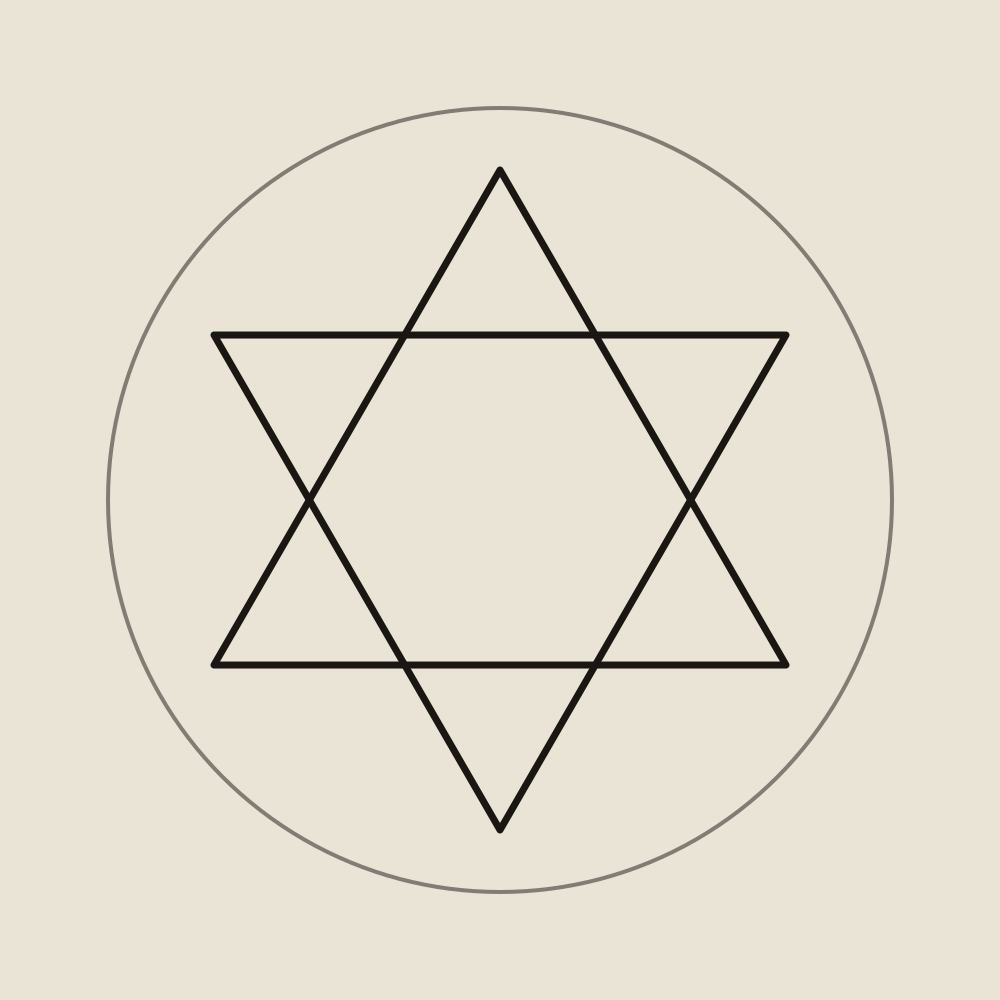
The Hexagram
Two triangles, joined — read by the tradition as Saturn's seal.
Also sacred-geometry
Attributed Saturnian -
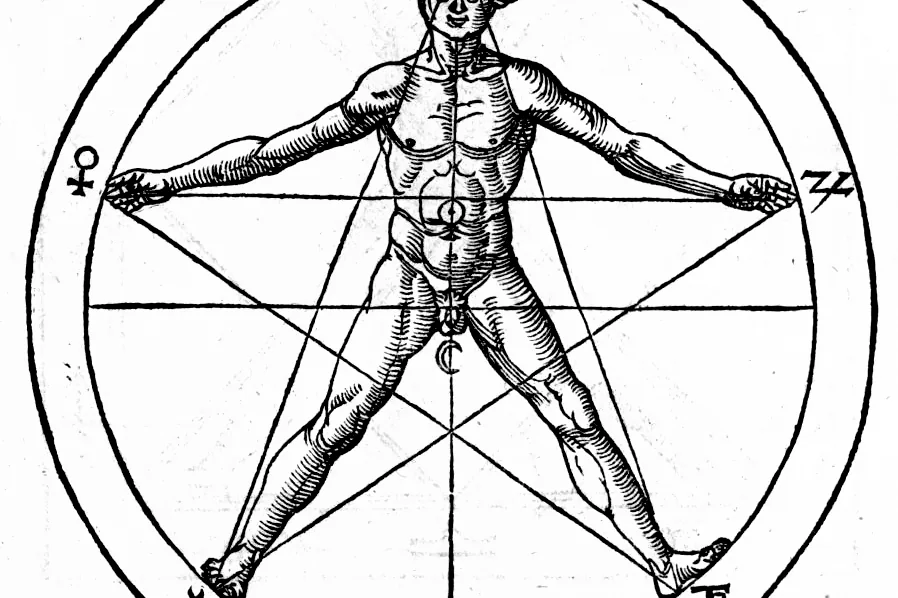
sacred-geometry
The Pentagram
The star of the body, the cosmos, and the awakened mind.
Also sacred-geometry
Attributed Hermetic
Share this specimen
ANAMNESIS
One ratio rules the shell, the seed, the human hand.
The Golden Ratio / Fibonacci Spiral