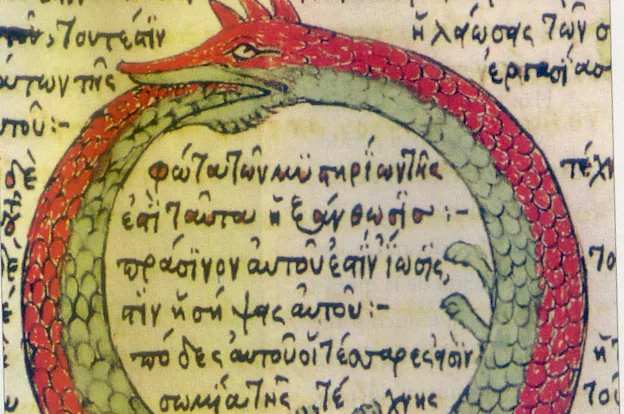
Anonymous (medieval alchemical manuscript) · Wikimedia Commons · Public Domain
alchemical
The Ouroboros
The serpent that eats its own tail — the cosmos remaking itself.
AttributedDocumented origin
The ouroboros — a serpent or dragon devouring its own tail — has its earliest known depiction in the Egyptian Enigmatic Book of the Netherworld, in the tomb of Tutankhamun, in the 14th century BCE. It became a key emblem of Gnostic and alchemical thought across the centuries that followed. The Chrysopoeia of Cleopatra, an early alchemical text, encloses the figure with the phrase ἓν τὸ πᾶν — “the all is one.”
The reading
In the alchemical tradition, Manly P. Hall reads the tail-eating serpent as the eternal cycle of death and renewal and the unity of all matter — a cosmos that consumes and remakes itself without end. Mark Passio reads it within the same Hermetic frame, as the self-sustaining whole in which destruction and creation are not two events but a single continuous motion, beginning and end folded into one line.
Where it hides today
It coils through logos and jewelry, through the sideways figure-eight of infinity, and through any image that wants to say without beginning or end — eternity compressed into a snake that feeds on itself.
Decoded by
- Manly P Hall
- Mark Passio
Where next
-
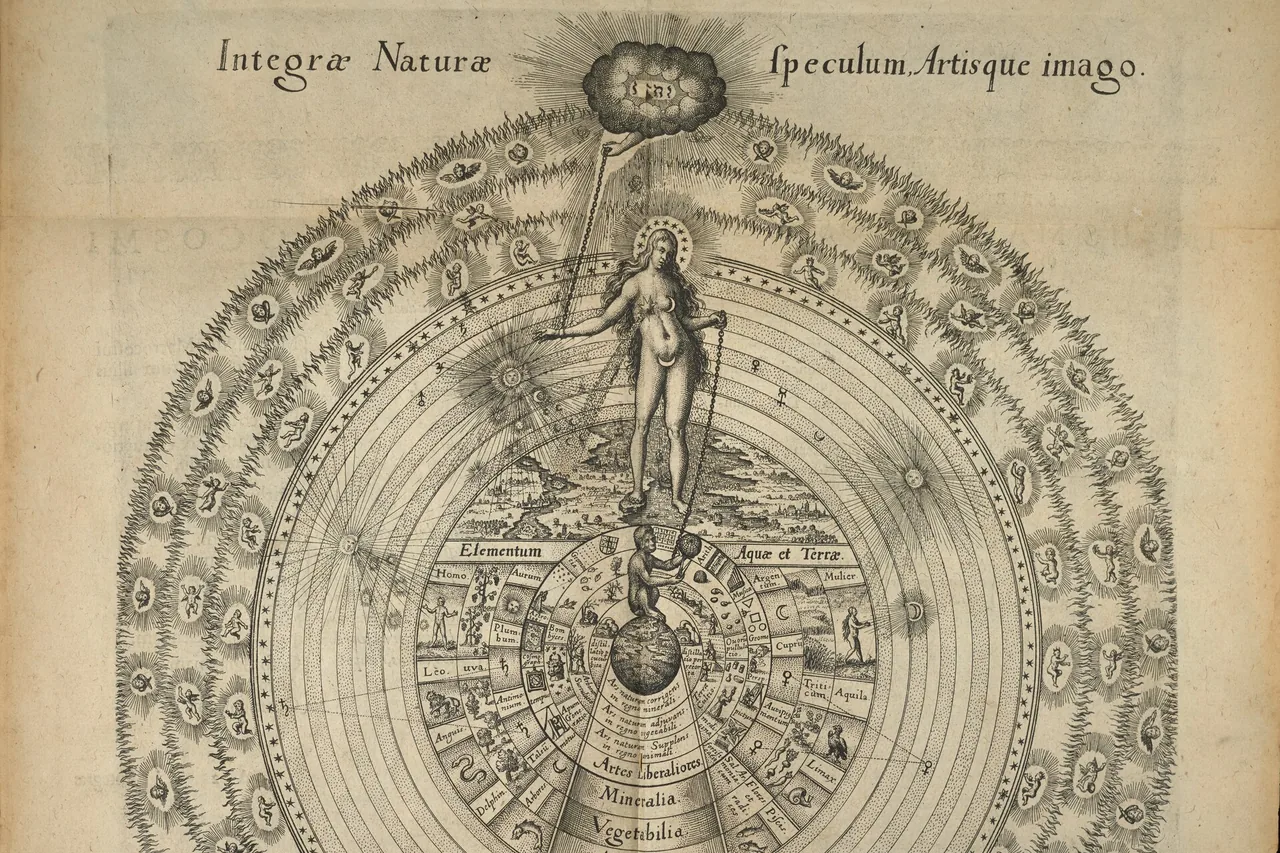
alchemical
As Above, So Below
The chain of being from God to ape, drawn whole.
Also alchemical
Attributed Hermetic -
alchemical
The Caduceus
Hermes' twin-serpent wand, read as energy rising up the spine.
Also alchemical
Attributed Hermetic -
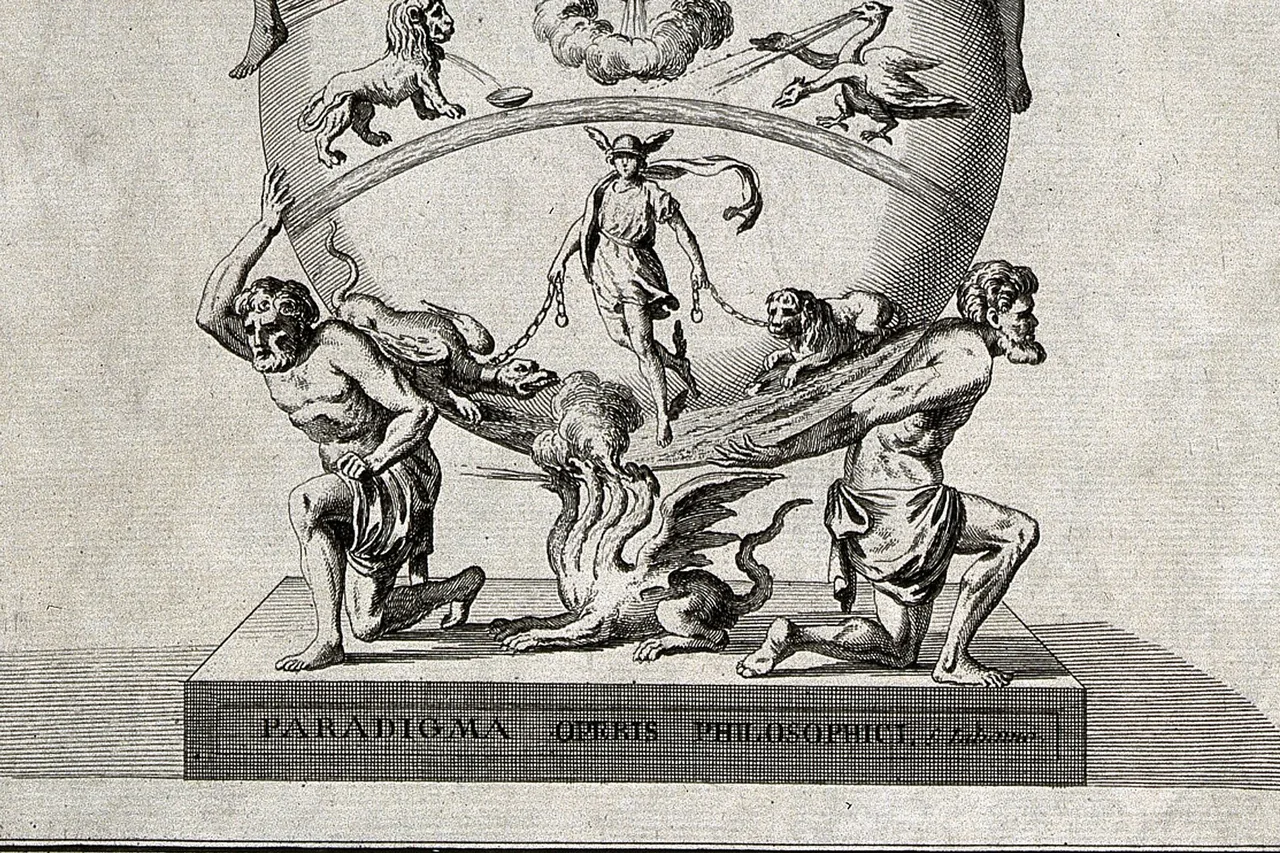
alchemical
The Philosopher's Stone Glyph
The goal of every alchemist — perfection drawn as a single device.
Also alchemical
Attributed Alchemical -
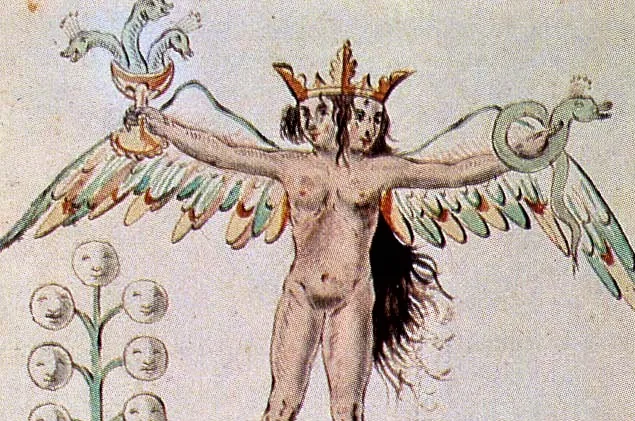
alchemical
The Rebis
Two natures, one body — wholeness as the goal of the Work.
Also alchemical
Attributed Alchemical
Share this specimen
ANAMNESIS
Eternity, drawn as a snake that feeds on itself.
The Ouroboros