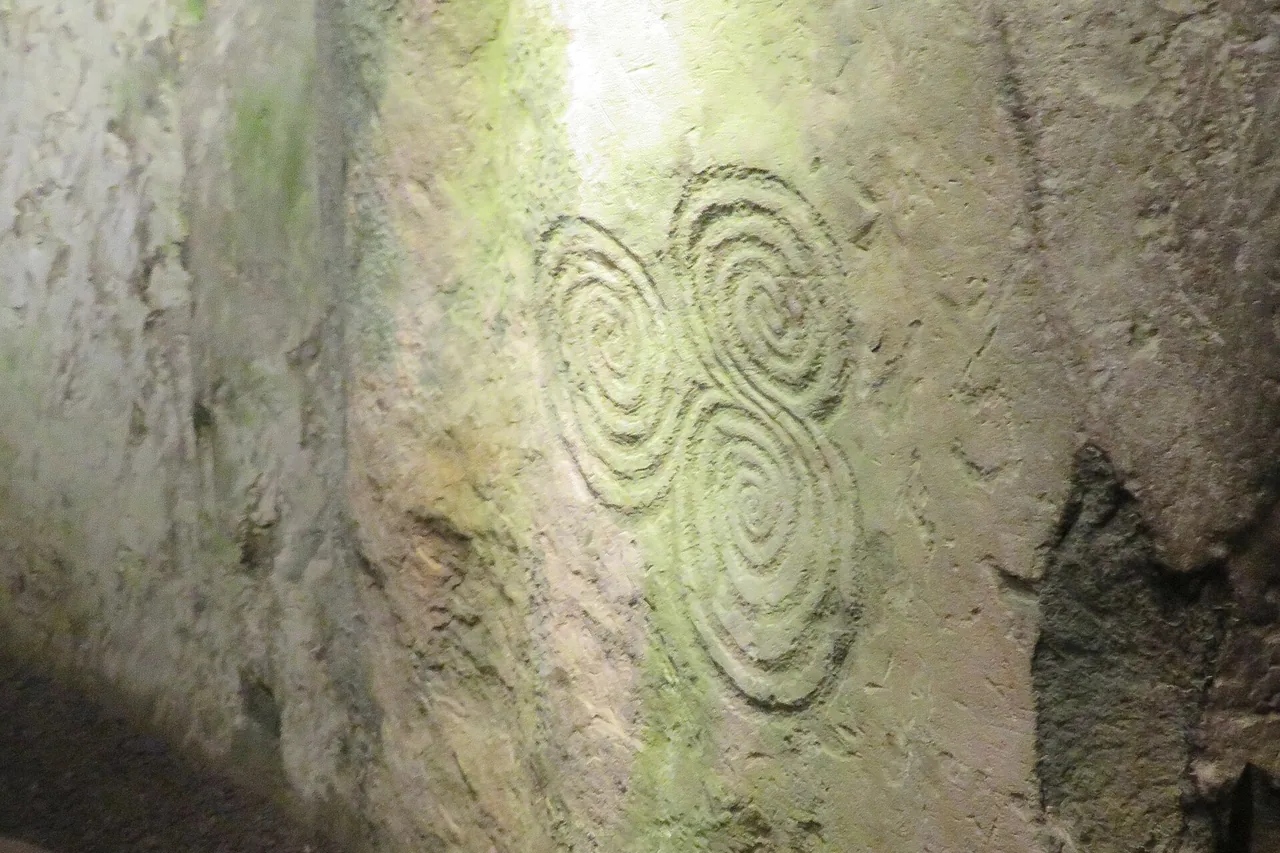
O'Dea · Wikimedia Commons · CC BY-SA 4.0
occult
The Triple Spiral / Triskele
Carved before writing existed — the oldest threefold turn in stone.
AttributedDocumented origin
The triple spiral — three interlocking or radiating spirals — is among the oldest motifs in European prehistoric art. The most celebrated example is carved in relief at the entrance stone of the Newgrange passage tomb in County Meath, Ireland, radiocarbon-dated to approximately 3200 BCE, making it older than Stonehenge and the Great Pyramid. The motif recurred through the later La Tène period of Celtic art, appearing on metalwork, illuminated manuscripts, and stone carvings across the British Isles and northern Europe.
The reading
Manly P. Hall reads the triple spiral as a graphic of the threefold cycle underlying existence — life, death, and rebirth; past, present, and future; the three realms of land, sea, and sky — expressed as the spiraling motion of a universe that turns on itself. Robert Sepehr situates it within a broader Indo-European and Atlantic tradition, reading the three arms as the three phases of the solar year and the sun’s annual turning: the solstices and the zenith. In Sepehr’s reading the Newgrange chamber, which admits the rising sun only at the winter solstice, confirms that the spirals carved at its threshold were drawn in dialogue with the sun from the first day of their making.
Where it hides today
The triskele appears on the flag of the Isle of Man and the emblem of Sicily, in Celtic jewelry, tattoo culture, and neopagan iconography worldwide. The spiral has made the full journey from Neolithic tomb to fast-fashion pendant without losing the threefold structure that gives it its force.
Decoded by
- Manly P Hall
- Robert Sepehr
Where next
-
occult
666 / The Number of the Beast
The Bible's most feared number, still totaled on the Sun's magic square.
Also occult
Attributed Saturnian -
occult
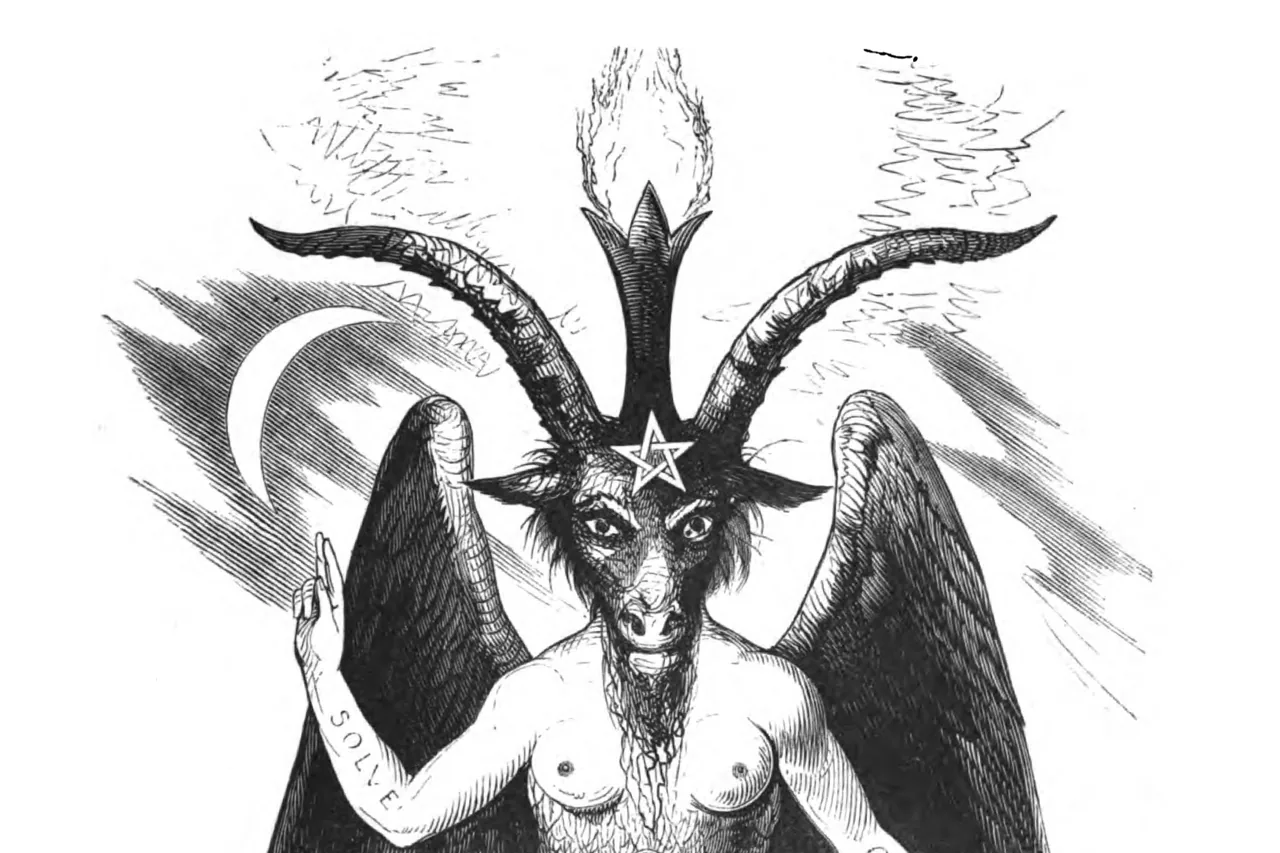
Baphomet
Lévi's drawing of opposites in balance — not a devil, a diagram.
Also occult
Attributed Hermetic -
occult
Saturn & the Black Cube
The geometry of time, lead, and limitation.
Also occult
Attributed Saturnian -
occult
The Black Sun
An inner, invisible sun — and a symbol whose history cannot be separated from its origin.
Also occult
Attributed Hermetic
Share this specimen
ANAMNESIS
Three spirals carved at Newgrange in 3200 BCE — still spinning today.
The Triple Spiral / Triskele