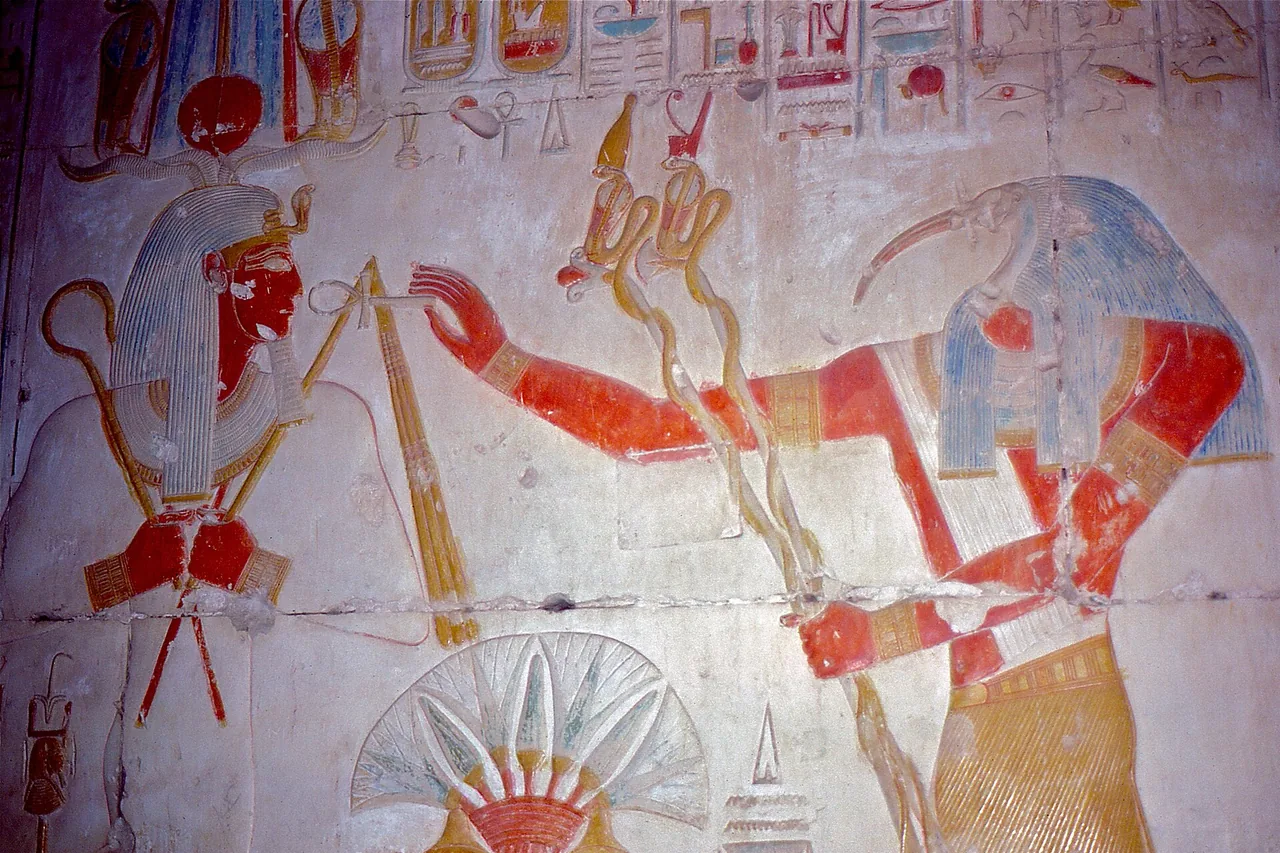
Bernard DUPONT from FRANCE · Wikimedia Commons · CC BY-SA 2.0
solar-astro
The Ankh
Egypt's word for life: a loop of sun rising over a cross.
AttributedDocumented origin
The ankh is the Egyptian hieroglyph for “life” (nḫ), attested continuously from the First Dynasty. Leading origin theories include Alan Gardiner’s sandal-strap reading and E.A. Wallis Budge’s identification of the loop as a fertility girdle — the “knot of Isis.” Carried by gods and pharaohs in tomb paintings and temple reliefs, it marked the gift of divine life. Coptic Christians later adopted the form as the crux ansata, folding Egypt’s oldest life-glyph into the new faith without changing its shape.
The reading
In the astrotheology tradition, Jordan Maxwell and D.M. Murdock read the ankh as a solar and fertility emblem fusing male and female principles — Osiris and Isis united. The teardrop loop above the crossbar is the sun cresting the horizon: Ra ascending over the east-west axis of the earth. Manly P. Hall places it within Egypt’s initiatic teaching that life itself flows from the solar fire, the loop as the inexhaustible source from which the cross of the four directions is generated.
Where it hides today
The Coptic cross carries it forward in North Africa’s Christian communities. It reappears in Kemetic neopagan revival, in goth subculture as a mortality charm, and in mass-market jewelry where buyers sense a power in the shape they cannot quite name.
Decoded by
- Jordan Maxwell
- Manly P Hall
- D M Murdock
Where next
-
solar-astro
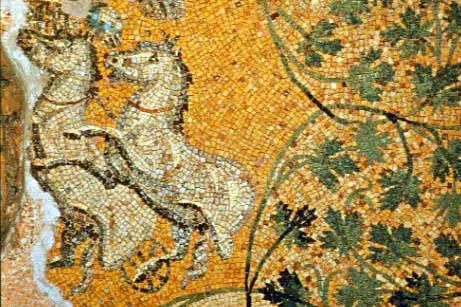
Sol Invictus / The Halo-Nimbus
The halo behind every saint is a disk of the sun.
Also solar-astro
Attributed Astro-Theology -
solar-astro
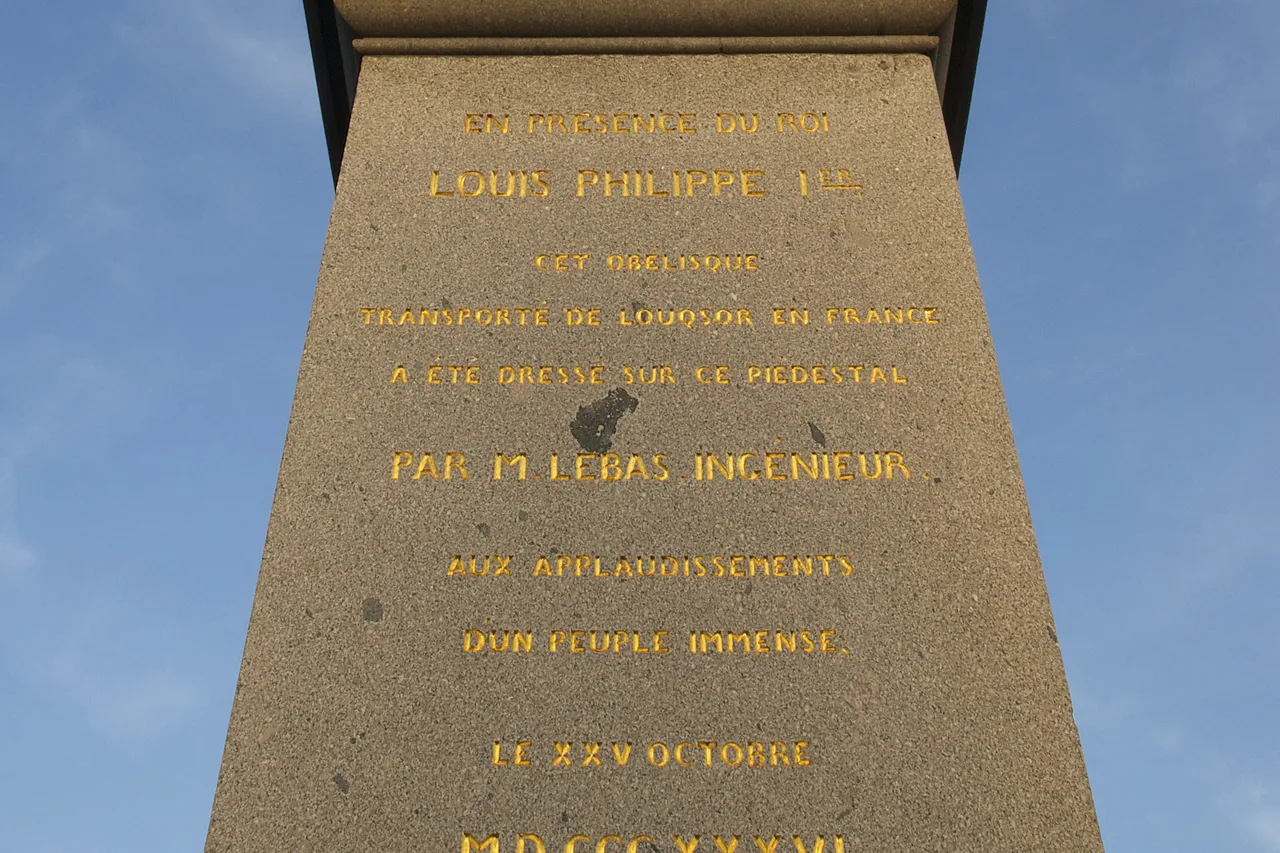
The Obelisk
A stone ray of sunlight, planted at the center of empire.
Also solar-astro
Attributed Astro-Theology -
solar-astro
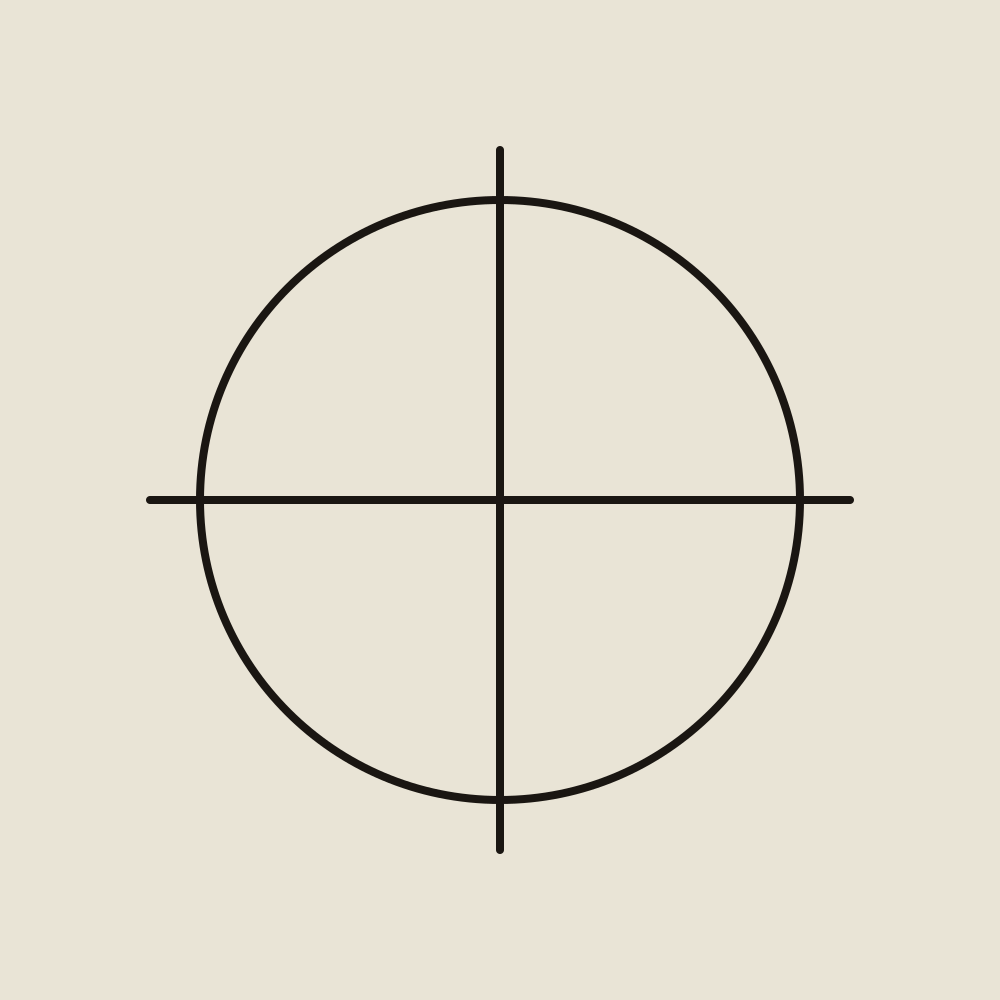
The Solar Cross
The first cross was the sun's path through the year.
Also solar-astro
Attributed Astro-Theology -
solar-astro
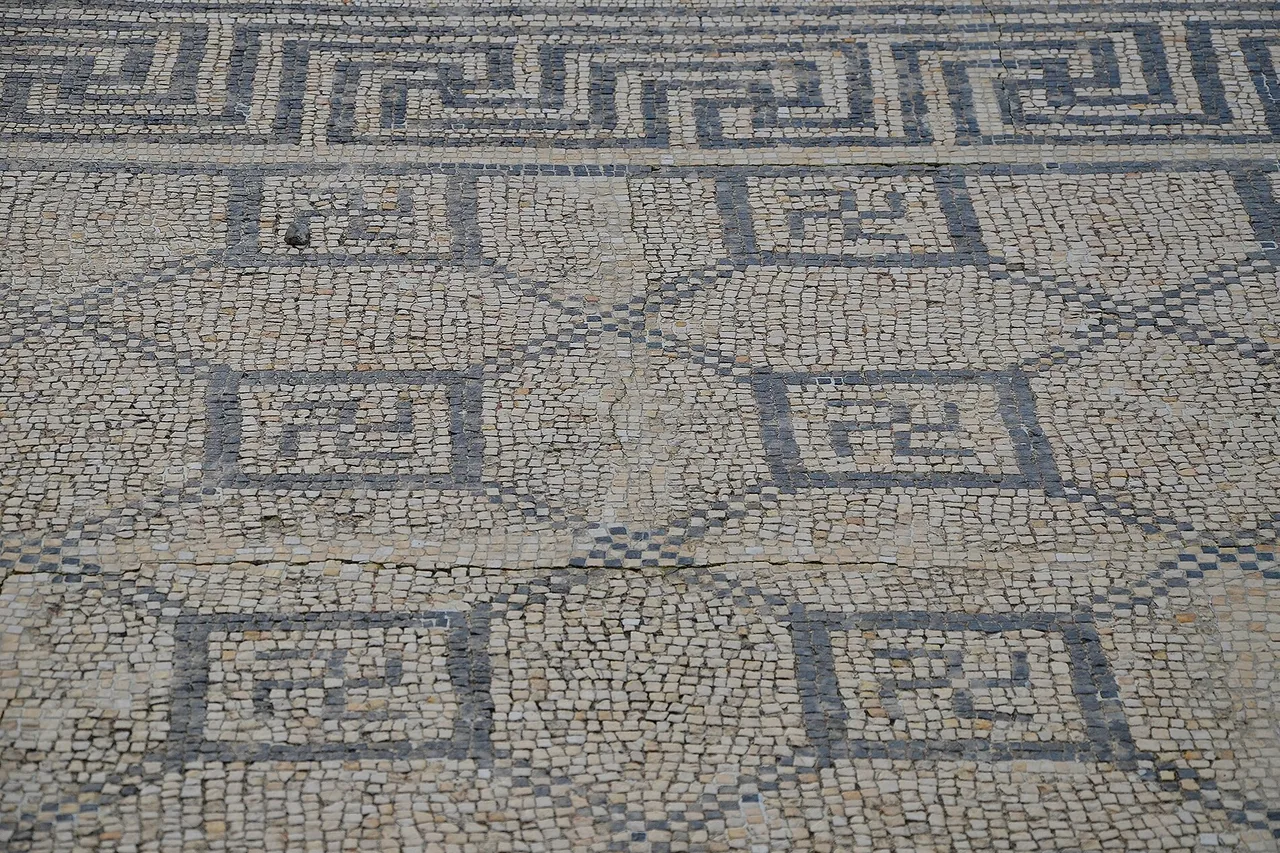
The Swastika
A 15,000-year solar wheel of good fortune, older than every flag.
Also solar-astro
Attributed Astro-Theology
Share this specimen
ANAMNESIS
Egypt's hieroglyph for life was always a picture of the sun.
The Ankh