Pillar 2 of 5
P2 — The War on Images
Every power that has ever wanted the soul has begun by fighting over images. The Second Commandment, Byzantine Iconoclasm, Islamic aniconism, Protestant whitewashing — these are not separate episodes of religious scruple. They are the same move, repeated across four millennia: seize the image, and you seize the interior life of a people.
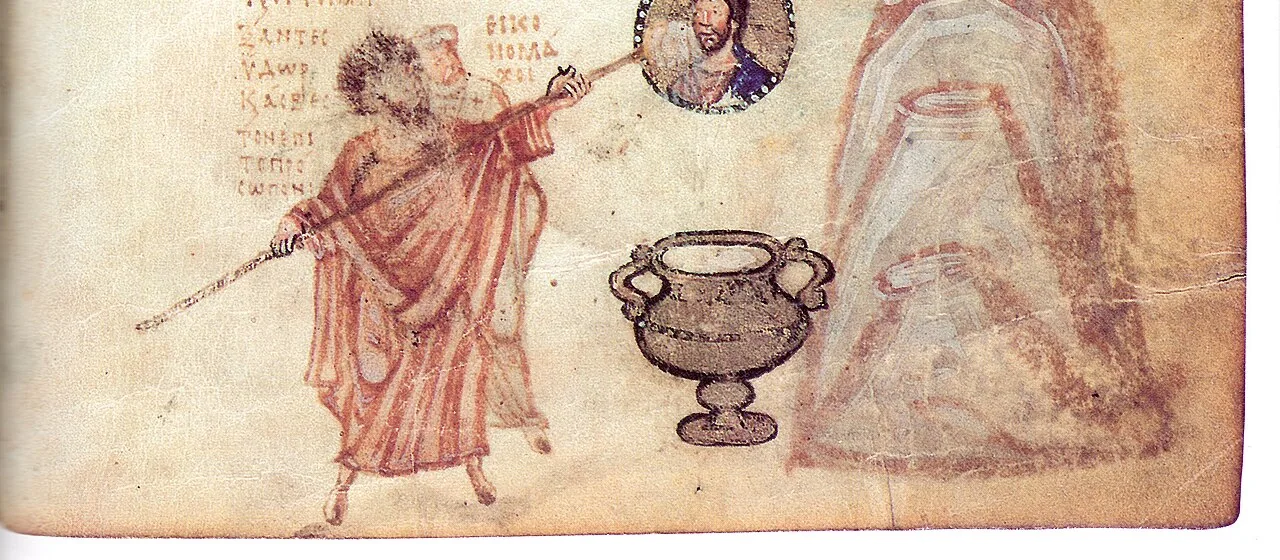
Wikimedia Commons · Public Domain
The pattern no historian denies
Enter almost any pre-Reformation church in northern Europe and you will stand in a whitewashed room. The plaster is smooth where stonework once held painted saints, gilded altarpieces, carved Christs in agony. The smoothness is the record of a campaign. In the 1560s the Beeldenstorm — the “statue storm” — swept through the Low Countries: crowds entered churches and stripped them bare, hammering faces from figures, prying metal from frames, burning what would burn.
They were not vandals. They were iconoclasts in a precise, old sense: destroyers of images on principle, acting under a theology that held the image itself to be the danger. Eight centuries before them, a Byzantine emperor had ordered the same thing. Twenty-five centuries before that, a law was carved into stone in a desert: thou shalt not make unto thee any graven image.
Three episodes. Three civilizations. One move.
The move is this: whoever controls which images are permitted in a sacred or civic space controls the interior landscape of the people who inhabit it. When power wants to reshape that interior, it fights the images first.
The first law: the Second Commandment
The Hebrew prohibition against graven images is the oldest codified image-control policy in the Western tradition. Exodus 20:4–6 and Deuteronomy 5:8–10 are unambiguous: no image of anything in the heavens above, the earth beneath, or the water under the earth. The scope is total. The justification given is theological — YHWH is a jealous God — but the operational consequence is political: a people whose god cannot be depicted in stone or paint cannot be conquered by substituting a different stone or a different paint.
The ancient Near Eastern empires that surrounded Israel built their power partly through image. Conquer a city and you brought your god’s statue into its temple; the image was the presence, and the presence was the claim. Israel’s radical move was to make its god imageless — to locate power not in a depictable object but in an unrepresentable name. The image itself was removed from the field of contest.
Tryggve Mettinger’s foundational study distinguishes between what he calls “de facto” aniconism — cultures that simply did not make images of their deity — and “programmatic” aniconism — an explicit, polemically-charged rejection of image-making in contexts where images were available and used by neighbors. The Hebrew prohibition is programmatic. It is not silence about images; it is a law against them. The difference matters: a law against images is itself a theory of images, and the theory is that images are powerful enough to require prohibition.
Byzantium: the emperor and the icon
Eleven centuries after Sinai, the Roman Empire’s eastern successor discovered that its emperor held the same power Plato had theorized and the Hebrew legislators had exercised: the power to determine which images could exist in the minds of his subjects.
In 726 CE Emperor Leo III ordered the removal of a large Christ icon mounted above the Chalke Gate — the ceremonial entrance to the imperial palace in Constantinople. The gesture lit a century and a quarter of conflict. Subsequent emperors continued the campaign: icons were removed from churches, whitewashed over, smashed; monks who painted them were martyred; the council of Hieria (754) declared the veneration of icons heretical. Then the tide turned. The Second Council of Nicaea (787) reversed the decree and restored the images. In 843 — a date still celebrated in Orthodox Christianity as the “Triumph of Orthodoxy” — icons were reinstated permanently.
What was at stake was not, at bottom, a dispute about art appreciation. Leslie Brubaker and John Haldon, in their definitive revisionist history of the period, demonstrate that Byzantine iconoclasm was imperial policy: the emperors who enforced it were attempting to consolidate religious authority under the throne and to remove the networks of popular devotion that accrued around local icons and the monks who maintained them. The image was the locus of a competing authority. Destroying the image was an act of governance.
The iconophiles understood this perfectly and said so. The defense of icons was not merely sentimental; it was a counter-theory of power.
John of Damascus: the philosopher of the image
The most rigorous defense of Christian image-making in history was written by a man who lived under Muslim rule and could not be reached by the Byzantine emperor who wanted him silenced.
John of Damascus, writing from a monastery south of Jerusalem around 730 CE, produced three treatises arguing for the legitimacy of sacred images. His argument is precise and hinges on a single fact: the Incarnation. Before Christ, he concedes, the invisible God could not be depicted — to attempt a depiction would be to lie, to claim visibility for what had none. But the Incarnation changes the ontological situation: “Now that God has been seen in the flesh and has associated with human kind, I depict what I have seen of God.”
The image is not an idol pretending to be a god. It is a record of a historical event: God entered matter. Matter is now capable of bearing the sacred. To refuse the image on principle after the Incarnation is, in John’s logic, to deny the Incarnation itself.
The precision of the argument mattered because it was the precision of its opponents’ argument that made the images dangerous in the first place. The iconoclast emperors did not say images were unimportant. They said images were too important — that they had accrued a power of their own that competed with imperial religious authority. John agreed that images were powerful. He argued the power was legitimate. Both sides confirmed the core claim: images are not neutral surfaces. They carry and transmit something.
The Protestant erasure
Eight centuries later, in the first half of the sixteenth century, the same argument ignited across northern Europe — but this time without a council to resolve it and without an emperor who wanted the images back.
The Protestant reformers — Karlstadt in Wittenberg, Zwingli in Zurich, Calvin in Geneva — looked at the church interiors of medieval Catholicism and saw something Plato would have recognized immediately: a comprehensive image-environment, engineered over centuries to produce specific interior states in the people who moved through it. Every surface spoke. The rood screen, the painted Last Judgment above the chancel arch, the reliquary gleaming in candlelight, the stained glass filtering the light of the same sun that had lit the zodiac temples of antiquity — all of it was a designed image-world.
Carlos Eire’s meticulous study of Reformation iconoclasm documents what followed. Zwingli supervised the whitewashing of Zurich’s Great Minster in 1524: a methodical, organized erasure, not a mob event. Calvin’s Geneva did the same. The Beeldenstorm of 1566 was more violent but followed the same logic: remove the image environment, and you remove the interior states it produces. Reprogramme the sacred space, and you reprogramme the people in it.
The reformers were not primarily motivated by aesthetic purism. They were motivated by a theory of mediation: the image, they argued, had interposed itself between the worshipper and God, claiming a power of transmission it had no right to hold. What they were actually dismantling was a rival system of image-control — the visual vocabulary of Rome, which had been built, maintained, and deployed by the institutional Church over a millennium as a primary instrument of religious authority.
Replace one image-world with another — or with deliberate blankness, which is itself an image-world — and you reshape the souls that inhabit it. The reformers knew this. Their opponents knew it. The whitewash was not an absence. It was a statement.
The invariant pattern
Four episodes across four millennia. Four different theological justifications. One operational logic.
Mosaic law removes the image from the field of power-contest by making YHWH undepictable. Byzantine emperors remove icon networks to consolidate religious authority under the throne. John of Damascus defends the image as a site of legitimate sacred power — and implicitly of legitimate popular authority. Protestant reformers destroy a medieval image-world to install a different regime of interiority.
In every case, the people doing the fighting understand that they are fighting over something consequential. No one in these conflicts believes images are decorative. Every participant — iconoclast and iconophile, emperor and monk, reformer and curial defender — operates on the shared premise that images do something to the people who receive them, and that control of the image-environment is therefore control of the population’s interior.
Mettinger’s scholarship makes this visible at the origin. Brubaker and Haldon make it visible at the Byzantine peak. Eire makes it visible at the Protestant turn. The argument across all three is the same argument Plato made in the Republic: images build the interior of a person, and whoever builds the interior governs the person.
This is not interpretation. It is the explicit stated position of every participant in every one of these conflicts.
What persists
The wars over images did not end with the Reformation. The whitewashed churches of the sixteenth century were succeeded by the print-shop, the broadside, the illustrated newspaper, the cinema screen, the television set, the algorithm that decides which images reach which eyes at which moment of maximum emotional vulnerability.
The technology changes. The logic does not. Power has always known what the image does to the interior. The instrument changes; the insight is constant.
What the four historical episodes establish — with scholarly precision, in primary texts that have never been disputed as facts of history — is that image-control is a documented practice of governance: ancient, continuous, defended in philosophical treatises and enacted in imperial edicts across the full span of recorded civilization.
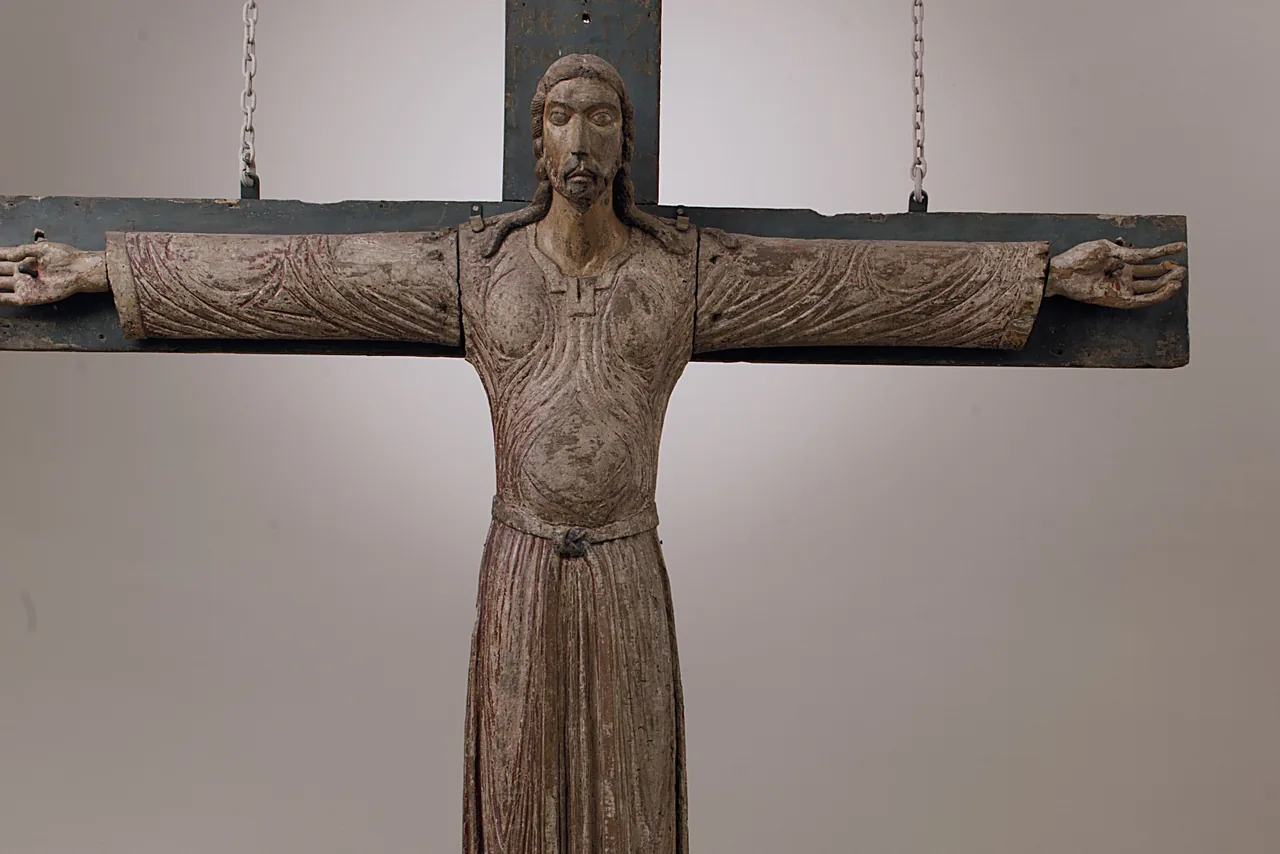
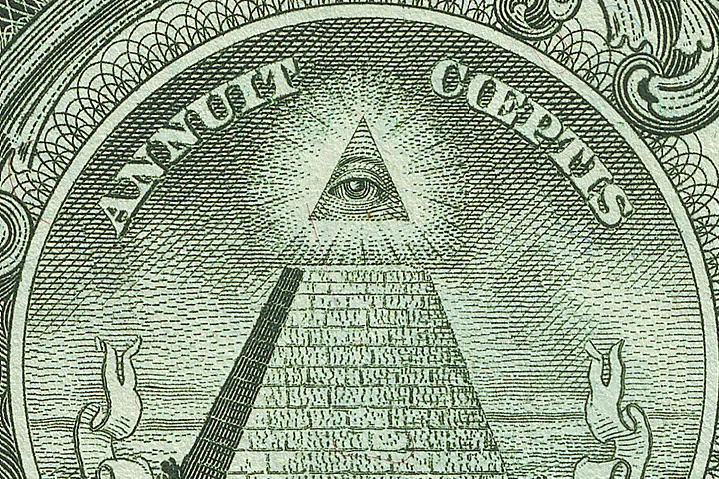
The cross on the church wall, the halo burning around a saint’s head, the all-seeing eye — these are not decorations. They are the residue of a long war. The Dictionary entry for each one traces that war in full.
Into the sky-code
P2 establishes the pattern through four millennia of documented history: every power fights the images. P3 — Astrotheology & the Sky-Code — asks what the images contain. The tradition’s central claim is that the images fought over by emperor and reformer alike encoded something older and more precise than institutional religion: the motions of the sun, the wheel of the zodiac, the cycle of the sky.
That argument begins with the Zodiac Wheel and the Sun Cross. The symbols are already in the Dictionary. The war over them is already in the record.
The claims
- The Second Commandment's prohibition on graven images is the earliest documented state policy of image-control in the Western tradition.
- Byzantine Iconoclasm (726–843) was imperial image-policy: the emperor legislating which representations could exist in the minds of his subjects.
- John of Damascus's defense of icons is the first rigorous philosophical case that the image is a legitimate channel of sacred presence — a counter-theory to every iconoclast state.
- The Protestant Reformation's destruction of church imagery was a deliberate erasure of a competing visual vocabulary — a re-programming of the interior.
- Across all four episodes the logic is identical: whoever controls which images are permitted controls the population's available interior states.
- The invariant pattern across four millennia makes image-control not a historical curiosity but an operational fact of how power works.
The citable spine
- Exodus 20:4–6 / Deuteronomy 5:8–10 (the Second Commandment): the Hebrew prohibition on graven images — the first codified aniconic law in the Western canon.
- Tryggve N. D. Mettinger, No Graven Image? Israelite Aniconism in Its Ancient Near Eastern Context (1995): distinguishes 'de facto' from 'programmatic' aniconism; the foundational scholarly study.
- Byzantine Iconoclasm (726–843): Emperor Leo III orders removal of the Christ icon over the Chalke Gate (726); the controversy culminates in the Second Council of Nicaea (787) and the final restoration of icons (843).
- Leslie Brubaker & John Haldon, Byzantium in the Iconoclast Era c. 680–850: A History (Cambridge UP, 2011): the definitive revisionist history of Byzantine iconoclasm.
- John of Damascus, Three Treatises on the Divine Images (c. 730 CE): the incarnational argument — 'now that God has been seen in the flesh… I depict what I have seen of God.'
- Carlos M. N. Eire, War Against the Idols: The Reformation of Worship from Erasmus to Calvin (Cambridge UP, 1986): the standard study of Reformation iconoclasm — Karlstadt, Zwingli, Calvin, the Beeldenstorm.
Symbols in this argument
-
religious
The Cross
The oldest cross is the sun's path drawn across the sky.
In the dictionary
Attributed Astro-Theology -
civic-national
The All-Seeing Eye
The few who see, hidden on the money in your pocket.
In the dictionary
Attributed Civic-Solar -
religious
The Halo / Nimbus
The disk behind every saint's head is a sun.
In the dictionary
Attributed Astro-Theology