Pillar 3 of 5
P3 — Astrotheology & the Sky-Code
The tradition's central claim is precise: the religious imagery fought over by emperors and reformers encodes the motions of the sun, the wheel of the zodiac, and the cycle of the precessing heavens. This is not metaphor — the tradition reads scripture as cosmology and the sanctuary as a star-map. From Dupuis and Volney in the 1790s through Massey, Kuhn, Maxwell, and Bonacci, a continuous lineage holds that the sky-code is the oldest layer beneath every sacred image.
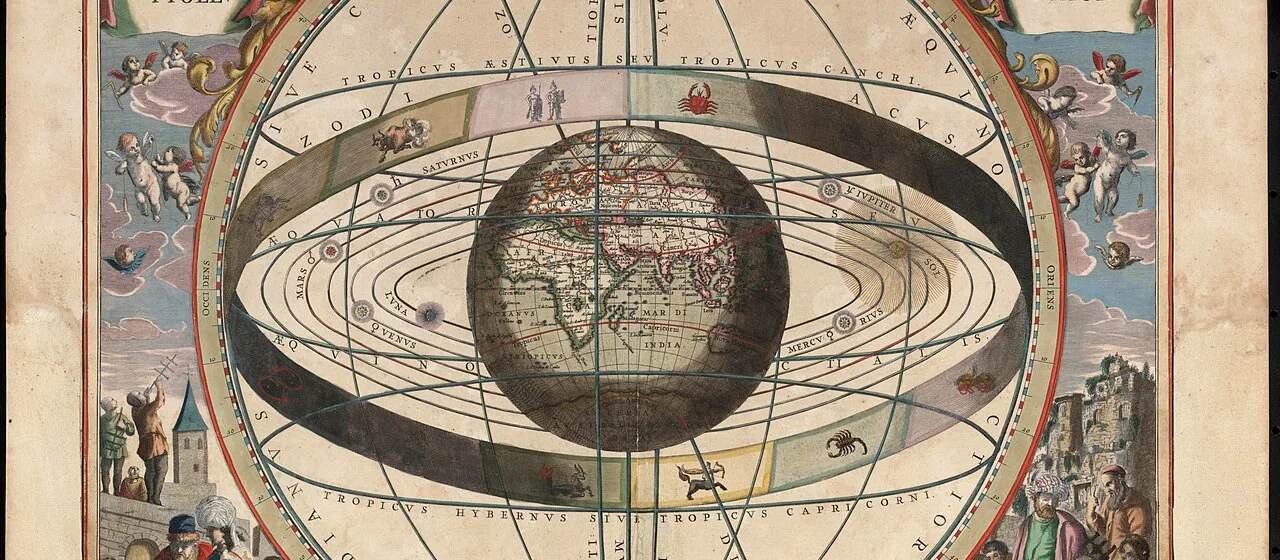
Jan van Loon · Wikimedia Commons · Public Domain
The image behind the image
Stand in almost any church, temple, or sanctuary on earth and look at what is on the walls. A radiant disc behind the head of the deity. A figure born at the winter solstice, resurrected at the spring equinox. A wheel divided into twelve. A fish. A lamb. A cross whose four arms mark the cardinal points of the solar year.
The tradition covered in this pillar holds that these images are not primarily theological. They are astronomical. The sacred images of the world’s major religions are, in this reading, a sky-map — a visual encoding of the sun’s annual journey, the twelve stations of the zodiac, and the long cycle of precession that carries the equinox point backward through the constellations over twenty-six thousand years.
This claim is old. It is two-centuries-old in its modern form, and the lineage that carries it is traceable, documented, and consistent. The sources are primarily those of the tradition’s own proponents — what this archive calls Tier-B primary texts. They are presented here in their own terms, attributed to their authors, not to the judgment of academic consensus. A note on that distinction matters, and this essay makes it explicit.
The founders: Dupuis and Volney
The argument that religion derives from astronomical observation enters the modern Western tradition at a precise moment: the decade of the French Revolution.
Charles-François Dupuis published Origine de tous les cultes, ou Religion universelle in 1795 — a vast, systematic work arguing that all the world’s religious systems, without exception, originated in the observation of the sky. The heroes, gods, and saviors of myth, Dupuis contended, are solar figures: they are the sun moving through its annual cycle, dressed in narrative. The twelve labors of Hercules are the twelve months. The death and resurrection of Osiris is the death and rebirth of the solar year. The birth of the savior at the winter solstice is the moment when the dying sun, having reached its nadir, begins its return to strength.
Constantin Volney had arrived at a closely related position four years earlier. The Ruins (1791) includes a celebrated passage in which the astronomical key to religion is laid out: the zodiacal figures, the solar hero, the agricultural calendar behind the ritual year. Volney’s zodiacal appendix is the clearest early statement of what the tradition would later call the sky-code: religion as a teaching encoded in celestial observation, preserved in image and narrative long after the encoding was forgotten.
Both Dupuis and Volney are Tier-B proponents in this archive’s sourcing system — their works are the tradition’s own primary texts, not academic consensus, and are presented as such.
The Victorian channel: Massey and Kuhn
The Dupuis-Volney thesis moved through the nineteenth century in various forms and arrived, with considerably more detail, in the work of Gerald Massey.
Massey’s Ancient Egypt: The Light of the World (1907) is the comparative monument of the tradition. In two dense volumes Massey argues that the Egyptian mythos — centered on the figure of Horus, child of the sky-goddess Nut and the sun-god Ra, born of a virgin, triumphant over darkness, risen — is the template behind the Christian narrative. The solar symbolism is, in Massey’s reading, not analogy but genealogy: the Christian images inherit their meaning from the Egyptian sky-code, which is itself a record of astronomical observation.
Alvin Boyd Kuhn carried the argument forward in The Lost Light, reading the scriptural texts of multiple traditions as astronomical allegories whose astronomical meaning had been lost when the tradition forgot how to read them as such. Kuhn’s proposition is that the scriptures were never intended as literal history; they were always sky-maps in narrative form, and the literalization of the text was itself a fall away from the original encoding.
Massey and Kuhn are foundational Tier-B proponents whose works are widely cited within the tradition. They are available in full as public-domain texts and form the documentary spine from which later transmitters work.
The modern transmitters: Maxwell and Bonacci
The Dupuis-Volney-Massey-Kuhn lineage moves into the late twentieth and early twenty-first century most prominently through Jordan Maxwell and Santos Bonacci.
Jordan Maxwell, whose career as a researcher spanned from the 1960s until his death in 2022, argued systematically that Christian holidays, sacraments, and iconography encode the solar year with deliberate precision. In Maxwell’s reading — laid out across decades of lectures and interviews — the word “sun” and the word “son” are not a coincidence but an encoding. The cross is a sun-cross before it is an execution instrument: the solar disc quartered by the four cardinal directions of the year. The haloes of Christian saints are the solar corona. The forty days in the wilderness are the forty days the sun spends below the celestial equator. Maxwell’s reading is attributed, throughout this archive, to Maxwell — it is his interpretive system, his argument, his lineage of sources.
Santos Bonacci, whose Universal Truth School continues to teach and broadcast this synthesis, extends the reading into what he terms “syncretism” — the demonstration that astrotheology unifies the world’s religious traditions through a common solar-astronomical grammar. Bonacci’s syncretism holds that once the sky-code is understood, the apparent divisions between traditions dissolve: the same solar narrative runs beneath Hinduism, Christianity, Islam, Buddhism, and the Egyptian, Greek, and Roman systems. Bonacci’s position is his stated teaching, documented in his publicly available lectures and courses, and is attributed to him accordingly.
Michael Tsarion and D. M. Murdock (Acharya S.) develop adjacent and overlapping bodies of work in the same tradition. Tsarion traces the astrotheological layer through Irish mythology and the origins of what he calls the astral religion of the ancient world. Murdock’s The Christ Conspiracy and Suns of God present an extensive comparative case for the solar reading of the Christ narrative, drawing heavily on Massey and adding additional comparative-religion material. Both are Tier-B proponents: the interpretive layer is theirs; the archive presents it in their names.
What the Tier-A scholarship establishes
A note of precision is required here, and this archive makes it openly.
The academic historiography of solar mythology — the scholarly record of this interpretive tradition — is documented at the Tier-A level by Richard Dorson and Michael Carroll. Dorson’s 1955 essay “The Eclipse of Solar Mythology” chronicles the full arc of the nineteenth-century solar-mythology school: the tradition of Max Müller, who argued that mythology originated in metaphors for solar phenomena, attracted sustained academic engagement across several decades and generated a rich historiographical debate. Carroll’s 1985 reassessment maps how that debate developed and what its key arguments established.
What the Tier-A scholarship establishes, firmly, is that this interpretive tradition is over two centuries old, carries a documented intellectual genealogy, and commanded serious engagement within academic comparative religion across the nineteenth and early twentieth centuries. Dorson and Carroll map the breadth and duration of that debate — evidence of how seriously the academy took the solar question, and how sustained the argument was.
This archive presents the sky-code tradition at full strength, in its own terms, attributed to its own proponents. It does not disguise the sourcing. Dupuis, Volney, Massey, Kuhn, Maxwell, Bonacci — these are the tradition’s own voices. The Tier-A floor is what makes the tradition’s age and seriousness documentable. The interpretive system built on that floor is the tradition’s.
The zodiac and the calendar in the sanctuary
What makes the sky-code reading of images compelling to those who have followed it is not primarily the genealogical argument but the visual argument: the images themselves.
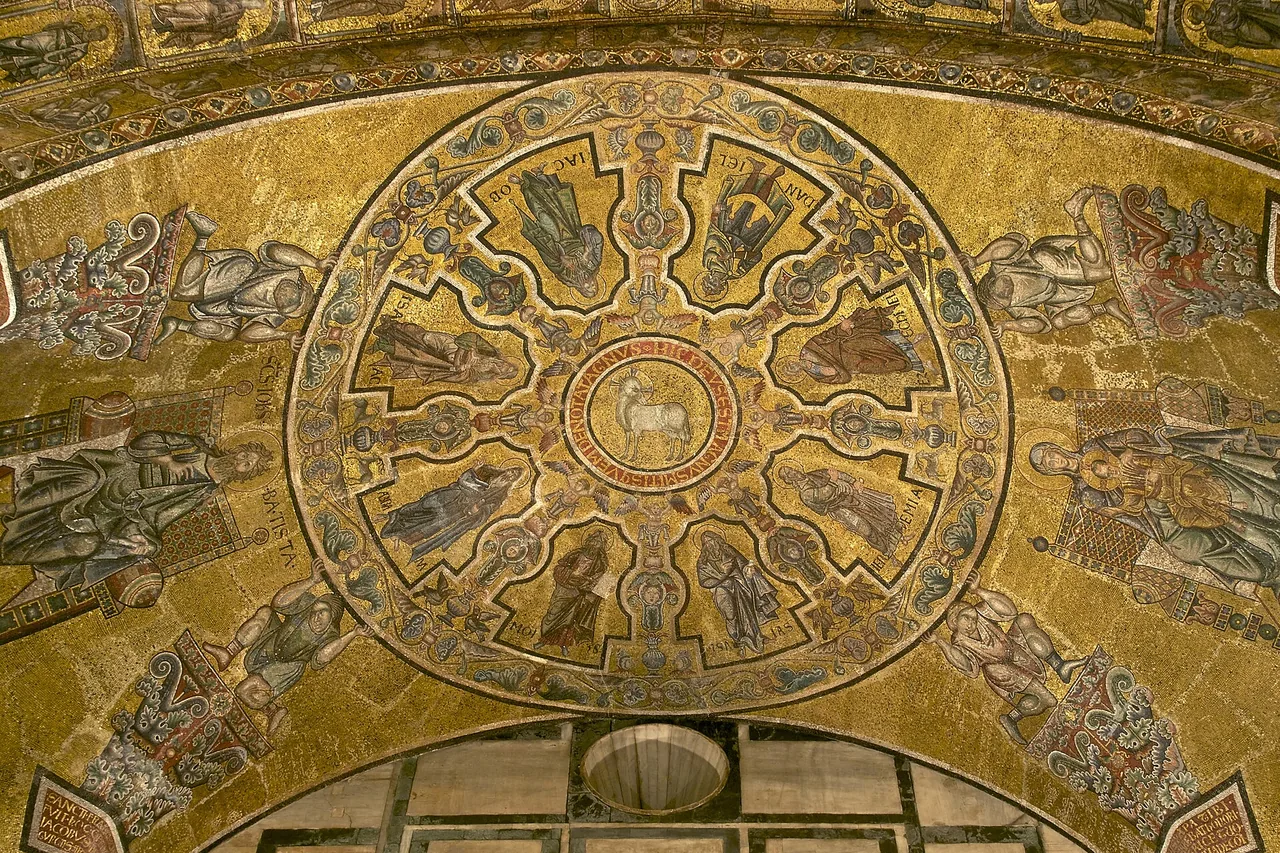
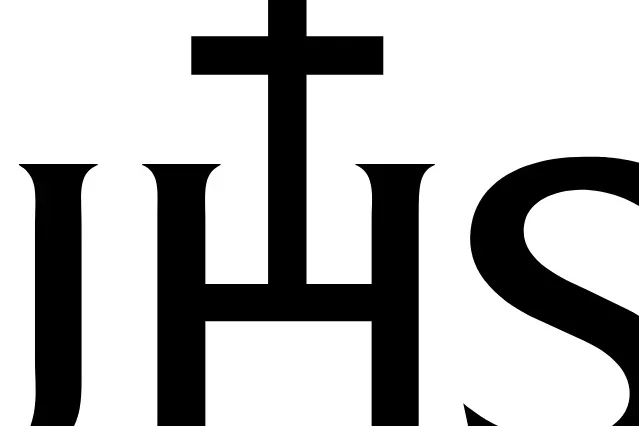
The Zodiac Wheel appears in mosaic floors of ancient synagogues, in the vaulted ceilings of Renaissance chapels, in the stained glass of Gothic cathedrals. The Sun Cross — the solar disc quartered by four arms — predates the Christian cross by millennia and appears across cultures with no documented contact. The IHS Monogram, read by the tradition as a solar abbreviation, appears on the vestments of Jesuit priests and the facades of Baroque churches. The Agnus Dei — the lamb of God — carries, in the sky-code reading, the astronomical identity of Aries, the ram, the spring sign of the zodiac through which the equinox moved during the epoch when the Passover and Easter cycles were established.
The Ichthys, the fish — two arcs forming the mandorla — is in Maxwell’s reading the symbol of the astrological age of Pisces, the age inaugurated around the same period as the rise of Christianity, the age now ending as the equinox precesses into Aquarius. The tradition reads the fish as a time-stamp, not just an emblem. Every symbol in the Dictionary has this dual layer: the documented historical origin and the sky-code reading the tradition gives it, attributed in full.
The encoding and the forgetting
The tradition’s deeper claim is not only that the images encode astronomy but that the encoding was intentional and that the meaning was subsequently lost.
Kuhn’s formulation is the clearest: the scriptures were sky-maps first; the fall into literalism was the catastrophe that separated a civilization from the meaning of its own symbols. Maxwell extended this into a claim about institutional management: the sky-code was known to the initiated layers of the priesthood and was kept from the laity — not through crude conspiracy but through the structural hierarchy of initiatic religion, which always maintained a distinction between exoteric teaching (for the many) and esoteric teaching (for the few).
Whether or not one accepts the intentionality argument, something is demonstrable: the images carry a layer most of their contemporary viewers cannot read. The cross on the church carries its solar geometry whether or not the person kneeling before it knows what geometry is. The halo burns its solar corona whether or not the viewer can identify where the image came from. The zodiac wheel rotates in the chapel ceiling without requiring anyone to look up and understand what they are seeing.
The sky-code tradition says the layer was placed there deliberately. What is not in dispute — and what is visible in the symbols themselves — is that the layer exists.
Into consent
P3 argues that the images carry a code whose grammar is astronomical. P4 — The Engineering of Consent — moves to the modern layer, where the code is not cosmic but commercial, and where the engineers of the image-environment left a paper trail.
Bernays had no need of the zodiac. He had something more effective: a documented methodology, a named technique, and a body of clients who paid him to do what Plato, the Byzantine emperors, and the Protestant reformers had each done in their own idiom — shape the interior life of a population through the deliberate management of its image-environment.
The Zodiac Wheel is in the Dictionary. The sky-code is in the symbols. The next layer is in the archive.
The claims
- Dupuis (1795) and Volney (1791) argued that all religious figures and narratives derive from astronomical observation of the solar year and zodiacal cycle.
- Gerald Massey's comparative work reads the Egyptian Horus-mythos as the template behind the Christ-narrative, with solar symbolism as the common code.
- Alvin Boyd Kuhn argues in The Lost Light that scriptural passages are astronomical allegories whose literal reading lost the original astral meaning.
- Jordan Maxwell, following the Dupuis-Massey-Kuhn lineage, argues that Christian holidays, sacraments, and iconography encode the solar year with deliberate precision.
- Santos Bonacci's Universal Truth School holds that astrotheology unifies all world religions through a single solar-astronomical grammar.
- The Tier-A historiography of solar mythology (Dorson, Carroll) documents that this interpretive tradition is over two centuries old and was seriously debated within academic comparative religion — establishing the lineage's age, reach, and scholarly seriousness.
The citable spine
- Charles-François Dupuis, Origine de tous les cultes (1795): the founding text arguing all religion originates in solar and astral observation.
- Constantin Volney, The Ruins (1791): astronomical interpretation of world religions, including a zodiacal appendix.
- Gerald Massey, Ancient Egypt: The Light of the World (1907): comparative Egyptian-Christian solar symbolism.
- Alvin Boyd Kuhn, The Lost Light (n.d.): astro-allegorical reading of scripture as encoded astronomy.
- Richard M. Dorson, 'The Eclipse of Solar Mythology,' Journal of American Folklore 68 (1955): the scholarly account of how the academic solar-mythology school developed and what it contended.
Symbols in this argument
-
solar-astro
The Zodiac Wheel
Twelve signs, one wheel — the master key all scripture shares.
In the dictionary
Attributed Astro-Theology -

solar-astro
The Solar Cross
The first cross was the sun's path through the year.
In the dictionary
Attributed Astro-Theology -
religious
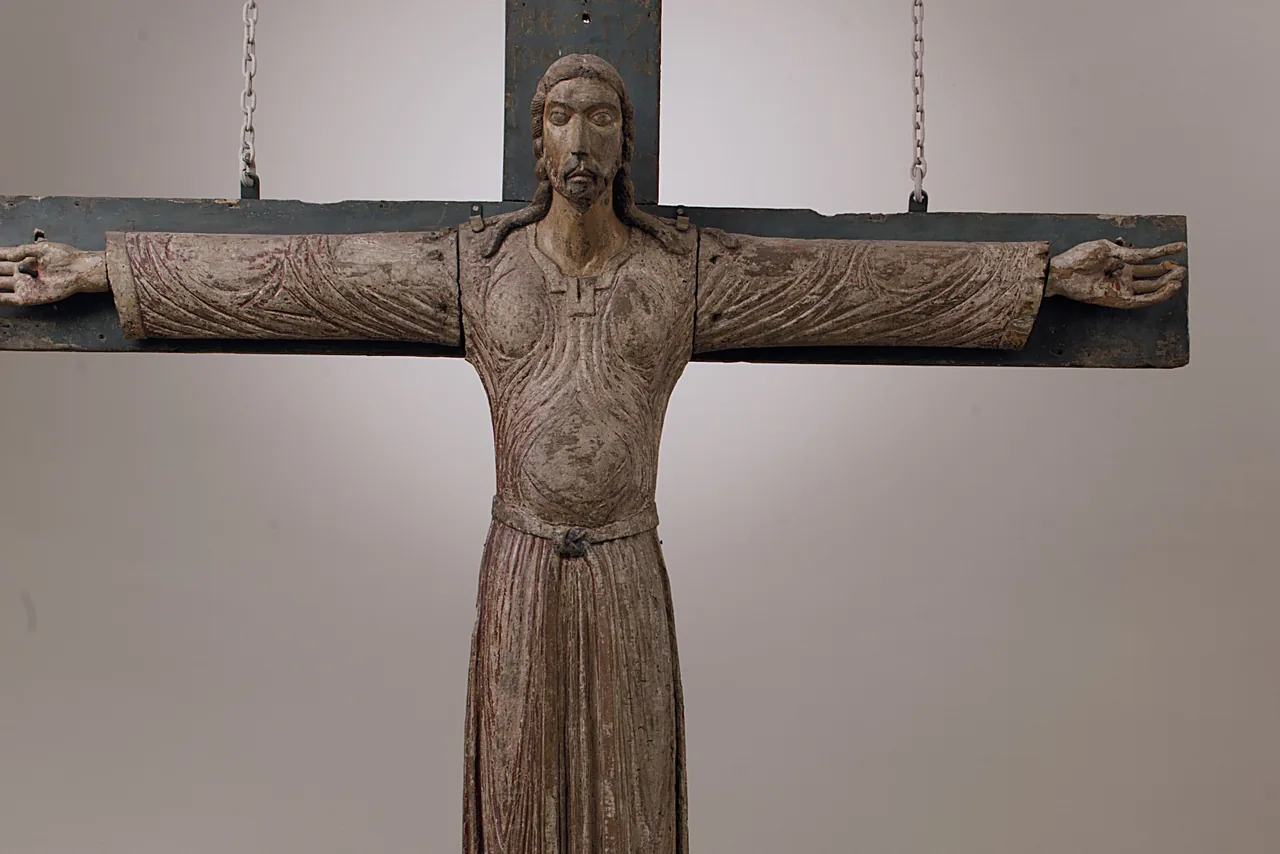
The Cross
The oldest cross is the sun's path drawn across the sky.
In the dictionary
Attributed Astro-Theology -

religious
The Fish / Ichthys
The Jesus fish is the shape of an astrological age.
In the dictionary
Attributed Astro-Theology -
religious
The Lamb / Agnus Dei
The Lamb of God who takes away the sin of the world — and the sun.
In the dictionary
Attributed Astro-Theology -
religious
The IHS Monogram
Three letters on every altar — but whose name do they really spell?
In the dictionary
Attributed Astro-Theology