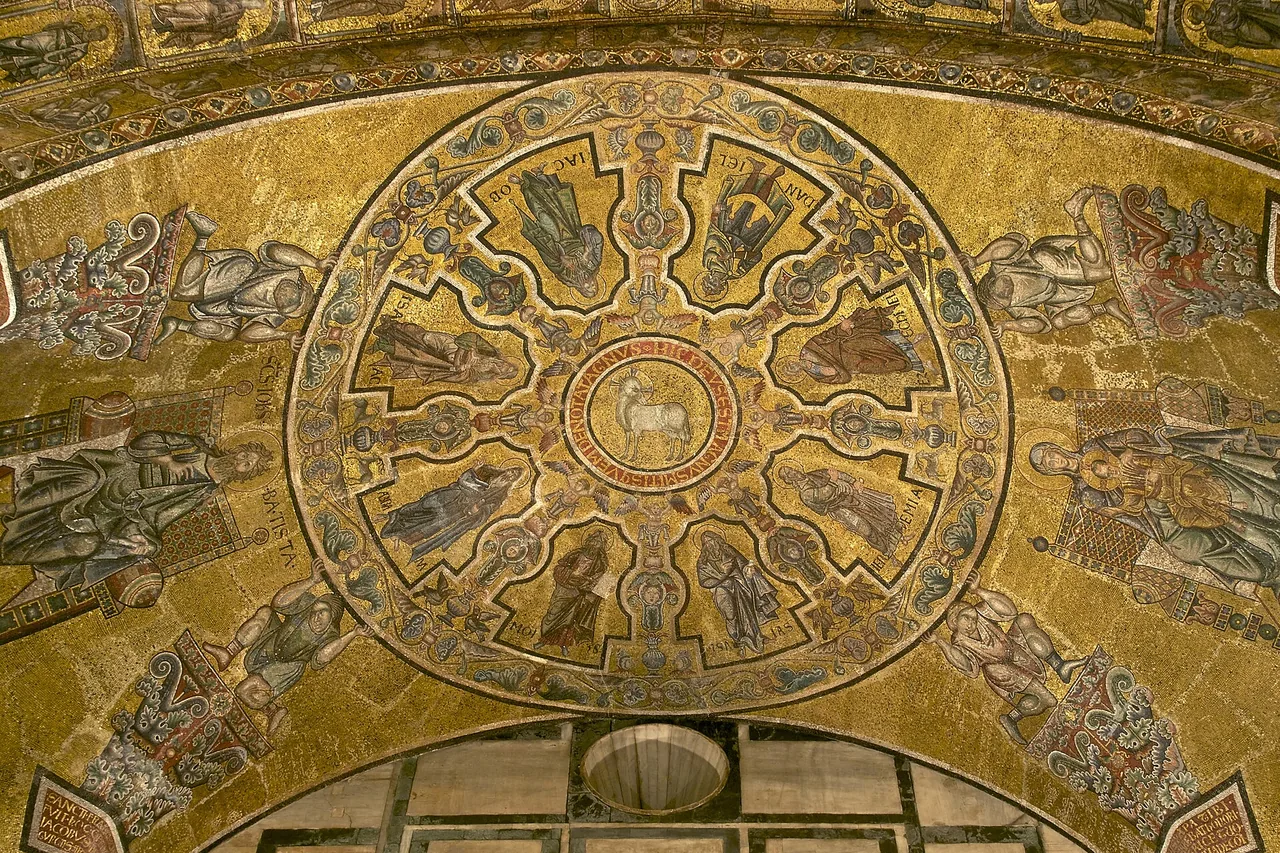
Jebulon · Wikimedia Commons · CC0
religious
The Lamb / Agnus Dei
The Lamb of God who takes away the sin of the world — and the sun.
AttributedDocumented origin
“Lamb of God” enters Christian scripture at John 1:29 — “Behold the Lamb of God, who takes away the sin of the world” — and the image recurs throughout the Book of Revelation, where the slain and risen Lamb rules creation. The Agnus Dei became one of Christianity’s central emblems of sacrificial atonement, appearing in liturgy, heraldry, and sacred art for two millennia. Astronomically, the lamb maps to Aries the Ram, the first sign of the zodiac.
The reading
Bonacci’s syncretism holds that the Lamb of God is the sun entering Aries at the spring equinox — the solar “sacrifice” of winter ending, the new light taking away the darkness of the old year. The wordplay, in Bonacci’s reading, is built into the text: “sin” echoes the sun (the word “sun” in multiple archaic forms), so the Lamb takes away the sun of the world as it crosses into the new season. D.M. Murdock places the Agnus Dei within the same precessional schema, reading the sacrificial lamb as the zodiacal Age of Aries (c. 2150–1 BCE) giving way to the Age of Pisces — the fish that followed the lamb on the altar and on the car.
Where it hides today
The Agnus Dei appears in Catholic liturgy, church heraldry, and the flags of nations; the lamb-with-banner is the emblem of the City of London and dozens of religious orders. Every Easter, the imagery of the sacrificed and risen lamb enacts, Bonacci argues, the spring equinox drama in plain sight.
Decoded by
- Santos Bonacci
- D M Murdock
- Jordan Maxwell
Where next
-
religious
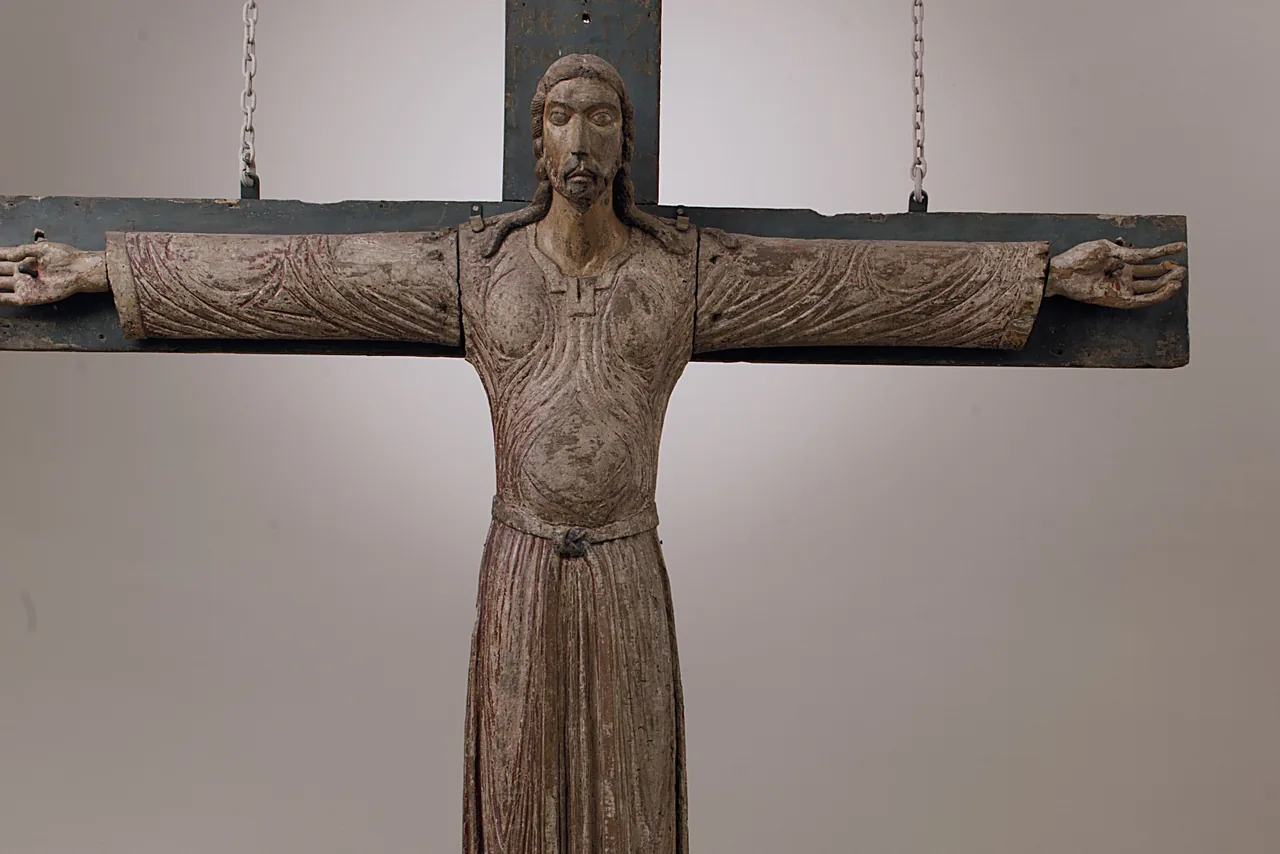
The Cross
The oldest cross is the sun's path drawn across the sky.
Also religious
Attributed Astro-Theology -
religious
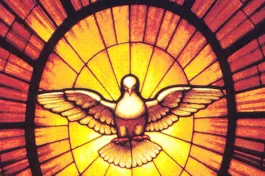
The Dove
The bird of the goddess, re-named but never fully re-made.
Also religious
Attributed Astro-Theology -
religious
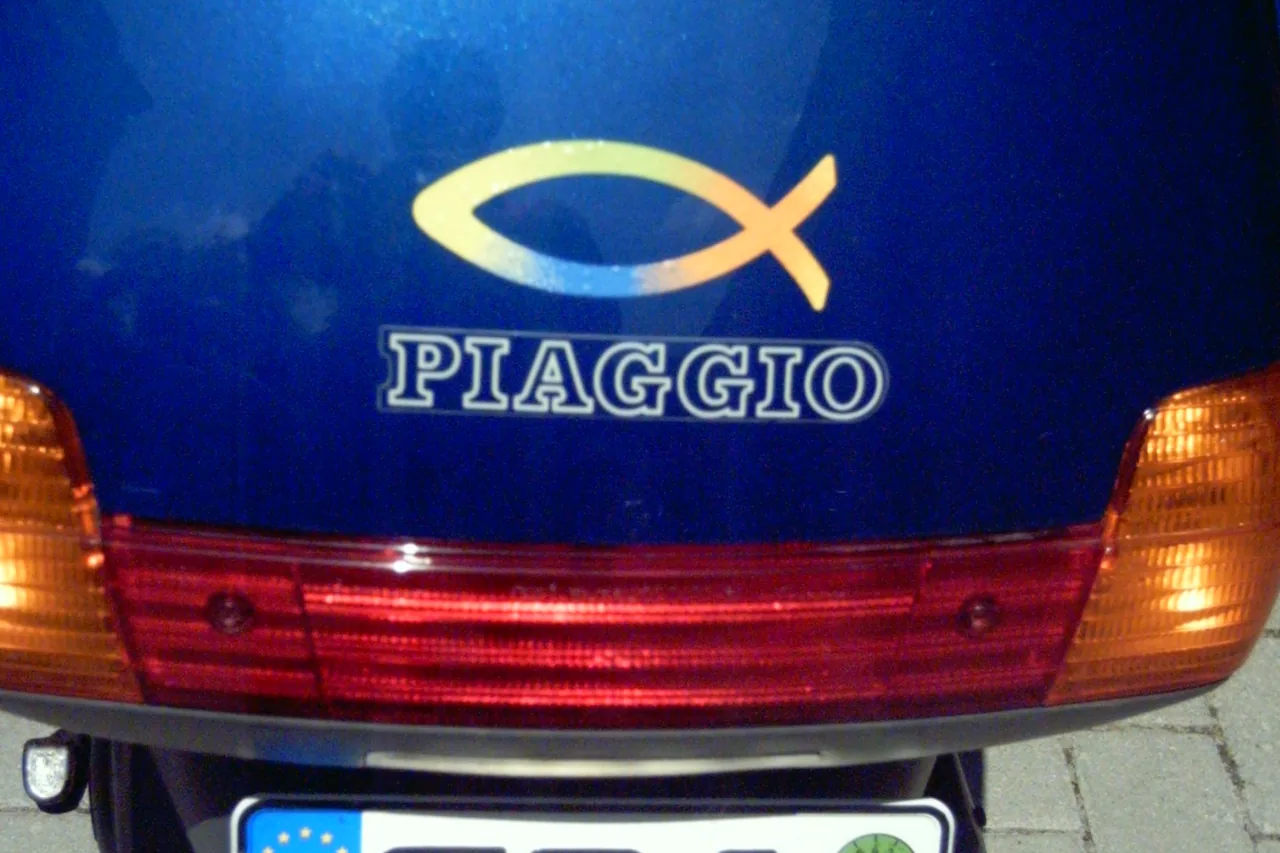
The Fish / Ichthys
The Jesus fish is the shape of an astrological age.
Also religious
Attributed Astro-Theology -
religious
The Halo / Nimbus
The disk behind every saint's head is a sun.
Also religious
Attributed Astro-Theology
Share this specimen
ANAMNESIS
The Lamb of God and the Ram of Aries are the same spring dawn.
The Lamb / Agnus Dei