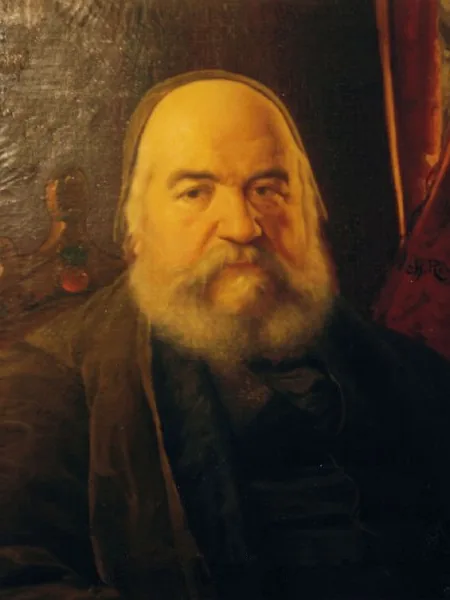
Charles Revel · Wikimedia Commons · Public Domain
Ancestor · 1810–1875
Éliphas Lévi
Alphonse Louis Constant
The French magus who codified modern Western ceremonial magic in images and doctrine.
Foundational 19th-century codifier — gave the tradition its central symbolic vocabulary: Baphomet, the Sabbatic Goat, the upright pentagram, and the doctrine of the macrocosm/microcosm.
Born Alphonse Louis Constant, Éliphas Lévi was a failed Catholic seminarian who became the architect of 19th-century ceremonial magic. In Dogme et Rituel de la Haute Magie (1856), translated by A.E. Waite as Transcendental Magic, Lévi laid down a complete symbolic science: the Astral Light as the operative medium, the Tarot and the Qabbalistic Tree as its map, and the pentagram as its controlling sign. His drawing of the Sabbatic Goat — Baphomet, seated between twin pillars, torch between the horns, arms bearing Solve et Coagula — became the central image of Western esoteric iconography. Manly P. Hall studied him; Albert Pike corresponded with him. The pentagram law Lévi codified — upright for the microcosm, inverted for its shadow — governs every symbol decode in the tradition that followed.
Core claims
- Lévi taught that magic is the science of the control of the secret force that pervades all things — the Astral Light — and that symbols are its operative grammar.
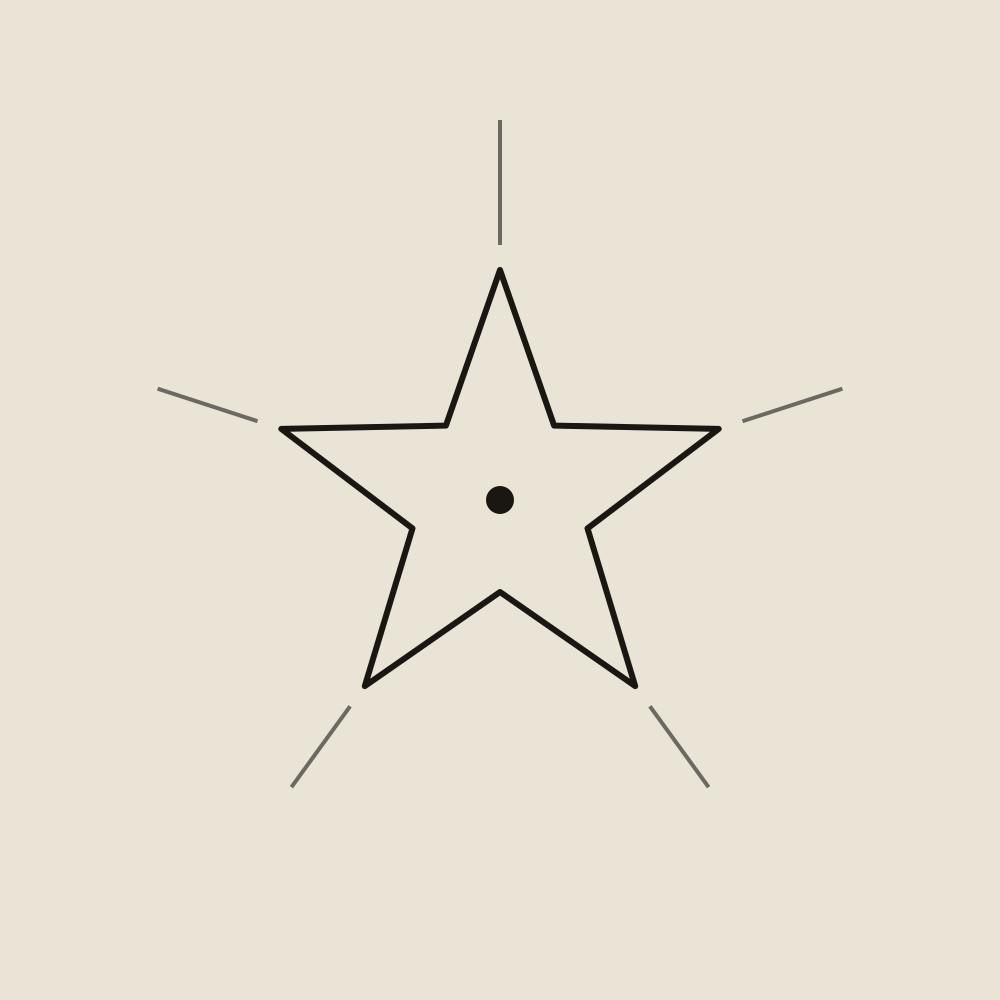
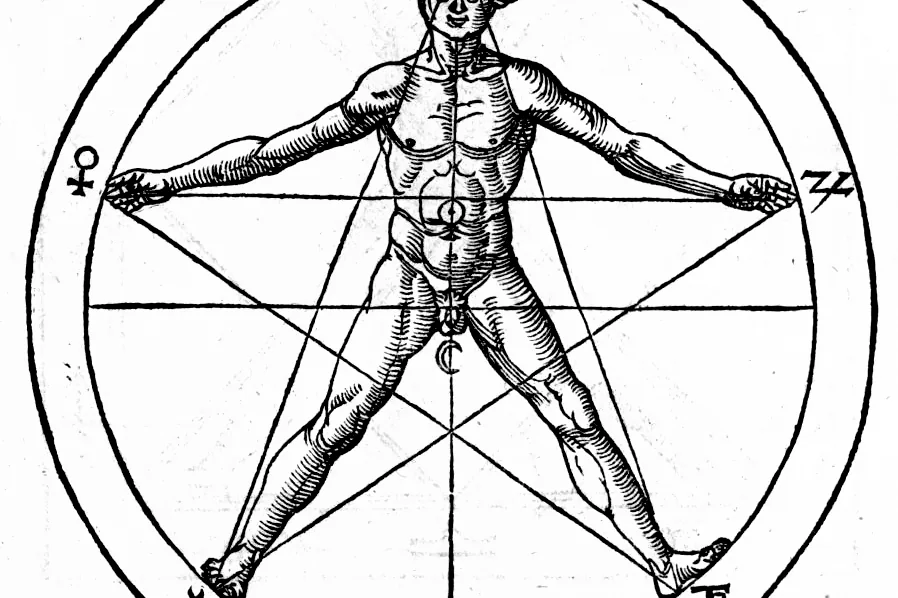
- Lévi taught that the upright pentagram is the sign of the microcosm, the 'Blazing Star' of the lodge, representing the human figure with one point ascending — the spirit governing matter.
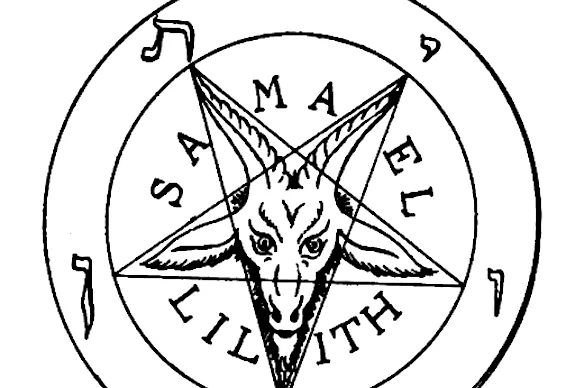
- Lévi taught that the inverted pentagram — one point down, two horns raised — is the hieroglyph of the goat of the Sabbath and the sign of infernal forces, inverting the upright symbol's meaning.
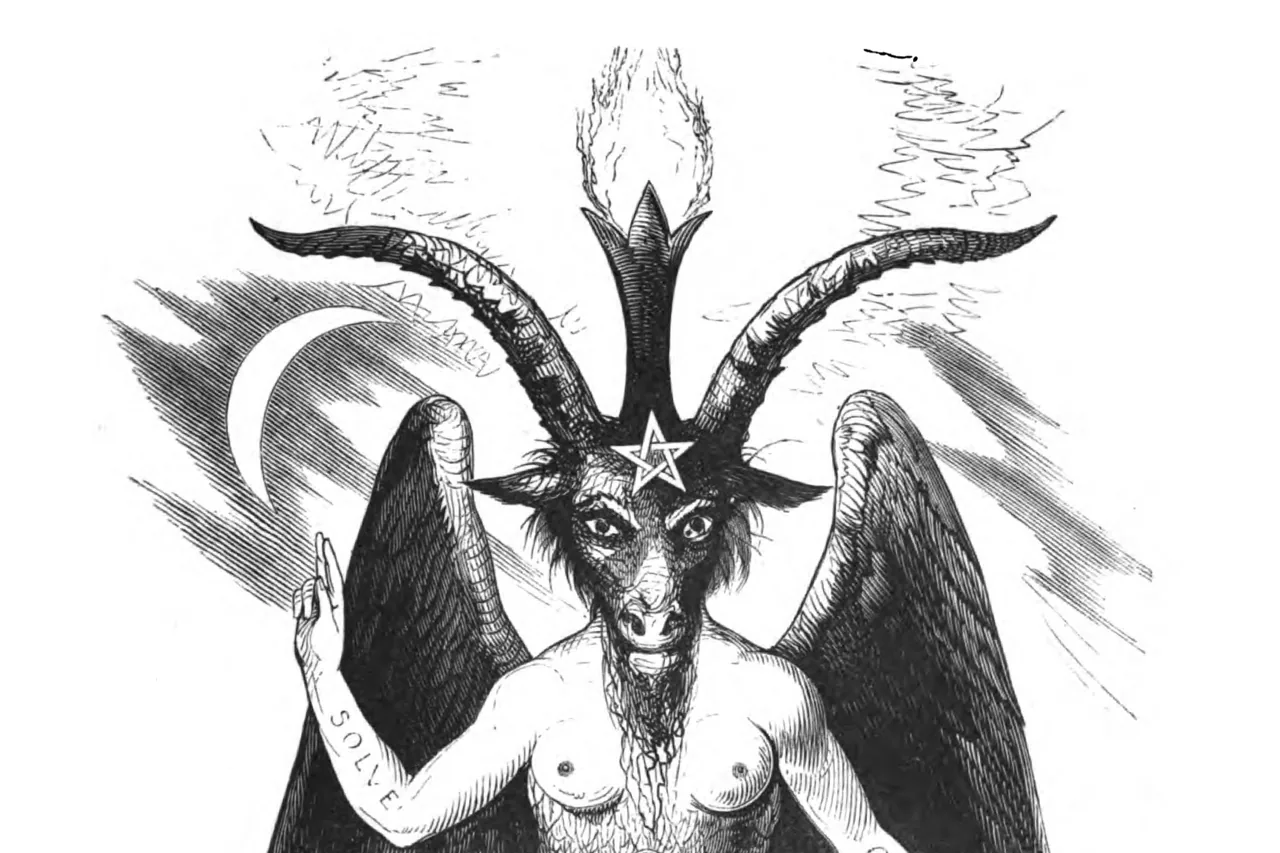
- Lévi drew and defined the 'Baphomet of Mendes' (the Sabbatic Goat): the winged, hermaphroditic figure seated between twin pillars — encoding in a single image the principle of polarity, the reconciliation of opposites, and the androgynous nature of the divine.
- Lévi taught that all religious symbols encode initiatic truths accessible to the adept: the Tarot, the Qabbalistic Tree, and the Hermetic axiom 'as above, so below' form a single interlocking cipher.
Key works
- Dogme et Rituel de la Haute Magie (Transcendental Magic) · 1856
- Histoire de la Magie (The History of Magic) · 1860
- La Clef des Grands Mystères (The Key of the Mysteries) · 1861
Signature decodes
- Lévi's drawing of the Sabbatic Goat — Baphomet of Mendes — became the defining image of ceremonial-magic iconography: seated between twin pillars, torch between the horns, one arm raised and one lowered, bearing the words 'Solve et Coagula' on its forearms.
- Lévi taught the upright pentagram as the Blazing Star and microcosm of man: one point up equals the spirit ruling the four elements; inverted, the two raised points become the goat's horns and the sign is reversed in meaning — a distinction the entire subsequent symbol-decoding tradition inherits.
- Lévi formulated the Hermetic maxim 'as above, so below' as the master key to ceremonial magic, encoding in a single phrase the analogical principle that the Astral Light binds the cosmos and the human body in identical symbolic correspondence.
Influenced
Symbols they decode
-
occult
Baphomet
Lévi's drawing of opposites in balance — not a devil, a diagram.
Decoded
Attributed Hermetic -
fraternal-masonic
The Blazing Star
The star at the center of the lodge floor is not decoration — it is the point.
Decoded
Attributed Masonic -
occult
The Inverted Pentagram
One rotation of the star — and its whole meaning flips.
Decoded
Attributed Hermetic -
sacred-geometry
The Pentagram
The star of the body, the cosmos, and the awakened mind.
Decoded
Attributed Hermetic
Sources
Status Deceased (1810–1875). His works are in the public domain; *Transcendental Magic* remains continuously in print in English translation by A.E. Waite.