Constantino Brumidi · Wikimedia Commons · Public Domain
Casebook decode · The Apotheosis of Washington fresco in the U.S. Capitol Rotunda
The U.S. Capitol Dome & Brumidi's 'Apotheosis of Washington'
The seat of American government is crowned with a pagan deification painted by a man trained in the Vatican.
The surface
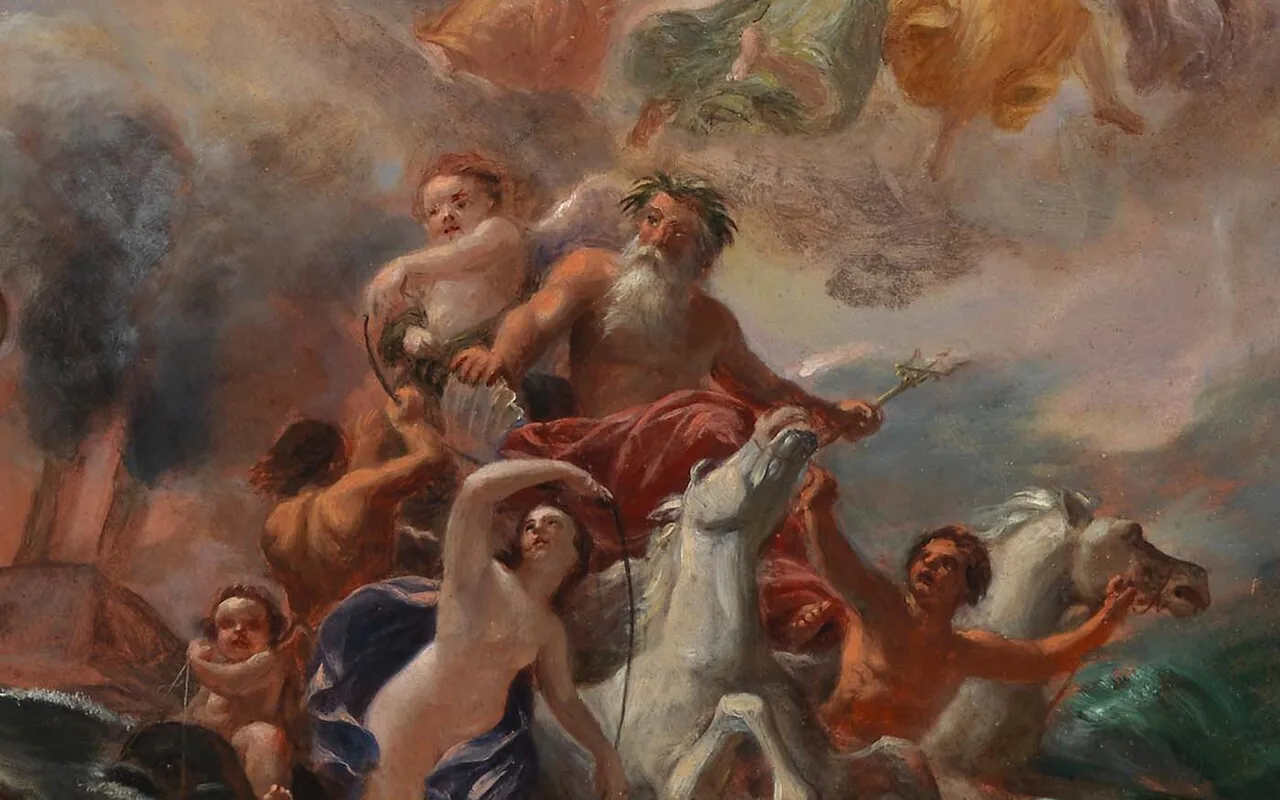
Constantino Brumidi painted The Apotheosis of Washington in 1865, on the inner canopy of the U.S. Capitol dome 180 feet above the Rotunda floor. The fresco covers 4,664 square feet. At its center George Washington sits enthroned in the clouds, draped in purple, flanked by the female figures of Liberty and Victory. Around him ring six allegorical panels, each featuring a named Roman or Greek deity: Minerva, Neptune, Mercury, Vulcan, Ceres. The Architect of the Capitol identifies all of them by name. Brumidi had trained and worked in the Vatican before emigrating to the United States.
The decode
Jordan Maxwell and William Cooper read the fresco as a literal apotheosis in the classical sense — the formal elevation of a man to divine status, the same act by which the Roman Senate deified emperors after their death. In this reading the painting does not merely honor Washington; it installs him among the pagan gods at the symbolic apex of the republic’s temple. Cooper, in his lectures, places this within the broader argument that the founders, many of them Freemasons, enshrined Mystery-school theology — the doctrine of the “deified man,” the initiate who ascends — at the very crown of American governance. The presence of Minerva, Mercury, and the rest is not metaphor; it is the open presence of the old pantheon in the house of state.
The symbol lineage
The capitol-dome carries two converging symbol-lines. The dome itself is an ancient temple form — hemisphere as heaven’s vault — and the fresco within it performs apotheosis, the Greco-Roman elevation to godhood documented from Alexander the Great through the Roman emperors, whose post-mortem deification was a Senate decree. Flanking Washington are figures that echo the statue-of-liberty type: Liberty and Victory, winged and robed, the goddess-form as attendant to male power. Around the outer ring, six allegorical panels arrange the gods in a circuit. The symbol-decoding tradition reads that encircling arrangement as a zodiac-wheel pattern — the old twelve (here compressed to six stations) organizing the heavens around a solar or divine center, the same wheel-of-powers that structures ancient cosmology. Brumidi assembled all of this from his Vatican training. The result is the Mystery school’s central teaching, painted at the axis of American legislative power.
The symbol lineage
Broken into its symbols
The artifact is a stack of inherited symbols. Scroll to lift each one out ↓
-
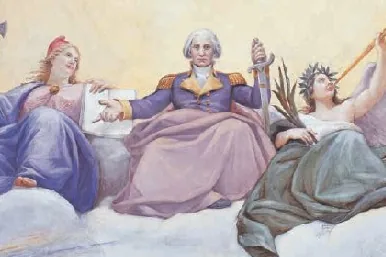 The Capitol Dome and the Apotheosis of Washington The dome — the temple vault over the deified founder. In the Dictionary →
 -
 The Statue of Liberty Liberty / Victory flanking Washington's ascent. In the Dictionary →
 - The Zodiac Wheel Six allegorical panels ring the fresco like zodiac hours. In the Dictionary →
Who teaches this decode
- Jordan Maxwell
- William Cooper
Sources
Where next
-
solar-astro
The Zodiac Wheel
Twelve signs, one wheel — the master key all scripture shares.
Related symbol
Attributed Astro-Theology -
civic-national
The Statue of Liberty
The goddess in the harbor — Isis wearing a different name.
Related symbol
Attributed Astro-Theology -
civic-national
The All-Seeing Eye
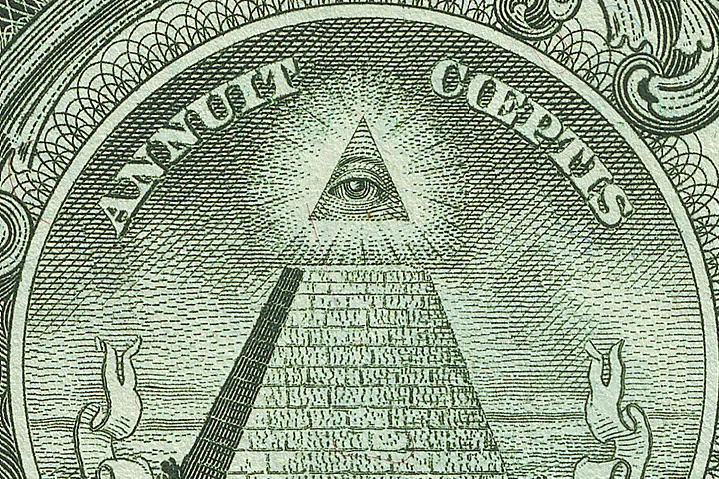
The few who see, hidden on the money in your pocket.
Related symbol
Attributed Civic-Solar -
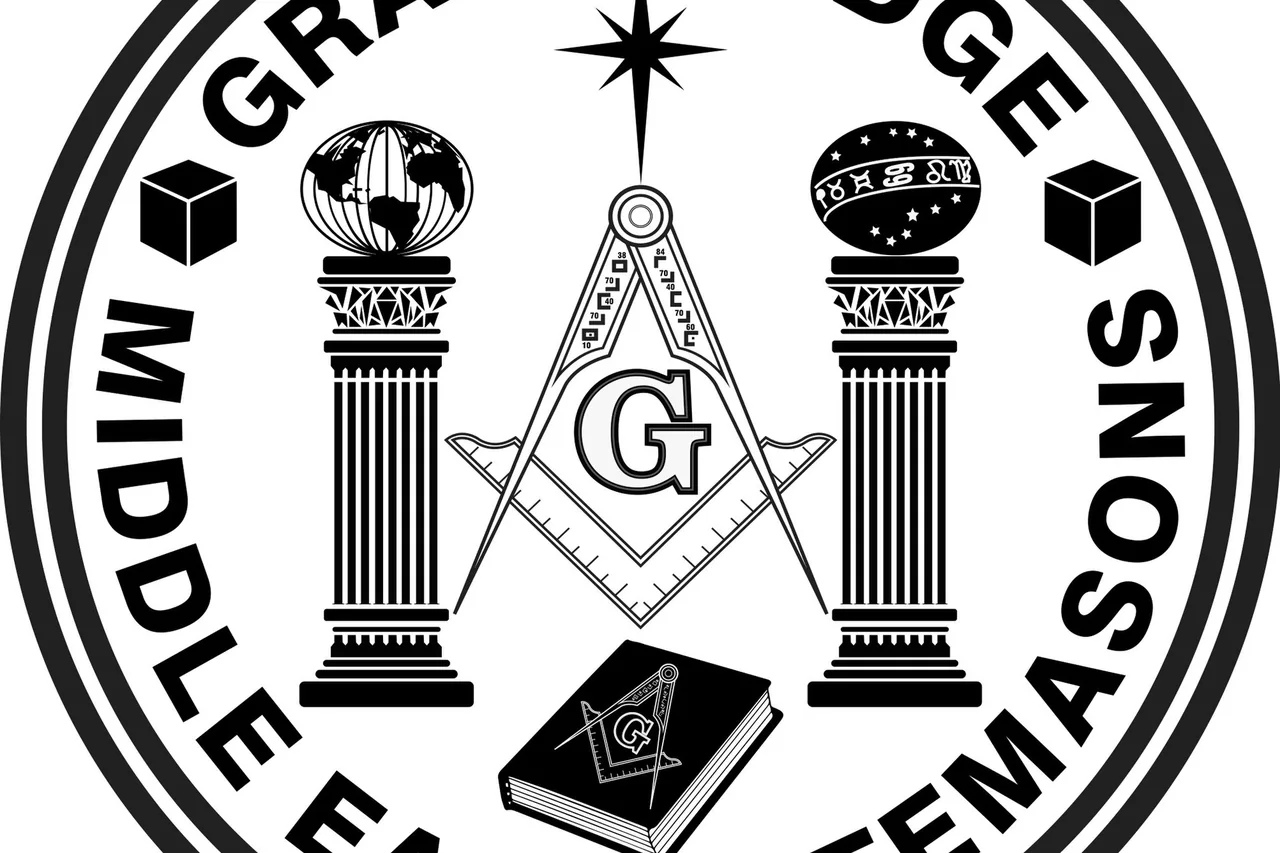
fraternal-masonic
The Square and Compasses
A stonemason's tools, raised into the world's most known initiatic sign.
Related symbol
Attributed Masonic
Share this decode
ANAMNESIS
The fresco at the top of the Capitol dome is a literal deification. The gods are named. Washington is among them.
The U.S. Capitol Dome & Brumidi's 'Apotheosis of Washington'