occult
The Serpent / Kundalini
The most feared creature in scripture is also its wisest teacher.
AttributedDocumented origin
The serpent is among the most ancient sacred symbols on record. The Egyptian uraeus — the rearing cobra at the brow of the pharaoh — embodied divine authority and the fire of the sun-god Ra. In the Indian tradition, kundalini is described as a dormant spiritual energy coiled at the base of the spine, central to yogic and Tantric practice. The Genesis serpent imparts knowledge of good and evil; the brazen serpent Moses raises on a pole (Numbers 21) heals those who look upon it. The Greek Asclepius heals with a serpent-wound staff. Across cultures, the serpent denotes wisdom, healing, regeneration, and the dangerous threshold between states.
The reading
Manly P. Hall reads the serpent as the universal emblem of the solar fire and of initiate wisdom — the creature that sheds its skin and is perpetually reborn. Mark Passio identifies the biblical “fall” narrative as a record of knowledge-suppression: the serpent offers gnosis that an institutional authority did not want distributed. Jordan Maxwell reads the serpent in the Garden as the teacher-figure, the bringer of the light of understanding. Michael Tsarion places the kundalini current within a lineage of pre-diluvian initiatic teaching, the force that rises through the chakra centers to open the “third eye” — the same eye the uraeus marks at the pharaoh’s brow.
Where it hides today
The serpent appears in medical symbols (the caduceus and Rod of Asclepius), in yoga-studio branding, in Nāga imagery across South and Southeast Asian temple architecture, and in the ouroboros that loops through occult art from ancient Egypt to contemporary tattoo. The most feared creature in the Bible remains the teacher in every other tradition.
Decoded by
- Manly P Hall
- Jordan Maxwell
- Mark Passio
- Michael Tsarion
Where next
-
occult
666 / The Number of the Beast
The Bible's most feared number, still totaled on the Sun's magic square.
Also occult
Attributed Saturnian -
occult
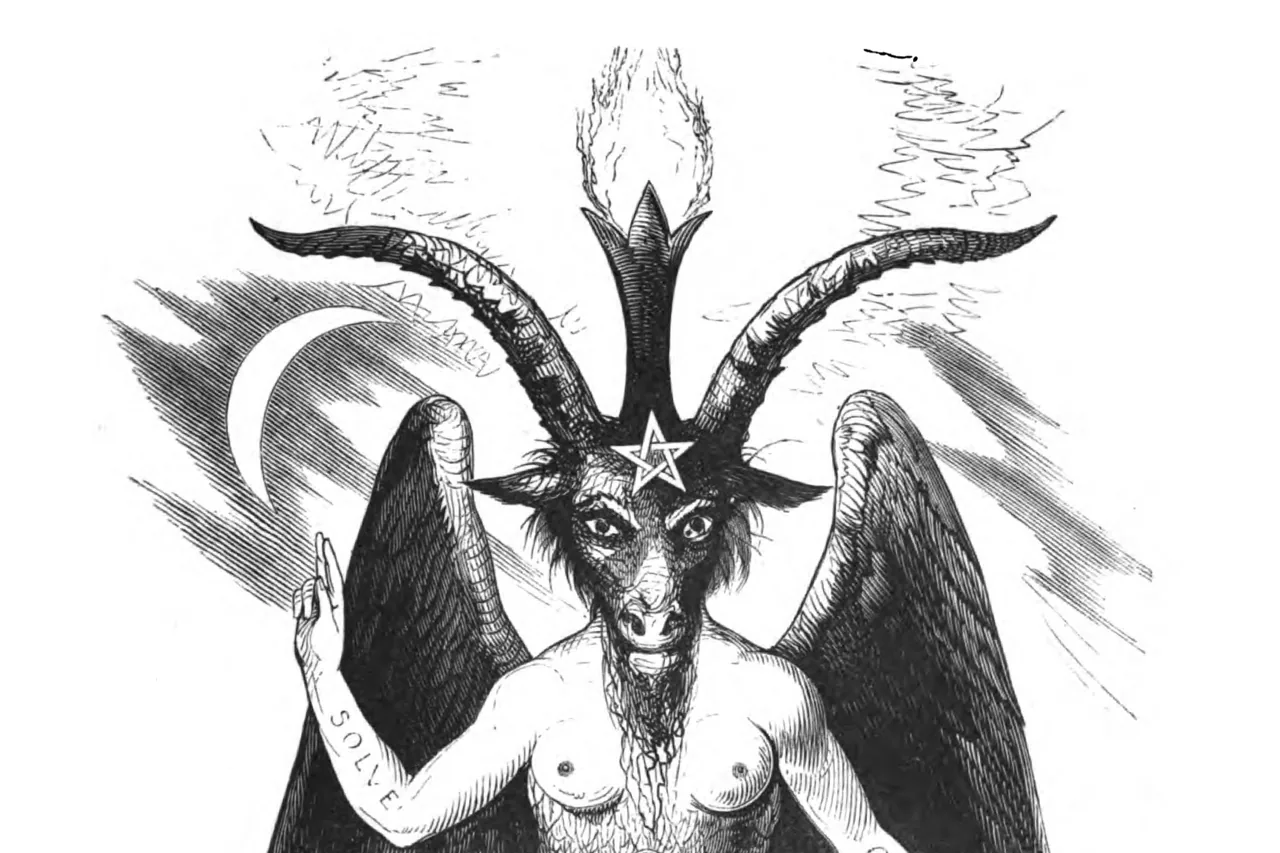
Baphomet
Lévi's drawing of opposites in balance — not a devil, a diagram.
Also occult
Attributed Hermetic -
occult
Saturn & the Black Cube
The geometry of time, lead, and limitation.
Also occult
Attributed Saturnian -
occult
The Black Sun
An inner, invisible sun — and a symbol whose history cannot be separated from its origin.
Also occult
Attributed Hermetic
Share this specimen
ANAMNESIS
In every tradition, the serpent that is feared is also the one that heals.
The Serpent / Kundalini