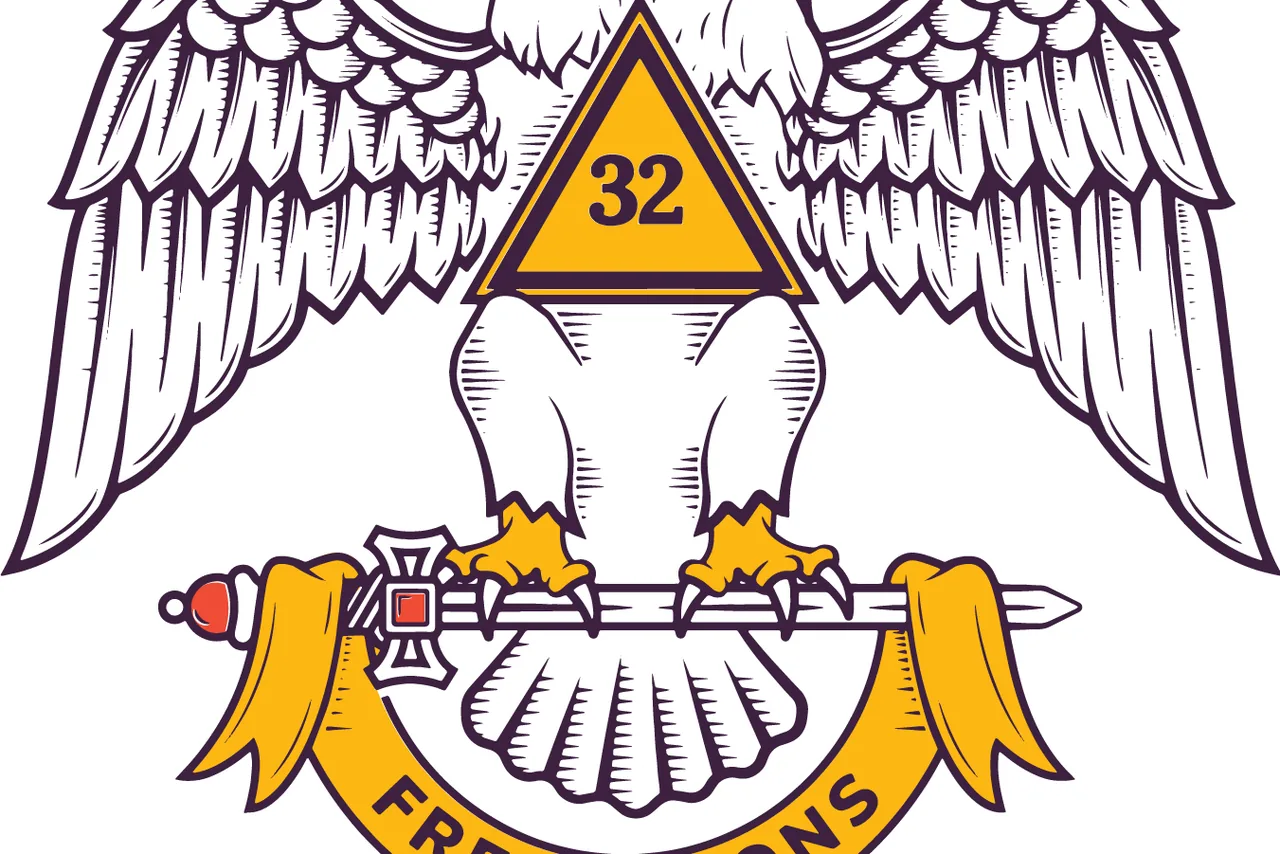
Ancient Accepted Scottish Rite, Northern Masonic Jurisdiction · Wikimedia Commons · CC BY-SA 4.0
fraternal-masonic
The Double-Headed Eagle
Two heads, one body — the eagle that watches both worlds at once.
AttributedDocumented origin
The double-headed eagle is among the most ancient and durable devices in heraldry. The “Eagle of Lagash,” a two-headed eagle with spread wings, appears in Sumerian art as early as the third millennium BCE and was widely used across Hittite, Byzantine, and Holy Roman imperial heraldry. The Ancient and Accepted Scottish Rite of Freemasonry adopted it as the emblem of the thirty-third and highest degree of the Rite — its most recognizable degree symbol — depicted with a sword between its two heads and the number thirty-three at its breast.
The reading
Manly P. Hall reads the two-headed eagle as the emblem of the perfected adept: a being who has unified the dual nature of existence — spirit and matter, solar and lunar, active and passive — and can therefore face both worlds simultaneously. The eagle’s two heads do not disagree; they see the complete picture that a single vantage point cannot provide. Jordan Maxwell locates the same symbol in the long tradition of imperial power borrowing the language of esoteric initiation, the double-vision of the eagle marking those who, by the tradition’s own account, govern from a position of integrated understanding that others do not share.
Where it hides today
The double-headed eagle appears on Scottish Rite temple facades, regalia, and rings in every country where the Rite operates. It also marks the national coats of arms of Albania, Montenegro, Serbia, Russia, and the former Austro-Hungarian and Byzantine empires — a single device spanning the summit of a fraternal order and the heraldry of states.
Decoded by
- Manly P Hall
- Jordan Maxwell
Where next
-
fraternal-masonic
The Blazing Star
The star at the center of the lodge floor is not decoration — it is the point.
Also fraternal-masonic
Attributed Masonic -
fraternal-masonic
The Checkerboard Floor
Black and white squares underfoot — duality made literal in every lodge.
Also fraternal-masonic
Attributed Masonic -
fraternal-masonic
The Letter G
One letter suspended at the heart of the world's most recognizable initiatic emblem.
Also fraternal-masonic
Attributed Masonic -
fraternal-masonic
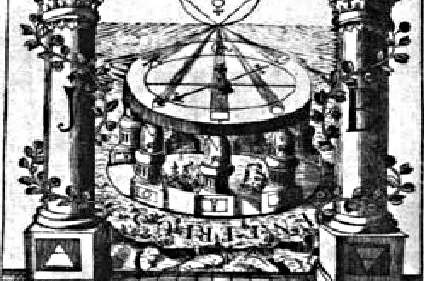
The Pillars Jachin and Boaz
Two bronze pillars at the temple door, flanking every Masonic lodge.
Also fraternal-masonic
Attributed Masonic
Share this specimen
ANAMNESIS
The eagle that rules the 33rd degree stares in two directions at once.
The Double-Headed Eagle