Casebook decode · The 1929 Easter Parade cigarette stunt, commissioned by the American Tobacco Company
Bernays's 'Torches of Freedom'
In 1929 Bernays grafted the goddess's torch onto a cigarette — and rewired what freedom meant.
The surface
On Easter Sunday, March 31, 1929, Edward Bernays — Sigmund Freud’s nephew and the acknowledged architect of modern public relations — staged an event on Fifth Avenue. A group of debutantes marched in New York’s Easter Parade and lit Lucky Strike cigarettes in public view, framing the act as a declaration of women’s liberation. The New York Times covered it on April 1, 1929. The phrase “torches of freedom” was provided by Bernays’s psychoanalytic consultant A.A. Brill, who told him: “Cigarettes, which are equated with men, become torches of freedom.” The stunt tracked measurable results: women’s share of cigarette purchases rose from 5% in 1923 to 12% in 1929, reaching 18.1% by 1935.
The decode
Jordan Maxwell reads the Bernays campaign as a crystalline demonstration of symbol engineering — the deliberate attachment of an ancient liberation emblem to a consumer product in order to transfer the emblem’s entire emotional and mythic freight. The cigarette was reframed not as a tobacco product but as the same torch that Libertas holds aloft at the harbor entrance, the same flame that the Columbia torch-bearer lifts above the opening credits of every film: the light of freedom, of the goddess, of illumination itself. In Maxwell’s reading the Bernays stunt reveals the operating method of the symbol-system at large — take the inherited emblem, relocate it onto the commodity, and let millennia of symbolic weight do the selling.
The symbol lineage
The torch is among the most stable symbols in Western iconography. The Statue of Liberty — formally Libertas Enlightening the World, dedicated 1886 — holds the torch of illumination as the goddess’s defining attribute, her form descended from Roman Libertas, Greek Eleutheria, and the Egyptian goddess tradition. The torch-bearing robed female of Columbia Pictures, placed above every film that issues from that studio since 1924, repeats the same image: illumination as the gift the institution offers. Bernays’s masterstroke was relocating this emblem from monument and studio to a lit cigarette in a woman’s hand on Fifth Avenue. He documented the method himself in his Biography of an Idea. Maxwell teaches that the method did not originate in 1929 — it is as old as the symbols themselves.
The symbol lineage
Broken into its symbols
The artifact is a stack of inherited symbols. Scroll to lift each one out ↓
Who teaches this decode
- Jordan Maxwell
Sources
Where next
-
civic-national
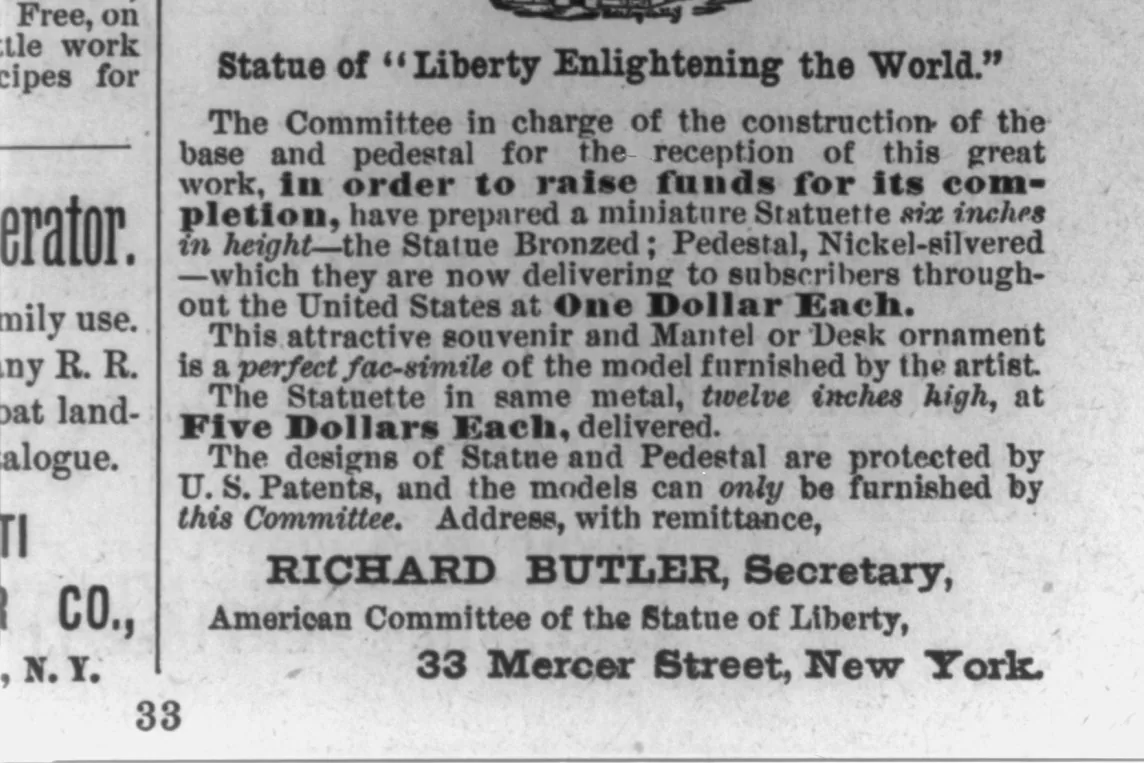
The Statue of Liberty
The goddess in the harbor — Isis wearing a different name.
Related symbol
Attributed Astro-Theology -
corporate
The Columbia Pictures Torch-Bearer
A draped goddess lifting a torch above every Hollywood film since 1924.
Related symbol
Attributed Civic-Solar -
civic-national
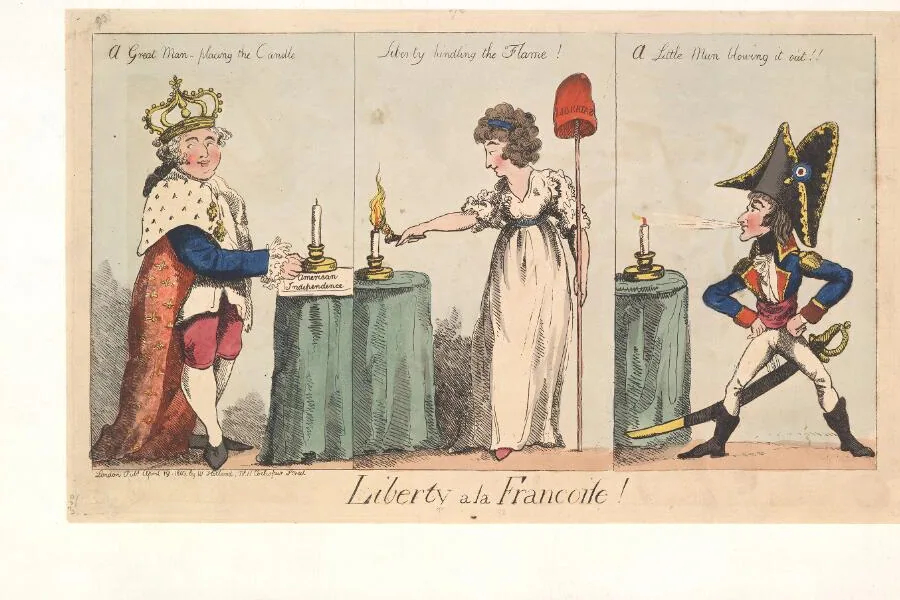
The Liberty Cap
The hat of freedom — and of the solar savior Mithras.
Related symbol
Attributed Astro-Theology
Share this decode
ANAMNESIS
A cigarette called a torch of freedom — Bernays's 1929 symbol engineering, decoded.
Bernays's 'Torches of Freedom'