Wikimedia Commons · Public Domain
Scholarly backbone · 1907–1986
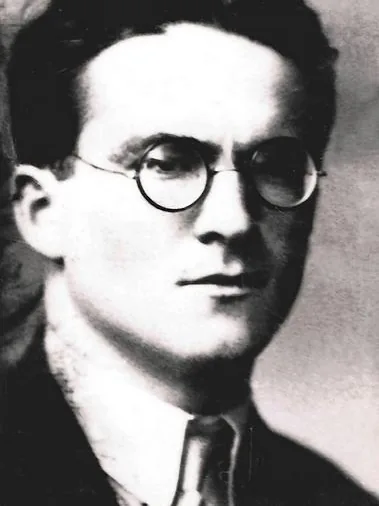
Mircea Eliade
Romanian historian of religion who mapped the sacred as its own mode of being.
Academic source — his comparative-religion findings on celestial archetypes, hierophany, and the sacred/profane distinction are mined by the astrotheology tradition as credentialed confirmation of scriptural non-originality and cosmic symbolism.
Mircea Eliade spent his career at the University of Chicago doing something quietly radical: taking archaic religious experience seriously on its own terms. For traditional humanity, he argued, the world was never a neutral container of events but a cosmos saturated with sacred meaning — every stone, tree, and mountain a potential site where the sacred broke through. His concept of hierophany named this rupture; his eternal return named the ritual response: by reenacting the original cosmogony, a community could step out of profane time altogether and stand again at the moment creation happened. The astrotheology scene, listed prominently on the Tsarion-affiliated astrotheologyzone.com, mines Eliade’s comparative findings — Eden as axis mundi, Flood parallels with Gilgamesh, Christianity’s debt to Mithraism — as credentialed academic evidence that scriptures share a common celestial substrate. Eliade was a historian of religion; he did not argue that religions are encoded astronomy.
Core claims
- Eliade distinguished 'the sacred and the profane' as two fundamentally different modes of being in the world — not gradations of one thing but ontologically distinct orientations.
- Eliade coined 'hierophany' — the manifestation of the sacred in an ordinary object (stone, tree, mountain) — arguing that for archaic humanity, the world was saturated with such theophanies.
- Eliade argued that archaic humanity experienced cyclical 'sacred time' and the 'eternal return,' reactualizing the cosmogony through ritual in order to escape the 'terror of history.'
- In Eliade's view, for archaic man 'reality is a function of the imitation of a celestial archetype': earthly things derive meaning by imitating sacred celestial models; all sacred space centers on an axis mundi.
Key works
- The Myth of the Eternal Return · 1949
- Patterns in Comparative Religion · 1949
- The Sacred and the Profane · 1957
Signature decodes
- The axis mundi: the sacred pole, world-tree, or mountain at the center of the world — a structural constant across Siberian shamanism, Vedic cosmology, and biblical Eden.
- The eternal return: archaic ritual does not commemorate a past event but literally reactualizes it, collapsing profane time so the community stands again at the moment of creation.
- Hierophany in a stone: the sacred stone is not venerated as a stone but as a site where the sacred broke through — the ordinary object becomes transparent to another order.
Influenced
Sources
Status Deceased (1907–1986). He held the Chair of History of Religions at the University of Chicago from 1957 until his death. His works are published by the University of Chicago Press and Princeton University Press.