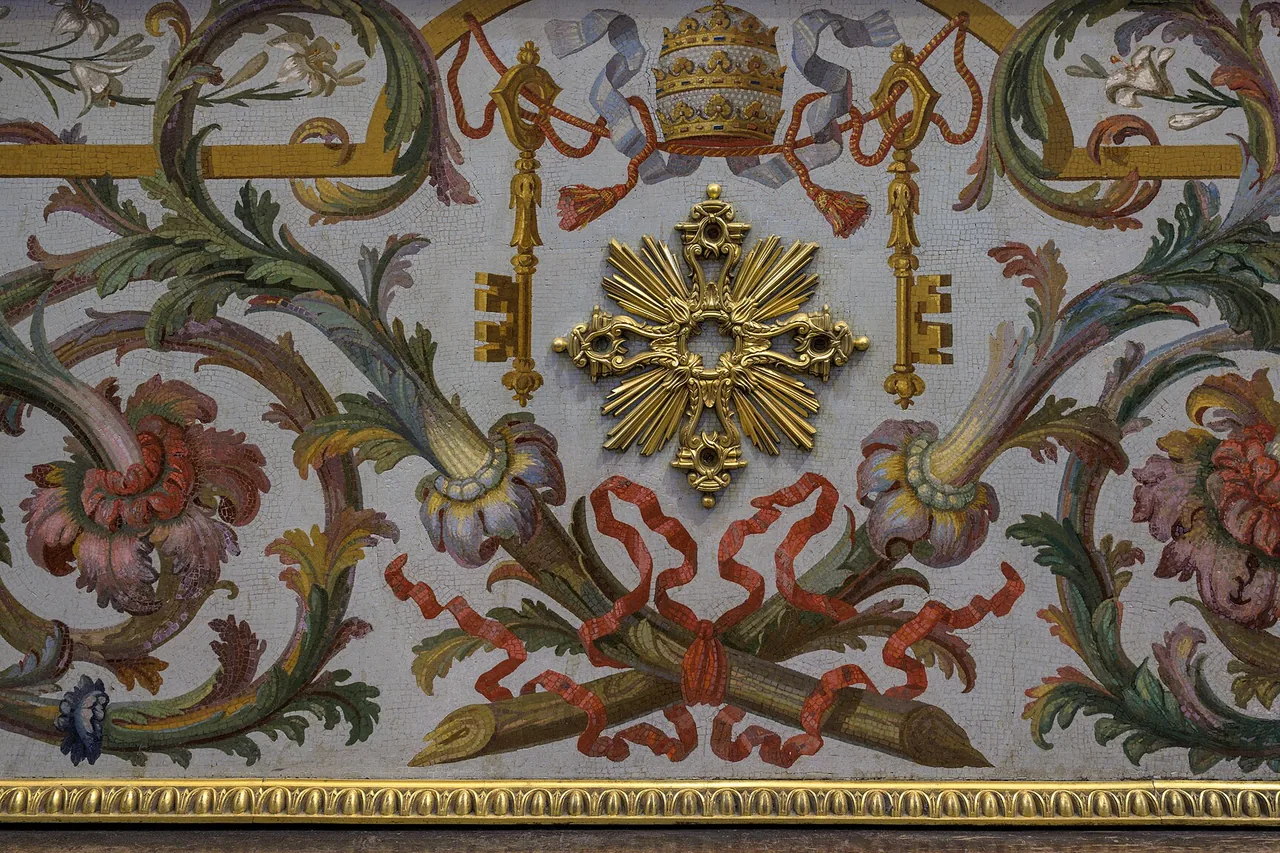
Wilfredor · Wikimedia Commons · CC0
religious
Vatican / Papal Symbolism
Keys, a fish-hat, and a colossal pinecone — the Vatican's open archive.
AttributedDocumented origin
The crossed Keys of St. Peter derive from Matthew 16:19, in which Christ grants Peter the keys of heaven. The bishop’s mitre — the tall, cleft headdress of Catholic prelates — developed as liturgical dress through the early medieval centuries. The Pigna, a colossal bronze pinecone standing roughly four metres tall, is a Roman-era fountain sculpture originally placed near the Pantheon; it was moved to the Vatican’s Cortile della Pigna, where it remains, flanked by bronze peacocks, a landmark of the papal complex.
The reading
Jordan Maxwell reads the cleft papal mitre as a fish-head headdress, linking it to the iconography of the ancient Mesopotamian fish-deity Dagon; Maxwell argues this priestly lineage represents an unbroken institutional succession running from the ancient Near East into the modern Church. David Icke argues the colossal pinecone is a direct representation of the pineal gland — the biological “third eye” — displayed openly by an institution that, in Icke’s published account, guards consciousness-knowledge it does not distribute. Mark Passio situates all three symbols inside the same framework: a priestly institution whose public iconography encodes older, pre-Christian meanings for initiates who know how to read it.
Where it hides today
The mitre appears on every bishop and pope at every formal ceremony broadcast worldwide. The Pigna stands in St. Peter’s Square complex, photographed by millions of tourists annually. The Keys emblazon Vatican heraldry, Swiss Guard uniforms, and official seals — the institution’s complete symbolic archive, open to anyone who arrives with the right question.
Decoded by
- David Icke
- Jordan Maxwell
- Mark Passio
Where next
-
religious
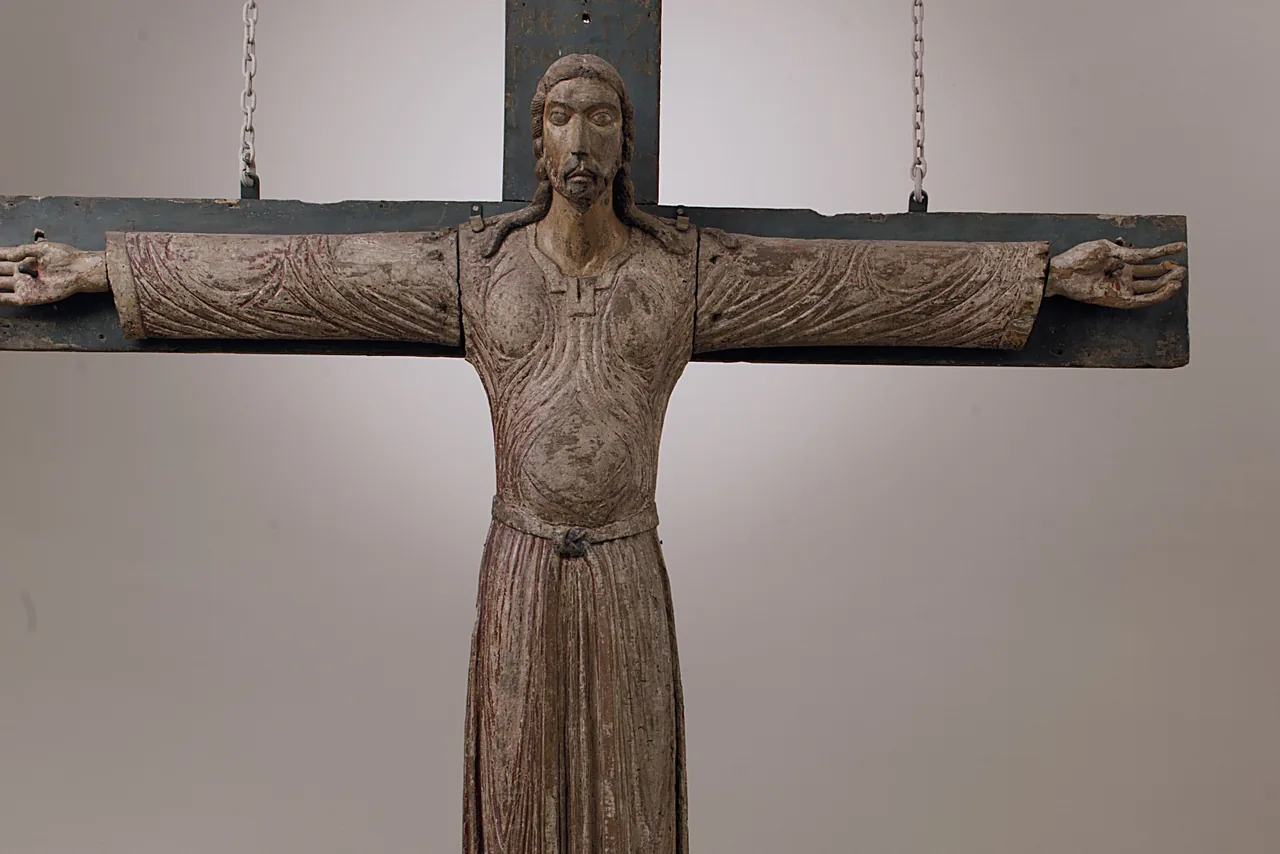
The Cross
The oldest cross is the sun's path drawn across the sky.
Also religious
Attributed Astro-Theology -
religious
The Dove
The bird of the goddess, re-named but never fully re-made.
Also religious
Attributed Astro-Theology -
religious
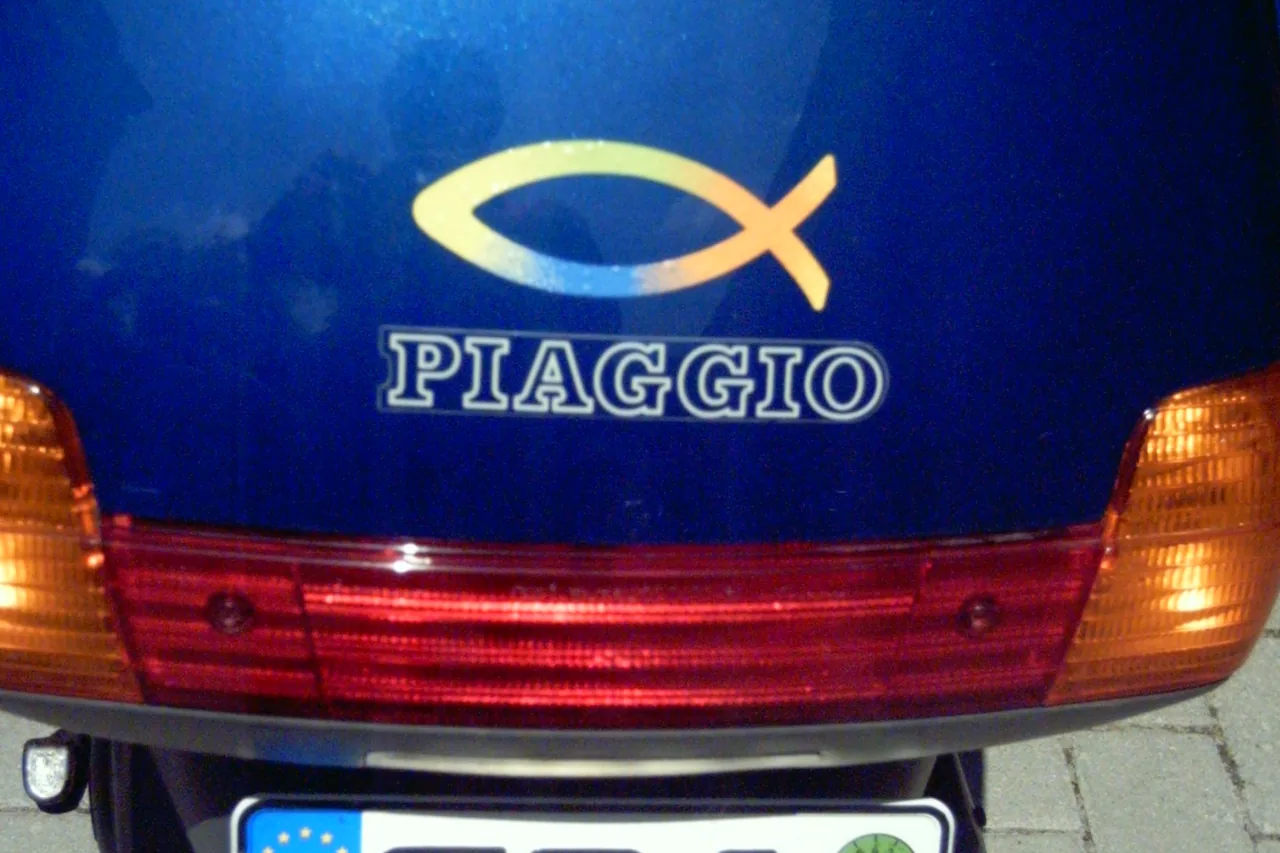
The Fish / Ichthys
The Jesus fish is the shape of an astrological age.
Also religious
Attributed Astro-Theology -
religious
The Halo / Nimbus
The disk behind every saint's head is a sun.
Also religious
Attributed Astro-Theology
Share this specimen
ANAMNESIS
A pinecone, a fish-hat, crossed keys — the oldest symbols, still on display.
Vatican / Papal Symbolism